
Introduction
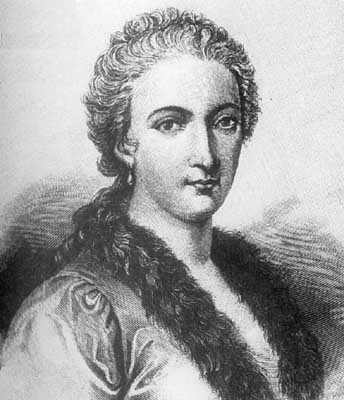
Maria Gaetana Agnesi, born on May 16, 1718, in Milan, Italy, was a pioneering mathematician, linguist, and philosopher. She is renowned for her contributions to mathematics and her groundbreaking work, “Instituzioni Analitiche ad uso della Gioventù Italiana” (Analytical Institutions for the Use of Italian Youth). This article delves into her age, rise to fame, and the significant highlights of her life, providing a comprehensive understanding of a remarkable figure in the history of mathematics and education.
Early Life and Family Background
Family Heritage
Maria Gaetana Agnesi was born into a wealthy and large family, the eldest of 21 siblings. Her family’s wealth came from the thriving silk industry in Milan, allowing them to provide Maria with an exceptional education. Her father, Pietro Agnesi, was determined to cultivate her intellectual talents and provided her with the best tutors and educators available.
Education and Early Talents
From a young age, Maria Gaetana Agnesi displayed extraordinary intellectual abilities. She quickly mastered several languages, earning the nickname “Oracolo Settilingue” (Seven-Language Oracle). By the age of 13, she was fluent in Italian, French, German, Greek, Latin, Spanish, and Hebrew. Her father, recognizing her potential, encouraged her to study philosophy and mathematics, despite the era’s typical restrictions on women’s education.
Academic Pursuits and Achievements
Transition to Mathematics
Although Maria Gaetana initially focused on languages, her father persuaded her to delve into philosophy and mathematics. She studied Euclidean geometry, logic, metaphysics, and physics, often presenting her findings in the intellectual salons hosted at her family’s home. These gatherings attracted prominent intellectuals from Italy and across Europe, providing her with a platform to discuss and refine her ideas.
Publication of “Propositiones Philosophicae”
In 1738, at the age of 20, Maria Gaetana published “Propositiones Philosophicae,” a collection of 191 philosophical theses she had presented in public debates. This work covered a wide range of topics, including logic, cosmology, ontology, mechanics, and pneumatology. The publication demonstrated her broad intellectual curiosity and her advocacy for women’s education.
“Instituzioni Analitiche”
Maria Gaetana Agnesi’s most significant contribution to mathematics came with the publication of “Instituzioni Analitiche ad uso della Gioventù Italiana” in 1748. This comprehensive textbook on algebra and calculus was one of the first of its kind, written in Italian to make advanced mathematical concepts accessible to a broader audience. The work was highly praised by contemporary mathematicians and was translated into French and English, further cementing her international reputation.
Religious Vocation and Philanthropy
Religious Aspirations
Despite her academic success, Maria Gaetana felt a strong pull towards religious life. At 21, she asked her father for permission to become a nun. However, her father’s need for her assistance and her own sense of duty to her family led her to remain at home. She did, however, withdraw from social life to focus on her studies and religious practices.
Philanthropic Endeavors
Following the death of her father in 1752, Maria Gaetana Agnesi dedicated herself to charitable work. She turned her family home into a refuge for the sick and poor, personally caring for the needy. Her commitment to helping others led her to sell her possessions and seek donations to support her charitable activities. In 1771, she helped establish the Pio Albergo Trivulzio, a shelter for the elderly and infirm, where she served as director.
Contributions to Mathematics and Academia
Analytical Institutions
“Instituzioni Analitiche” is considered one of the most comprehensive and advanced mathematical texts of its time. The book is divided into two volumes: the first focuses on elementary algebra and geometry, while the second delves into calculus. Maria Gaetana’s clear and systematic presentation of complex mathematical concepts made the work a valuable resource for students and scholars alike. Her contributions laid the groundwork for future developments in mathematical analysis.
Recognition and Honors
Maria Gaetana Agnesi’s work garnered widespread acclaim. The Royal Academy of Sciences in Paris praised her book as the best introduction to the works of Euler, a leading mathematician of the time. Empress Maria Theresa of Austria sent her a diamond ring and a precious casket in appreciation of her contributions to science. Pope Benedict XIV also recognized her achievements, offering her blessings and valuable gifts.
Teaching and Academic Roles
In 1750, Maria Gaetana Agnesi was appointed to the chair of mathematics and natural philosophy at the University of Bologna, making her one of the first women to hold a university professorship. Despite this prestigious position, she chose to focus on her charitable work and private studies, declining to formally teach at the university. Her decision reflected her deep commitment to her religious and philanthropic pursuits.
Later Life and Legacy
Continued Philanthropy
Maria Gaetana Agnesi spent the final years of her life dedicated to caring for the poor and sick. She continued her work at the Pio Albergo Trivulzio, living among the residents and personally attending to their needs. Her selflessness and devotion to helping others were widely admired and left a lasting impact on the community.
Death and Commemoration
Maria Gaetana Agnesi passed away on January 9, 1799, at the age of 80. Her contributions to mathematics, education, and charity have left an enduring legacy. Her summer residence in Varedo, known as Villa Agnesi, has been preserved as a historical site and now houses a music school and hospice for the elderly.
Historical Context and Influence
The Enlightenment Era
Maria Gaetana Agnesi’s life and work occurred during the Enlightenment, a period marked by significant advancements in science, philosophy, and education. Her achievements as a woman in a male-dominated field exemplify the era’s intellectual spirit and the push for greater knowledge and understanding.
Advocacy for Women’s Education
Throughout her life, Maria Gaetana Agnesi advocated for women’s education, challenging societal norms and barriers. Her success demonstrated that women could excel in intellectual pursuits and contribute meaningfully to scientific progress. Her legacy continues to inspire women in STEM (Science, Technology, Engineering, and Mathematics) fields today.
Mathematical Contributions
Maria Gaetana Agnesi’s “Instituzioni Analitiche” played a crucial role in advancing mathematical education. By making complex concepts accessible and providing a comprehensive framework for analysis, she influenced subsequent generations of mathematicians and educators. Her work remains a testament to the importance of clarity and rigor in mathematical writing.
Conclusion
Maria Gaetana Agnesi was a trailblazing mathematician, linguist, and philanthropist whose life and work left an indelible mark on the history of mathematics and education. Her achievements in a time when women’s intellectual contributions were often overlooked highlight her exceptional talent and determination. As we reflect on her legacy, we recognize the enduring impact of her contributions and the inspiration she continues to provide for future generations.


