
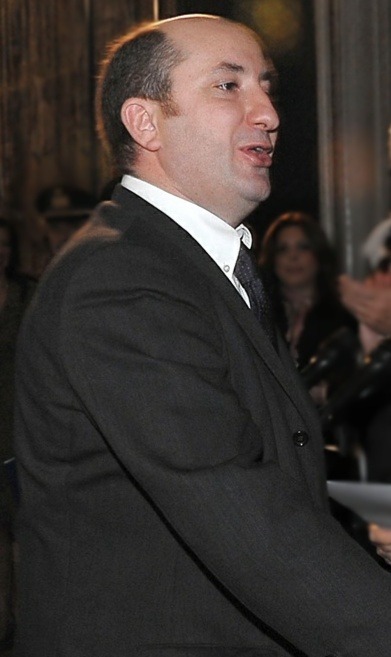
Antonio Albanese is a multifaceted Italian actor, comedian, director, and writer known for his distinctive characters and remarkable versatility. Born on October 10, 1964, in Olginate, a small town in the province of Lecco, Italy, Albanese has become a prominent figure in Italian entertainment. This article explores his early life, rise to fame, and significant career milestones.
Early Life and Education
Antonio Albanese was born to Sicilian parents in Olginate, Italy. His family’s Sicilian roots played a significant role in shaping his cultural background and comedic style. From a young age, Albanese exhibited a passion for performing arts, which led him to pursue a formal education in acting.
He enrolled in the Civica Scuola d’Arte Drammatica in Milan, one of Italy’s premier drama schools. Graduating in 1991, Albanese quickly began to establish himself in the Italian entertainment industry.
Early Career and Breakthrough
Antonio Albanese’s early career was marked by his performances in cabaret and on television. He made his debut at the famed Zelig Cabaret in Milan, a hotspot for Italian comedians. His talent soon caught the attention of television producers, leading to appearances on popular shows such as the “Maurizio Costanzo Show” and “Su la testa…!” hosted by Paolo Rossi.
His big break came in 1993 when he joined the cast of the television show “Mai dire Gol,” produced by Gialappa’s Band. Albanese introduced several iconic characters, such as the mild-mannered Epifanio, the aggressive Alex Drastico, the flamboyant sports commentator Frengo, and the eccentric gardener Pier Piero. These characters were not only comedic but also offered a satirical look at various aspects of Italian society, endearing Albanese to a broad audience.
Transition to Film and Theatre
After gaining fame on television, Antonio Albanese transitioned to film and theatre. His film debut came in 1996 with “Vesna va veloce,” where he played a melancholic bricklayer named Antonio. This role showcased his ability to handle more serious and dramatic parts, broadening his appeal as an actor.
Albanese continued to build his filmography with roles in “Tu ridi” (1998) directed by Paolo and Vittorio Taviani, where he portrayed a baritone singer who can no longer perform due to heart problems. His performance was critically acclaimed and demonstrated his range as an actor.
Directorial Ventures
In addition to acting, Antonio Albanese ventured into directing. His directorial debut was the film “Uomo d’acqua dolce” (1997), which he co-wrote with Vincenzo Cerami. The film tells the surreal story of a school teacher who loses his memory and returns to his family after a five-year absence. This venture was followed by “La fame e la sete” (1999), another collaboration with Cerami.
In 2002, he directed “Il nostro matrimonio è in crisi,” a satirical take on New Age philosophies. Co-written with Cerami and Michele Serra, the film explores the absurdities of spiritual health retreats.
Continued Success in Television and Film
Antonio Albanese’s success continued into the 2000s with numerous notable performances. In 2003, he starred alongside Fabio De Luigi in “È già ieri,” a remake of the American film “Groundhog Day.” Directed by Giulio Manfredonia, the film was a commercial success.
He also played significant roles in “La seconda notte di nozze” (2005) and “Questione di cuore” (2009), the latter directed by Francesca Archibugi, where he starred alongside Kim Rossi Stuart.
Iconic Characters and Satire
Albanese’s work is characterized by his creation of memorable and satirical characters. One of his most iconic characters is Cetto La Qualunque, a corrupt and outlandish politician from Calabria. Cetto embodies the worst traits of political corruption and moral decay, providing a biting critique of certain aspects of Italian politics.
Cetto La Qualunque became the protagonist of the film “Qualunquemente” (2011), directed by Giulio Manfredonia. The film was a commercial success and led to a sequel, “Tutto tutto niente niente” (2012), where Albanese reprised his role. Cetto’s character also appeared in the satirical show “Che tempo che fa,” hosted by Fabio Fazio on RaiTre.
Recent Works and Achievements
In recent years, Antonio Albanese has continued to captivate audiences with his performances. He appeared in Woody Allen’s “To Rome with Love” (2012), showcasing his talent on an international stage. Other notable films include “L’intrepido” (2013) by Gianni Amelio, “La sedia della felicità” (2013), and “L’abbiamo fatta grossa” (2016) directed by Carlo Verdone.
In 2017, he starred in “Mamma o papà?” and the popular comedy “Come un gatto in tangenziale,” directed by Riccardo Milani and co-starring Paola Cortellesi. The film’s success led to a sequel, “Come un gatto in tangenziale – Ritorno a Coccia di morto,” released in 2021.
Albanese also directed “Contromano” (2018), his fourth film as a director, continuing to explore themes of social relevance with his unique comedic touch.
Contributions to Theatre and Literature
Antonio Albanese’s contributions to theatre are equally notable. His stage performances, such as “Uomo!” (1992) and “Giù al Nord” (1997), written with Michele Serra and Enzo Santin, have been critically acclaimed. His theatrical work often merges comedy with poignant social commentary, reflecting his versatility as a performer.
Albanese has also authored several books, compiling his most famous monologues and characters. These include “Patapin e patapam” (1994), “Giù al Nord” (1995), and “Diario di un anarchico foggiano” (1996). His literary works provide a deeper insight into his creative process and the socio-political themes he explores through his comedy.
Personal Life and Legacy
Antonio Albanese’s personal life has remained relatively private, with his focus consistently on his work and creative projects. His ability to blend humor with serious social critique has earned him a unique place in Italian entertainment.
As a multifaceted artist, Antonio Albanese continues to push boundaries in film, theatre, and television. His characters, whether on stage or screen, often hold a mirror to society, encouraging audiences to reflect on the absurdities and complexities of modern life.
Conclusion
Antonio Albanese’s career is a testament to his talent, versatility, and dedication to his craft. From his early days in cabaret and television to his success in film and theatre, he has consistently demonstrated his ability to entertain and provoke thought.
His satirical characters, especially Cetto La Qualunque, have left a lasting impact on Italian popular culture. As he continues to explore new creative avenues, Antonio Albanese remains a vital and influential figure in the world of comedy and beyond.


