
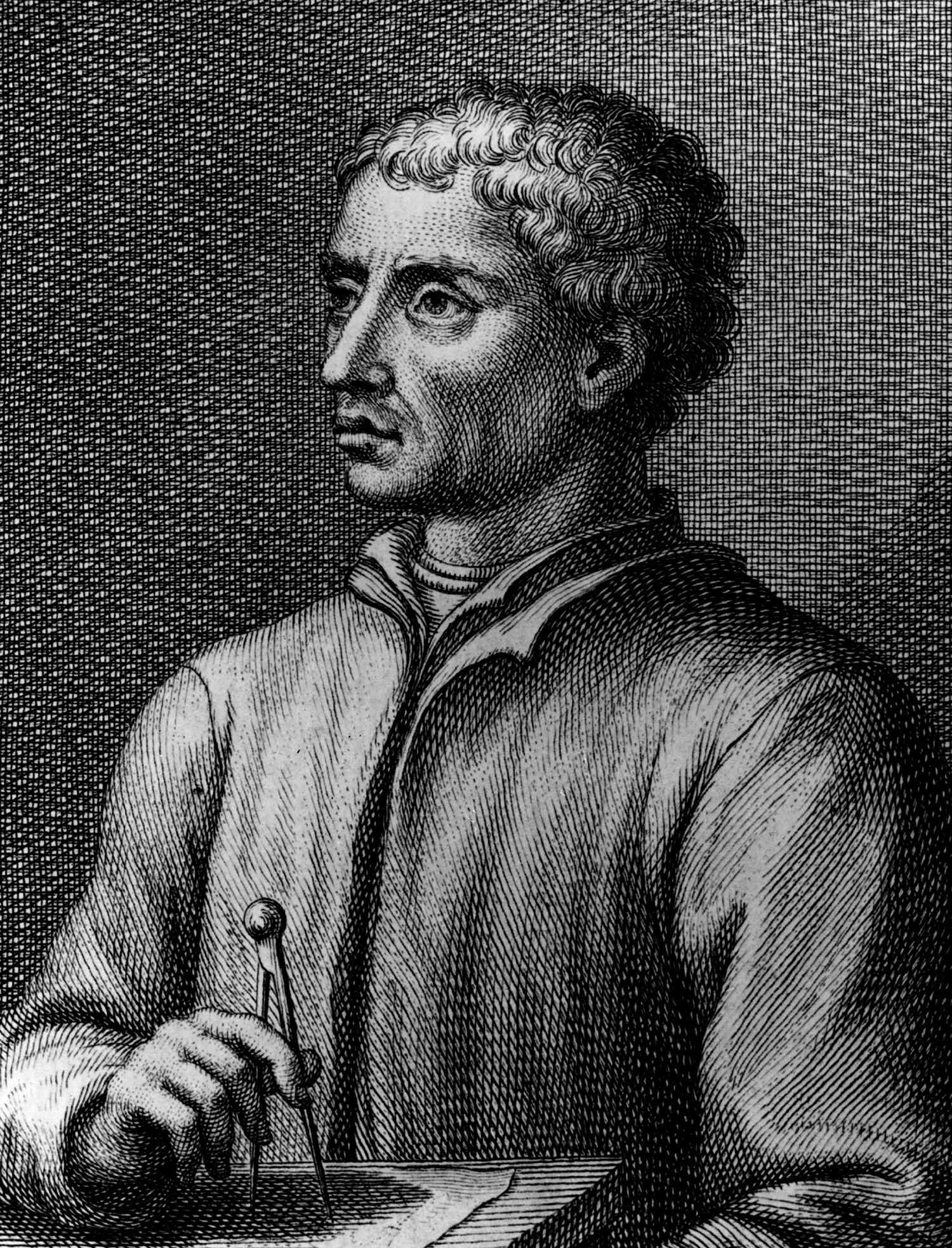
Leon Battista Alberti, born in Genoa on February 14, 1404, was an eminent figure of the Italian Renaissance. A polymath, Alberti excelled as an architect, humanist, author, artist, poet, priest, linguist, philosopher, and cryptographer. His multifaceted contributions significantly influenced the fields of art, architecture, and Renaissance thought. This comprehensive exploration delves into the life of Leon Battista Alberti, examining his age, rise to fame, and notable life highlights.
Early Life and Education
Leon Battista Alberti was born into a wealthy and influential Florentine family in exile in Genoa. His father, Lorenzo Alberti, was a successful merchant, which afforded young Leon access to an excellent education. He was sent to the prestigious University of Padua, where he studied law, but his interests soon expanded to encompass a wide range of disciplines including mathematics, philosophy, and the arts.
His early education laid the groundwork for his later achievements. The humanist curriculum he was exposed to at Padua instilled in him a profound appreciation for classical literature and the ideals of the Renaissance. This period of his life was crucial in shaping his intellectual pursuits and his subsequent contributions to various fields.
Rise to Fame
Alberti’s rise to fame began with his written works, which showcased his intellect and versatility. One of his earliest significant contributions was “De commodis litterarum atque incommodis” (On the Advantages and Disadvantages of Literature), written in 1428. This treatise reflects his humanist ideals and his belief in the power of literature and education to transform society.
His fame further increased with the publication of “Della pittura” (On Painting) in 1435. This groundbreaking work was one of the first treatises on the theory of painting, and it played a pivotal role in the development of Renaissance art. In “Della pittura,” Alberti outlined the principles of linear perspective, providing artists with a mathematical basis for creating realistic spatial depth in their works. This treatise had a profound impact on artists of his time, including masters like Leonardo da Vinci and Piero della Francesca.
Architectural Achievements
Leon Battista Alberti’s contributions to architecture are perhaps his most enduring legacy. His architectural philosophy was deeply rooted in the classical traditions of ancient Rome, which he sought to revive and adapt to the context of Renaissance Italy. His treatise “De re aedificatoria” (On the Art of Building), written around 1452, became a seminal work in architectural theory. This comprehensive guide covered various aspects of architecture, from urban planning to building materials, and it established Alberti as a leading figure in the field.
One of his most notable architectural achievements is the façade of the Basilica of Santa Maria Novella in Florence, completed in 1470. Alberti’s design harmoniously blended classical elements with the Gothic structure of the existing church, creating a masterpiece of Renaissance architecture. The façade’s geometric precision, use of classical motifs, and innovative approach to proportion and harmony exemplify Alberti’s architectural genius.
Another significant work is the Palazzo Rucellai in Florence, built between 1446 and 1451. This palace is renowned for its elegant and balanced design, featuring classical pilasters and a harmonious façade that reflect Alberti’s understanding of ancient Roman architecture. The Palazzo Rucellai set a new standard for urban residential architecture and influenced the design of subsequent palaces throughout Italy.
Literary Contributions
In addition to his architectural treatises, Alberti made significant contributions to literature. His works reflect his wide-ranging interests and his deep engagement with the humanist ideals of the Renaissance. One of his most famous literary works is “Momus” (also known as “De Principe”), written in 1443. This satirical novel critiques contemporary society and politics through the lens of classical mythology, showcasing Alberti’s wit and his ability to blend humor with profound social commentary.
Another important work is “De familia,” a dialogue on family and household management. Written in the mid-15th century, this treatise offers insights into the social and moral values of the time, emphasizing the importance of education, virtue, and prudent financial management. Alberti’s writings in this domain provide a valuable perspective on the everyday life and ethical concerns of Renaissance society.
Humanist Philosophy
Alberti’s contributions to humanist philosophy are evident in his emphasis on the potential of human achievement and the value of individual effort. His belief in the importance of education and the arts as means to achieve personal and societal improvement was a central tenet of his philosophy. He viewed the study of classical texts and the emulation of ancient virtues as pathways to achieving excellence in various fields.
His treatise “De iciarchia” (On the Man of Excellence and Ruler of His Family), written in 1440, underscores his humanist ideals. This work explores the qualities of a virtuous ruler and the responsibilities of individuals in positions of power. Alberti’s emphasis on moral integrity, wisdom, and the pursuit of knowledge reflects his broader philosophical outlook and his belief in the transformative power of education and ethical conduct.
Contributions to Mathematics and Cryptography
Leon Battista Alberti’s intellectual curiosity extended to the fields of mathematics and cryptography. His interest in these disciplines is evident in his treatise “De componendis cifris” (On Composing Ciphers), written in 1467. This work is considered one of the earliest known treatises on cryptography and introduces the concept of polyalphabetic ciphers, which are more complex and secure than simple substitution ciphers.
Alberti’s contributions to cryptography had practical applications in the realms of diplomacy and military communication, where secure messaging was of paramount importance. His innovations in this field laid the groundwork for future developments in cryptographic techniques and underscored his versatile intellect and ability to apply mathematical principles to real-world problems.
Artistic Endeavors
While Alberti is primarily known for his architectural and literary achievements, he also made notable contributions to the visual arts. His theoretical writings on painting and sculpture influenced many artists of his time and provided a framework for understanding the principles of Renaissance art. Alberti’s emphasis on proportion, perspective, and the study of anatomy helped shape the artistic techniques and standards of the period.
In addition to his theoretical contributions, Alberti was an accomplished artist in his own right. Although few of his works have survived, his artistic endeavors reflect his deep engagement with the visual arts and his commitment to exploring new techniques and ideas. His holistic approach to the arts, encompassing theory, practice, and innovation, exemplifies the Renaissance ideal of the “universal man” who excels in multiple disciplines.
Personal Life and Legacy
Leon Battista Alberti’s personal life was marked by his dedication to intellectual and artistic pursuits. Despite his many accomplishments, he remained a modest and private individual, focusing on his work and the dissemination of his ideas. His relationships with other leading figures of the Renaissance, such as Lorenzo de’ Medici and Pope Nicholas V, provided him with opportunities to further his projects and influence the cultural landscape of his time.
Alberti’s legacy is profound and far-reaching. His contributions to architecture, literature, philosophy, and the arts have left an indelible mark on the history of the Renaissance and continue to inspire scholars and practitioners today. His holistic approach to knowledge and his belief in the potential of human achievement resonate with contemporary ideals of interdisciplinary learning and innovation.
Awards and Honors
While formal awards and honors as we understand them today were not common during Alberti’s time, his work was widely recognized and celebrated by his contemporaries. His treatises were studied and revered by artists, architects, and scholars across Europe, and his ideas were instrumental in shaping the course of Renaissance thought.
In modern times, Alberti’s contributions have been acknowledged through numerous academic studies, exhibitions, and conferences dedicated to his work. His influence on the fields of architecture and art history is evident in the continued study and appreciation of his treatises and the buildings he designed.
Impact on Renaissance Culture
Leon Battista Alberti’s impact on Renaissance culture is immeasurable. His efforts to revive and adapt classical ideals to the context of his time helped shape the intellectual and artistic currents of the Renaissance. His emphasis on the importance of education, the study of classical texts, and the pursuit of excellence in multiple disciplines encapsulates the spirit of the Renaissance and its focus on human potential.
Alberti’s work in architecture set new standards for design and construction, influencing the development of Renaissance and Baroque architecture. His treatises on art provided a theoretical foundation that guided artists in their exploration of perspective, proportion, and realism. His contributions to literature and humanist philosophy enriched the cultural and intellectual life of his era, providing a framework for ethical conduct and the pursuit of knowledge.
Conclusion
Leon Battista Alberti was a towering figure of the Italian Renaissance, whose life and work left an indelible mark on the fields of architecture, literature, philosophy, and the arts. From his early days in Genoa to his rise to international fame, Alberti’s journey was marked by intellectual curiosity, artistic innovation, and a relentless pursuit of excellence. His contributions as a polymath and humanist have left a lasting legacy, inspiring future generations of scholars, artists, and thinkers. Alberti’s enduring influence is a testament to the transformative power of education, creativity, and the pursuit of knowledge.


