
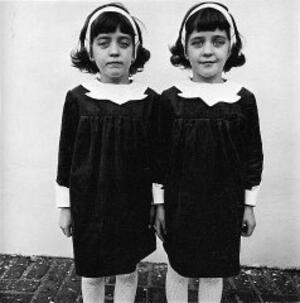
Diane Arbus, born Diane Nemerov on March 14, 1923, in New York City, is one of the most influential photographers of the 20th century. Known for her provocative and deeply engaging images, Arbus captured the lives of those on the fringes of society, earning her a controversial yet celebrated reputation. This detailed exploration of Arbus’s life delves into her early years, rise to fame, contributions to photography, and her enduring legacy.
Early Life and Education
Diane Arbus was born into a wealthy Jewish family of Polish descent. Her parents owned Russek’s, a famous department store specializing in fur. Growing up in an affluent environment, Arbus’s early life was marked by privilege and protection, which later influenced her fascination with the unusual and marginalized aspects of society.
Arbus attended the Culture Ethical School and then the Fieldstone School, both institutions emphasizing a humanistic and creative approach to education. Her artistic talent was evident from a young age, and her father supported her interests by arranging drawing lessons with Dorothy Thompson, an illustrator who had studied under George Grosz. This early exposure to Grosz’s grotesque and critical style left a lasting impression on Arbus, shaping her unique artistic vision.
Marriage and Early Career
At the age of 14, Diane met Allan Arbus, a young photographer. They married when she was 18, despite her family’s objections, and had two daughters, Doon and Amy. Diane learned photography from Allan, and together they ran a successful fashion photography business, shooting for magazines such as Vogue, Harper’s Bazaar, and Glamour. Despite their professional success, Diane felt creatively stifled and yearned for a more personal and meaningful artistic expression.
Artistic Transformation and Influences
In 1957, Diane Arbus left the fashion industry to pursue her own artistic path. This decision marked the beginning of a significant transformation in her career. She studied briefly with renowned photographer Berenice Abbott and later attended a workshop with Alexey Brodovitch, the art director of Harper’s Bazaar. However, it was her time with Lisette Model at the New School that had the most profound impact on her work. Model encouraged Arbus to find her unique voice and explore unconventional subjects, leading her to develop her distinctive photographic style.
Exploration of the Margins
Diane Arbus is best known for her candid and often unsettling portraits of people on the fringes of society. She was drawn to subjects that were considered taboo or unusual, such as circus performers, dwarfs, giants, transgender individuals, nudists, and people with physical and mental disabilities. Arbus’s ability to capture the humanity and individuality of her subjects, despite their marginalization, set her work apart from other photographers of her time.
Her approach was both empathetic and direct, allowing her subjects to reveal themselves in a way that was both intimate and raw. Arbus’s work challenged conventional notions of beauty and normality, forcing viewers to confront their own prejudices and assumptions.
Recognition and Controversy
Arbus’s work began to gain recognition in the early 1960s. In 1963, she received a Guggenheim Fellowship, which was renewed in 1966. Her photographs were published in prestigious magazines such as Esquire, Harper’s Bazaar, and The New York Times, often sparking controversy due to their provocative nature.
In 1965, Arbus’s work was included in the “Recent Acquisitions” exhibition at the Museum of Modern Art (MoMA) in New York. Although some critics found her images too disturbing, others praised their honesty and emotional depth. Her first solo exhibition, “New Documents,” was held at MoMA in 1967, alongside the work of Garry Winogrand and Lee Friedlander. This exhibition solidified her reputation as a groundbreaking artist, although her work continued to polarize audiences.
Personal Struggles and Legacy
Despite her professional success, Diane Arbus struggled with personal demons throughout her life. She suffered from depression, and her mental health issues were exacerbated by her creative work’s emotional intensity and the physical toll of her photographic pursuits. In addition to her psychological struggles, Arbus also battled hepatitis and became dependent on antidepressants.
On July 26, 1971, Diane Arbus took her own life by ingesting barbiturates and cutting her wrists. She was 48 years old. Her death shocked the art world and brought a tragic end to a career that had already profoundly impacted the field of photography.
Following her death, Arbus’s work continued to be celebrated and scrutinized. In 1972, a year after her death, MoMA organized a major retrospective of her work, which traveled internationally and solidified her status as a seminal figure in photography. She became the first American photographer to have her work displayed at the Venice Biennale, further cementing her legacy.
Influence and Cultural Impact
Diane Arbus’s influence on the world of photography and visual arts is undeniable. Her work has inspired countless photographers and artists who seek to explore the complexities of human identity and experience. Arbus’s ability to capture the essence of her subjects with compassion and unflinching honesty has made her a touchstone for contemporary portraiture.
Her photographs are not just images but profound statements about the human condition. They invite viewers to look beyond the surface and understand the diverse experiences that make up our world. Arbus’s work continues to challenge and provoke, ensuring her place as one of the most important and influential photographers of the 20th century.
Historical Context and Nuances
Diane Arbus’s work must be understood within the broader context of mid-20th century America. The post-World War II era was a time of significant social and cultural change, with movements challenging traditional norms and seeking greater freedom and expression. Arbus’s focus on marginalized communities reflected the era’s growing interest in exploring and documenting diverse experiences.
Her work also coincided with the rise of documentary photography, a genre that aimed to capture reality in a straightforward and unembellished manner. However, Arbus’s approach was distinct in its emphasis on personal connection and emotional resonance, setting her apart from her contemporaries.
Influence on Modern Photography
Diane Arbus’s legacy continues to resonate in contemporary photography. Her work has been the subject of numerous exhibitions, books, and scholarly studies, cementing her place in the pantheon of great photographers. Arbus’s influence can be seen in the works of modern photographers who seek to explore the boundaries of identity, beauty, and societal norms.
Her ability to capture the extraordinary within the ordinary has inspired a new generation of artists to look beyond conventional subjects and explore the full spectrum of human experience. Arbus’s work serves as a reminder of the power of photography to reveal truths and evoke deep emotional responses.
Conclusion
Diane Arbus’s life and work are a testament to the power of art to challenge, provoke, and inspire. From her early days as a fashion photographer to her groundbreaking explorations of marginalized communities, Arbus consistently pushed the boundaries of what photography could achieve. Her unflinching portrayal of her subjects’ humanity has left a lasting impact on the field of photography and continues to influence artists and viewers alike.
Arbus’s legacy is not only in her photographs but also in her approach to art and life. She dared to see and document the world in all its complexity, beauty, and strangeness. As we continue to grapple with issues of identity, acceptance, and empathy, Diane Arbus’s work remains a powerful and relevant force, reminding us of the profound impact of seeing and being seen.


