
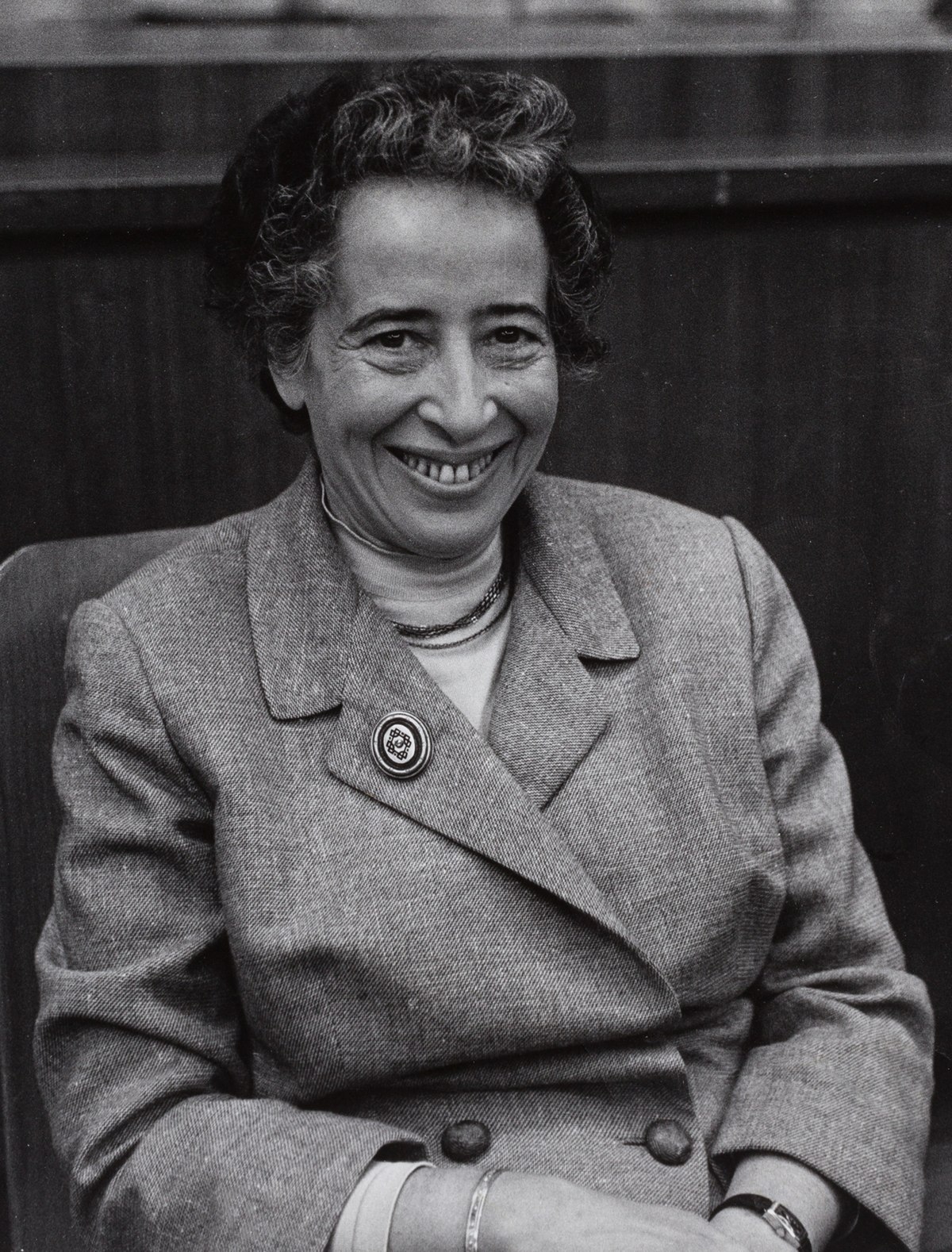
Hannah Arendt, born on October 14, 1906, in Linden, a suburb of Hanover, Germany, was a renowned philosopher and political theorist. Her profound thoughts and writings have left an indelible mark on 20th-century philosophy, particularly in the realms of political theory, the nature of power, and the concept of totalitarianism. This comprehensive biography explores her early life, education, career highlights, and lasting legacy.
Early Life and Education
Hannah Arendt was born into a well-off Jewish family. Her parents, Martha and Paul Arendt, were assimilated Jews who did not adhere to traditional religious practices. Despite this, Arendt always acknowledged her Jewish identity and was deeply affected by the fate of the Jewish people throughout her life.
Arendt’s early education was influenced by the intellectual milieu of her family. She attended the University of Marburg, where she studied under Martin Heidegger, with whom she had a significant and controversial relationship. She later moved to the University of Freiburg to study with Edmund Husserl and finally to the University of Heidelberg, where she completed her doctoral dissertation on “The Concept of Love in Saint Augustine” under the supervision of Karl Jaspers in 1929.
Early Career and Emigration
After completing her doctorate, Arendt moved to Berlin, where she received a fellowship to conduct research on the German Romantic writer Rahel Varnhagen. In 1929, she married Günther Stern, a philosopher she had met in Marburg.
The rise of the Nazi regime in Germany forced Arendt to flee the country in 1933. She first went to Prague, then to Geneva, and finally settled in Paris. In Paris, she worked with organizations that helped Jewish refugees and young Jews preparing to emigrate to Palestine. She also worked as a secretary for the baroness Germaine de Rothschild.
Life in America and Academic Career
In 1940, Arendt married Heinrich Blücher, a philosopher and political theorist. The German occupation of France during World War II led to her internment in the Gurs internment camp by the Vichy government. After her release, she and Blücher managed to escape to the United States via Lisbon, arriving in New York in May 1941.
In America, Arendt quickly became part of the intellectual community. She worked for various Jewish organizations and wrote for several publications. In 1951, she was granted U.S. citizenship and published her first major work, “The Origins of Totalitarianism,” a comprehensive study of the totalitarian movements of Nazism and Stalinism. This book established her reputation as a leading political thinker.
Major Works and Philosophical Contributions
The Origins of Totalitarianism (1951)
This seminal work analyzes the roots and mechanisms of totalitarian regimes, exploring how movements like Nazism and Stalinism arose from the conditions of modernity. Arendt argues that totalitarianism is a novel form of government that seeks to dominate every aspect of human life and to eliminate the distinction between public and private spheres.
The Human Condition (1958)
In “The Human Condition,” Arendt explores the nature of human activities and the vita activa. She distinguishes between labor, work, and action, and discusses the implications of these activities for the human experience. This book is a profound examination of what it means to be human in the modern world.
Eichmann in Jerusalem: A Report on the Banality of Evil (1963)
This controversial book is based on Arendt’s coverage of the trial of Adolf Eichmann, a key organizer of the Holocaust. Arendt’s analysis of Eichmann’s character led her to coin the term “the banality of evil,” suggesting that evil acts can be committed by ordinary individuals who accept the premises of their state and participate in its actions without critical thought or a sense of personal responsibility.
Other Notable Works
- On Revolution (1963): A comparative study of the American and French revolutions, exploring the concept of freedom and the role of revolution in establishing political order.
- Men in Dark Times (1968): A collection of essays on various political thinkers and literary figures.
- The Life of the Mind (1978, posthumously): This unfinished work explores the nature of thinking, willing, and judging.
Later Career and Legacy
From the late 1950s until her death, Arendt held various academic positions at prestigious institutions, including the University of Chicago, Princeton University, and the New School for Social Research in New York. Her teaching and writing during this period continued to influence students and scholars.
Arendt’s work on the nature of power, authority, and totalitarianism remains influential. Her concept of the “banality of evil” has sparked ongoing debates about morality, responsibility, and the nature of human actions within totalitarian regimes. Her insights into the dangers of totalitarianism and her emphasis on the importance of individual thought and action continue to resonate in contemporary political and philosophical discourse.
Personal Life and Relationships
Arendt’s personal life was marked by significant relationships that influenced her intellectual development. Her affair with Martin Heidegger, which began during her time at the University of Marburg, was a complex and controversial part of her life. Despite Heidegger’s later involvement with the Nazi party, Arendt maintained a lifelong, albeit tumultuous, intellectual relationship with him.
Her marriages to Günther Stern and Heinrich Blücher also played crucial roles in her life. Blücher, in particular, was a significant intellectual partner, and their marriage lasted until his death in 1970.
Death and Posthumous Recognition
Hannah Arendt died of a heart attack on December 4, 1975, at the age of 69, in her apartment in Riverside Drive, New York. Her death marked the loss of one of the most profound and influential political thinkers of the 20th century.
In 2012, a biographical film titled “Hannah Arendt,” directed by Margarethe von Trotta and starring Barbara Sukowa, brought renewed attention to her life and work. The film focused on her coverage of the Eichmann trial and the controversy surrounding her book “Eichmann in Jerusalem.”
Conclusion
Hannah Arendt’s life and work continue to be a source of inspiration and debate. Her deep engagement with the nature of power, evil, and human action has left an enduring legacy in political theory and philosophy. Through her writings and teachings, Arendt challenged us to think critically about our actions and the structures of power within society.
For more detailed insights into Hannah Arendt’s life and career, visit her full biography on biografieonline.it.


