
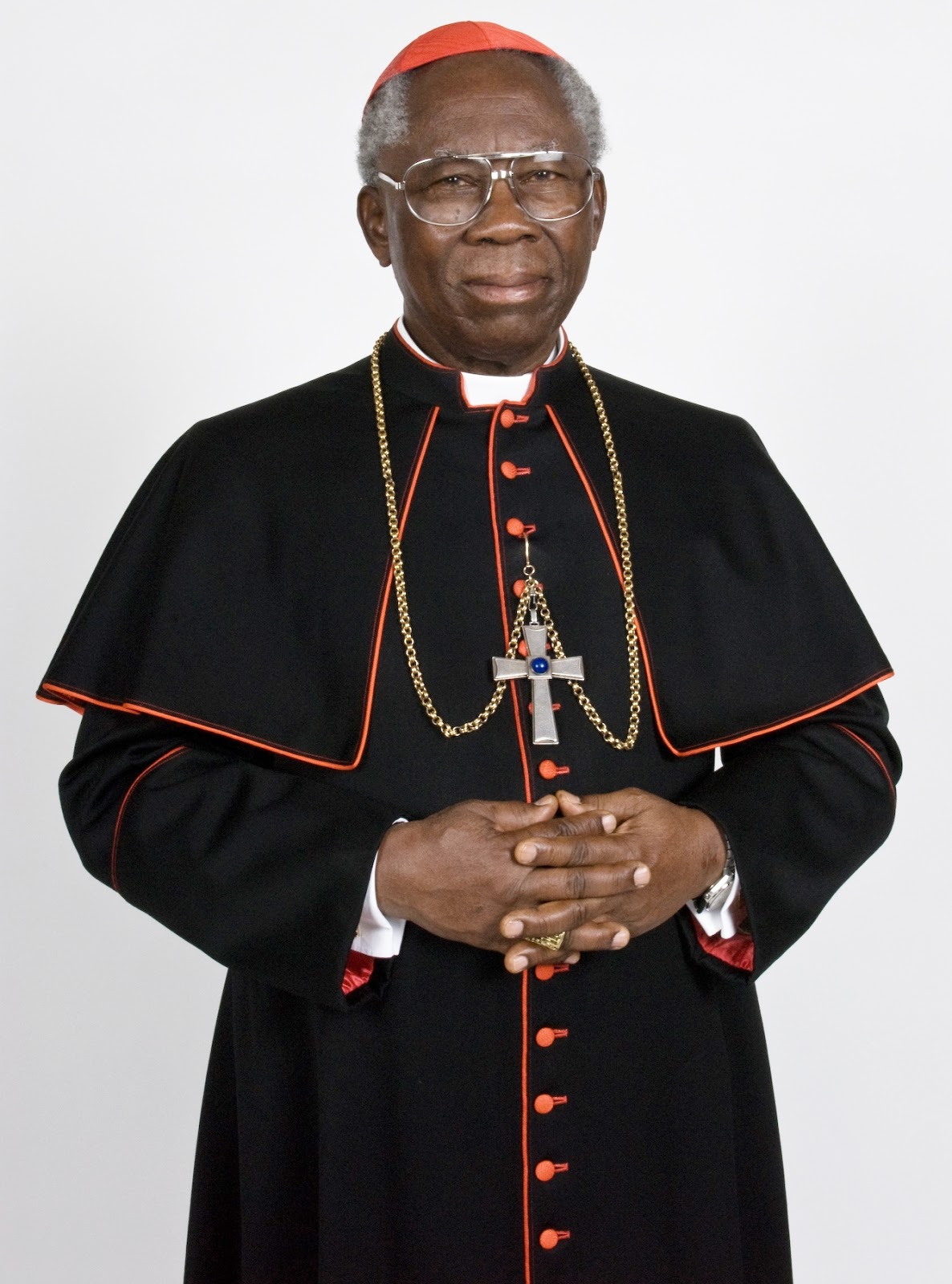
Early Life and Background
Francis Arinze was born on November 1, 1932, in Eziowelle, Nigeria, into a family of the Igbo ethnic group, which practiced traditional animist beliefs. His early life was marked by a significant spiritual transformation when he converted to Catholicism at the age of nine. This pivotal moment was influenced by Father Cyprian Michael Iwene Tansi, who later became the first Nigerian beatified by the Catholic Church in 1998.
Despite initial resistance from his family, Arinze’s deep commitment to his newfound faith led him to pursue religious education fervently. He attended the local seminary in Onitsha, where he earned a degree in philosophy in 1950. His academic journey continued at the Pontifical Urban University in Rome, where he studied theology and graduated summa cum laude with a doctorate in sacred theology.
Ordination and Early Ministry
Francis Arinze was ordained a priest on November 23, 1958, by Gregoire-Pierre Agagianian, who was then the pro-prefect of the Sacred Congregation for the Propagation of the Faith and later became a cardinal. Following his ordination, Arinze’s relationship with his family improved, leading to their eventual conversion to Catholicism.
Arinze remained in Rome after his ordination, where he completed another doctorate in 1960, focusing his thesis on the sacrificial practices of the Igbo religion. This academic work underscored his deep understanding and respect for his cultural heritage, even as he embraced and promoted Catholicism.
From 1961 to 1962, Arinze taught liturgy, logic, and philosophy at the Bigard Memorial Seminary in Nigeria. His commitment to education and his leadership skills were soon recognized, leading to his appointment as the regional secretary for Catholic education in Eastern Nigeria.
Ascension to Bishop and Archbishop
In 1965, at the remarkably young age of 32, Francis Arinze was appointed titular bishop of Fissiana and coadjutor archbishop of Onitsha. His consecration took place on August 29, 1965, marking a significant milestone in his ecclesiastical career. Just two years later, on June 26, 1967, he became the archbishop of Onitsha, making history as the first native African to lead the diocese. He succeeded the Irish missionary Charles Heerey, reflecting the growing indigenization of church leadership in Africa.
As archbishop, Arinze played a vital role in implementing the reforms of the Second Vatican Council, which sought to modernize the Church and engage more deeply with contemporary issues. His tenure coincided with a period of significant political and social upheaval in Nigeria, including the Biafran War, during which he provided spiritual leadership and support to his flock.
Leadership Roles and Vatican Service
In 1979, Francis Arinze was elected president of the Catholic Bishops’ Conference of Nigeria. His leadership extended beyond his home country when, in 1984, he was appointed president of the Pontifical Council for Interreligious Dialogue by Pope John Paul II. This role was crucial in promoting understanding and cooperation between the Catholic Church and other religious traditions worldwide.
On May 25, 1985, Pope John Paul II elevated Arinze to the College of Cardinals, assigning him the titular church of San Giovanni della Pigna. His cardinalate further solidified his influence within the global Church, allowing him to contribute significantly to its governance and direction.
Prefect of the Congregation for Divine Worship
In 2002, Cardinal Arinze was appointed prefect of the Congregation for Divine Worship and the Discipline of the Sacraments, succeeding Cardinal Jorge Medina Estévez. In this capacity, Arinze oversaw the Church’s liturgical practices and sacramental discipline, ensuring they were conducted in accordance with Catholic doctrine and tradition.
During his tenure, Arinze was known for his adherence to traditional liturgical practices and his emphasis on the importance of the Eucharist in Catholic worship. He also supported efforts to enhance the participation of laypeople in the liturgy, reflecting the spirit of the Second Vatican Council.
Later Years and Legacy
After reaching the mandatory retirement age, Cardinal Arinze stepped down as prefect of the Congregation for Divine Worship on December 9, 2008, succeeded by Cardinal Antonio Cañizares Llovera. Despite his retirement from active administrative roles, Arinze continued to be a respected figure within the Church.
On November 1, 2012, he turned 80, which rendered him ineligible to participate in future papal conclaves. However, his legacy as a potential candidate for the papacy and as a pivotal figure in the Catholic Church remains significant. His work in fostering interreligious dialogue and his contributions to the liturgical life of the Church have left an enduring impact.
Personal Reflections and Influence
Francis Arinze’s life is a testament to his deep faith, intellectual rigor, and unwavering commitment to the Catholic Church. His journey from a young convert in Nigeria to a cardinal in the Vatican reflects the universal nature of the Church and its ability to embrace diverse cultural backgrounds.
Throughout his career, Arinze has been a bridge-builder, fostering dialogue between different religious communities and promoting peace and understanding. His leadership during times of conflict in Nigeria and his work in the Vatican highlight his resilience and dedication to his mission.
Conclusion
Cardinal Francis Arinze’s life and career exemplify the profound impact that faith, education, and leadership can have on both individual lives and global communities. From his early days in Nigeria to his influential roles in the Vatican, Arinze has dedicated his life to the service of the Catholic Church and the promotion of interreligious harmony.
His contributions to the Church’s liturgical practices and his efforts to foster dialogue among different faiths have left a lasting legacy. As a respected figure in the Catholic Church, his story continues to inspire many, demonstrating the power of faith and dedication in overcoming challenges and achieving great heights.


