
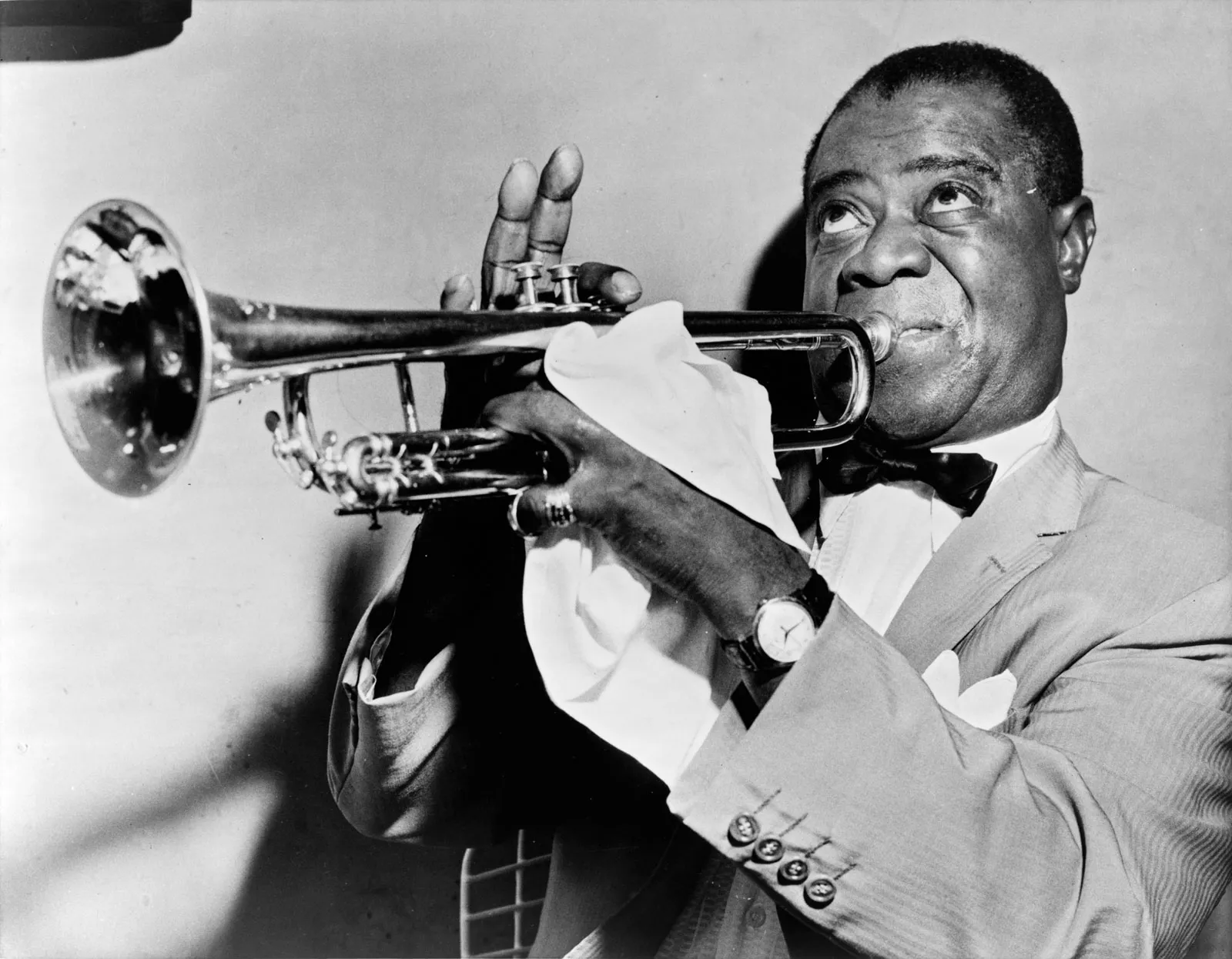
Early Life and Background
Louis Daniel Armstrong, one of the most influential figures in jazz music, was born on August 4, 1901, in New Orleans, Louisiana. Though Armstrong often claimed he was born on July 4, 1900, recent research funded by his hometown has confirmed his true birth date. This discrepancy may have been a result of Armstrong wanting to appear older during his early career in Chicago and New York.
Armstrong’s early life was marked by poverty and hardship. His parents separated shortly after his birth, and he was raised by his grandmother, Josephine, while his mother worked as a prostitute. Growing up in such a challenging environment, Armstrong found solace in music, which would eventually become his escape and pathway to greatness.
Musical Beginnings
Armstrong’s introduction to music began in the streets of New Orleans. He joined a local singing group that performed for tips. This early exposure helped him develop a strong sense of rhythm and improvisation, foundational elements of jazz.
Armstrong’s first encounter with playing an instrument came at the Colored Waif’s Home for Boys, where he was sent after being arrested for firing a pistol in the air on New Year’s Eve. At the home, he learned to play the cornet and joined the home’s band, quickly rising to become its leader. This experience provided him with structured musical training and instilled a deep love for performance.
Early Career and Mentorship
Upon leaving the Waif’s Home, Armstrong began performing in the clubs of New Orleans. He caught the attention of Joe “King” Oliver, one of the leading cornet players of the time, who became a mentor to the young Armstrong. Oliver took Armstrong under his wing, offering him a place in his band and teaching him the nuances of jazz performance.
In 1918, Armstrong replaced Oliver in Kid Ory’s band, the most popular band in New Orleans at the time. This position solidified his reputation as a talented cornet player and opened doors for future opportunities.
Rise to Fame
In 1922, Armstrong moved to Chicago to join Oliver’s Creole Jazz Band. His time with Oliver was a period of immense growth, allowing him to showcase his talent as a soloist. Armstrong’s innovative playing style, characterized by its bright tone, impressive range, and rhythmic complexity, began to draw attention.
Armstrong made his first recordings with Oliver’s band, but it was his subsequent work with Fletcher Henderson’s Orchestra in New York City that truly launched his career. Henderson’s band was one of the most prestigious of the era, and Armstrong’s contributions as a soloist helped revolutionize jazz. His recordings during this period, including “Sugar Foot Stomp” and “Copenhagen,” display his developing mastery and inventive style.
Solo Career and Innovations
By the mid-1920s, Armstrong had established himself as a leading figure in jazz. He began recording under his own name with groups known as the Hot Five and Hot Seven. These recordings, including classics like “West End Blues,” “Heebie Jeebies,” and “Struttin’ With Some Barbecue,” are considered some of the most important in jazz history.
Armstrong’s innovative use of improvisation transformed jazz from ensemble-based music to a soloist’s art form. His ability to create new, spontaneous melodies during performances showcased his unparalleled creativity and technical prowess. Additionally, Armstrong’s vocal style, featuring scat singing and a unique gravelly tone, added another dimension to his performances.
Hollywood and International Fame
Armstrong’s fame extended beyond the jazz world. He appeared in numerous films, including “Pennies from Heaven” (1936) and “High Society” (1956), where he performed alongside stars like Bing Crosby, Grace Kelly, and Frank Sinatra. His charisma and engaging stage presence made him a favorite among audiences, further cementing his status as an international icon.
In 1932, Armstrong embarked on his first European tour, where he was met with enthusiastic acclaim. His performances introduced European audiences to the vibrancy of jazz and solidified his global influence. Armstrong’s extensive touring schedule took him around the world, spreading the gospel of jazz and bridging cultural divides.
Personal Life and Challenges
Armstrong’s personal life was as eventful as his career. He was married four times and had numerous relationships. His first two marriages, to Daisy Parker and then to Lil Hardin, were both short-lived but significant. Lil Hardin, a pianist and bandleader in her own right, played a crucial role in shaping Armstrong’s early career and encouraging his move to New York.
Despite his professional success, Armstrong faced numerous challenges, including racial discrimination. As a black musician in the early to mid-20th century, he often had to navigate a society deeply divided by race. Nevertheless, his talent and determination helped him break down many racial barriers, making him one of the first African American entertainers to achieve widespread popularity.
Later Career and Legacy
In the 1940s, Armstrong formed a small group called the All Stars, which included some of the best musicians of the era. This group became a staple of Armstrong’s performances for the rest of his career, showcasing his versatility and enduring appeal.
Armstrong’s later years were marked by continued success. His recording of “Hello, Dolly!” in 1964 made him the oldest artist to have a number one hit on the Billboard Hot 100, a record he holds to this day. Other notable recordings from this period include “What a Wonderful World,” which remains one of his most beloved songs.
Despite health issues in his later years, Armstrong continued to perform and record until his death. He passed away on July 6, 1971, in his home in Queens, New York, leaving behind a legacy that has profoundly shaped the world of music.
Influence and Recognition
Louis Armstrong’s contributions to music extend far beyond his technical prowess and innovative style. He helped to popularize jazz and bring it into the mainstream, influencing countless musicians across various genres. His charisma, showmanship, and unique voice made him a beloved figure worldwide.
Armstrong received numerous awards and honors throughout his life, including the Grammy Lifetime Achievement Award and a star on the Hollywood Walk of Fame. His impact on music and culture was recognized globally, with tributes pouring in from fans and fellow musicians alike.
Conclusion
Louis Armstrong’s life and career are a testament to the transformative power of music. From his humble beginnings in New Orleans to becoming an international icon, Armstrong’s journey was marked by innovation, resilience, and a deep love for his craft. His influence on jazz and popular music is immeasurable, and his legacy continues to inspire musicians and music lovers around the world.
Armstrong’s ability to blend technical skill with emotional depth, his pioneering spirit, and his infectious joy for music have left an indelible mark on the world. As we continue to celebrate his contributions, Louis Armstrong remains a symbol of the enduring power of jazz and the limitless possibilities of artistic expression.


