
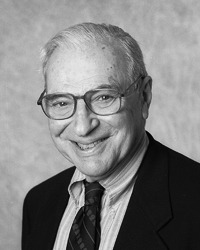
Kenneth Arrow stands as one of the most influential economists of the 20th century. His groundbreaking work has significantly shaped modern economic theory and practice. This article provides an in-depth exploration of Arrow’s life, achievements, and the historical context of his contributions.
Early Life and Education
Kenneth Joseph Arrow was born on August 23, 1921, in New York City. His early education was marked by excellence, and he attended the prestigious Townsend Harris High School, known for its rigorous academic environment. Arrow’s passion for mathematics and economics emerged early, leading him to pursue further studies at the City College of New York, where he graduated in 1940.
Arrow’s academic journey continued at Columbia University, where he earned a master’s degree in 1941. His studies were interrupted by World War II, during which he served as a weather officer in the U.S. Army Air Corps. This experience, although unrelated to economics, honed his analytical skills and contributed to his methodical approach to problem-solving.
Academic Career and Early Contributions
After the war, Arrow returned to Columbia University to complete his Ph.D. in economics, which he received in 1951. During this period, he also worked as a research associate at the Cowles Commission for Research in Economics at the University of Chicago. The Cowles Commission was a hub for pioneering economic thought, and Arrow’s time there profoundly influenced his future work.
Arrow’s early contributions to economic theory were groundbreaking. His dissertation, which later evolved into his seminal book “Social Choice and Individual Values,” introduced what would become known as Arrow’s Impossibility Theorem. This theorem demonstrated the inherent difficulties in devising a voting system that fairly translates individual preferences into collective decisions without encountering paradoxes or inconsistencies. The implications of this work were profound, challenging the foundations of social choice theory and political science.
The Impossibility Theorem and General Equilibrium Theory
Arrow’s Impossibility Theorem is perhaps his most famous contribution. It posits that no voting system can simultaneously fulfill all of the following criteria: unrestricted domain, non-dictatorship, Pareto efficiency, and independence of irrelevant alternatives. This theorem highlighted the complexities and potential inconsistencies in collective decision-making processes, influencing fields as diverse as economics, political science, and philosophy.
In addition to his work on social choice, Arrow made significant contributions to general equilibrium theory. Alongside Gérard Debreu, Arrow developed the Arrow-Debreu Model, which mathematically proved the existence of an equilibrium in a competitive economy. This model provided a rigorous foundation for understanding how markets operate under ideal conditions and has become a cornerstone of modern economic theory.
Nobel Prize and Later Work
In 1972, at the age of 51, Kenneth Arrow was awarded the Nobel Prize in Economics, sharing the honor with Sir John Hicks. The prize recognized their pioneering contributions to general equilibrium theory and welfare economics. At the time, Arrow was the youngest recipient of the Nobel Prize in Economics, underscoring the profound impact of his work.
Arrow’s contributions extended beyond theoretical economics. He explored various applied fields, including health economics, information asymmetry, and endogenous growth theory. His work on information asymmetry, in particular, addressed situations where one party in a transaction has more information than the other, leading to market inefficiencies. Arrow’s insights into this area laid the groundwork for future research on how to mitigate such inefficiencies, influencing policies and practices in diverse sectors.
Health Economics and Information Asymmetry
Arrow’s foray into health economics resulted in a seminal 1963 paper, “Uncertainty and the Welfare Economics of Medical Care.” This work explored the unique characteristics of the healthcare market, such as the unpredictability of health needs, the complexity of medical services, and the significant information asymmetries between patients and providers. Arrow’s analysis highlighted the challenges these factors pose to achieving efficient market outcomes in healthcare and underscored the need for regulatory interventions.
The concept of information asymmetry, which Arrow significantly advanced, addresses situations where one party in a transaction possesses more or better information than the other. This asymmetry can lead to market failures, as seen in used car markets (the “lemons” problem) and health insurance markets. Arrow’s work in this area not only provided a deeper understanding of market dynamics but also informed the development of mechanisms to address these inefficiencies, such as warranties, certifications, and regulations.
Endogenous Growth Theory
Another major area of Arrow’s research was endogenous growth theory, which examines how economic growth is generated from within an economy rather than from external forces. Arrow’s “learning by doing” model, introduced in 1962, posited that productivity improvements arise from cumulative experience and innovation within firms. This idea challenged traditional views of economic growth and highlighted the importance of human capital, innovation, and knowledge spillovers in driving long-term economic development.
Teaching and Mentorship
Throughout his career, Kenneth Arrow was also a dedicated teacher and mentor. He held professorships at several prestigious institutions, including Stanford University and Harvard University. His teaching influenced generations of economists, many of whom have gone on to make significant contributions to the field themselves. Arrow’s commitment to education and mentorship ensured that his legacy would continue through the work of his students and colleagues.
Awards and Honors
In addition to the Nobel Prize, Arrow received numerous accolades throughout his career. In 2004, he was awarded the National Medal of Science, the highest scientific honor in the United States, by President George W. Bush. This award recognized his contributions to economics and his profound impact on public policy and welfare.
Arrow was also a founding member of the Pontifical Academy of Social Sciences, reflecting his engagement with broader societal issues and his contributions to interdisciplinary research. His work has been widely cited and continues to influence contemporary economic thought and policy.
Legacy and Impact
Kenneth Arrow’s contributions to economics have left an indelible mark on the field. His work on social choice theory, general equilibrium, information asymmetry, and endogenous growth has fundamentally shaped modern economic theory and practice. Arrow’s insights have not only advanced academic understanding but also informed public policy, business practices, and regulatory frameworks.
Arrow’s Impossibility Theorem remains a foundational concept in social choice theory, challenging scholars to think critically about the limitations and possibilities of collective decision-making. His work on general equilibrium theory provided a rigorous mathematical framework for analyzing market dynamics, influencing everything from economic policy to financial modeling.
Arrow’s research on information asymmetry has had profound implications for understanding market behavior and designing mechanisms to mitigate inefficiencies. His contributions to health economics have informed debates on healthcare policy, emphasizing the need for regulatory interventions to address market failures in the provision of medical care.
Conclusion
Kenneth Arrow’s life and work epitomize the power of rigorous intellectual inquiry and the pursuit of knowledge. His contributions to economics have transformed the field, providing new tools and frameworks for understanding complex economic phenomena. Arrow’s legacy continues to inspire economists, policymakers, and scholars, underscoring the enduring relevance of his insights.
From his early education in New York to his groundbreaking work that earned him the Nobel Prize, Kenneth Arrow’s journey is a testament to the impact that one individual can have on the world. His work remains a cornerstone of economic theory, shaping the way we understand and approach economic challenges today.


