
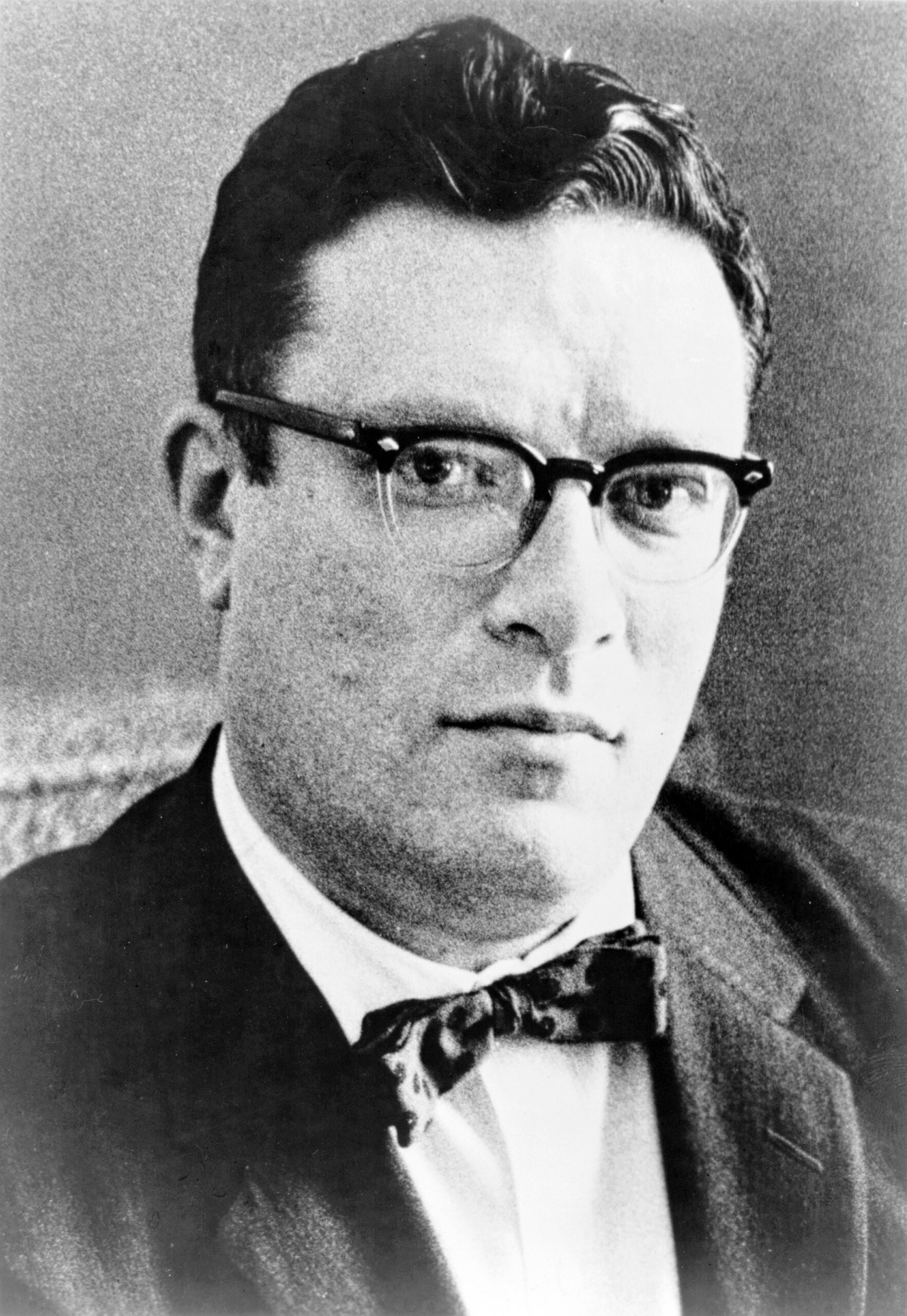
Isaac Asimov, born on January 2, 1920, in Petrovichi, Russia, near Smolensk, was a prolific author and biochemist, best known for his works of science fiction and popular science books. This article explores Asimov’s life, his journey to fame, and the highlights of his illustrious career. Through detailed insights and historical context, we aim to understand the legacy of one of the most influential writers of the 20th century.
Early Life and Education
Isaac Asimov’s early life was marked by a significant move from Russia to the United States in 1923. His family settled in New York City, where his father purchased a candy store in Brooklyn in 1926. These stores, which also sold newspapers and magazines, became a crucial part of Asimov’s formative years. The young Asimov spent much of his childhood surrounded by the written word, fostering a lifelong love for reading and learning.
Asimov’s intellectual prowess became evident at an early age. He taught himself to read by the age of five and became a voracious reader. His frequent visits to public libraries provided him with a wealth of knowledge that he would draw upon throughout his life. Asimov’s passion for science fiction was ignited in 1929 when he discovered “Science Fiction” magazines in his father’s store. These magazines captivated his imagination and set him on a path that would define his career.
Academic Achievements
Asimov’s academic journey was as remarkable as his literary career. He graduated from high school at the age of 15 and went on to attend Columbia University. He earned a Bachelor of Science degree in Chemistry in 1939, followed by a Master of Arts degree in 1941. Asimov’s academic pursuits were briefly interrupted by World War II, during which he worked as a chemist at the U.S. Navy Yard in Philadelphia.
After the war, Asimov returned to Columbia University and completed his Ph.D. in Biochemistry in 1948. He then joined the faculty of Boston University School of Medicine, where he taught biochemistry from 1949 to 1958. Despite his academic success, Asimov’s true passion lay in writing, and he eventually transitioned to a full-time writing career.
Literary Career and Major Works
Isaac Asimov’s literary career began in earnest in the late 1930s when he started publishing short stories in science fiction magazines. His first published work, “Marooned off Vesta,” appeared in the March 1939 issue of Amazing Stories. This initial success was followed by a steady stream of stories that showcased his ability to blend scientific accuracy with imaginative storytelling.
The Foundation Series
One of Asimov’s most significant contributions to science fiction is the “Foundation” series. The original trilogy—comprising “Foundation” (1951), “Foundation and Empire” (1952), and “Second Foundation” (1953)—chronicles the rise and fall of a galactic empire. Drawing inspiration from Edward Gibbon’s “The History of the Decline and Fall of the Roman Empire,” Asimov crafted a complex narrative that explores themes of politics, sociology, and the cyclical nature of history. The series was later expanded with prequels and sequels, further cementing Asimov’s reputation as a master storyteller.
The Robot Series
Asimov’s “Robot” series is another cornerstone of his literary legacy. The series introduced the world to the “Three Laws of Robotics,” a set of ethical guidelines designed to govern the behavior of robots. These laws have become a fundamental part of the science fiction genre and have influenced countless works of literature, film, and television. Key works in this series include “I, Robot” (1950) and “The Caves of Steel” (1954).
Popular Science and Non-Fiction
In addition to his science fiction, Asimov was a prolific writer of popular science books. He possessed a unique ability to explain complex scientific concepts in a manner that was accessible and engaging to the general public. His non-fiction works covered a wide range of topics, including chemistry, physics, astronomy, and biology. Notable titles include “The Intelligent Man’s Guide to Science” (1960) and “Asimov’s New Guide to Science” (1984).
Personal Life and Challenges
Asimov’s personal life was as dynamic as his professional career. He married Gertrude Blugerman in 1942, and the couple had two children, David and Robyn. However, the marriage ended in divorce in 1973. Later that year, Asimov married Janet Jeppson, a psychiatrist and writer, with whom he shared a deep intellectual bond.
Throughout his life, Asimov faced several health challenges. Despite his robust work ethic and prolific output, he struggled with heart problems. In 1983, he contracted HIV through a blood transfusion during heart surgery. This fact remained a closely guarded secret until after his death, when his second wife revealed it in 2002.
Legacy and Influence
Isaac Asimov’s influence on the fields of science fiction and popular science is immeasurable. His works have inspired generations of readers, writers, and scientists. Asimov’s vision of the future, his exploration of ethical dilemmas, and his commitment to scientific accuracy have left an indelible mark on literature and culture.
Awards and Honors
Asimov’s contributions to literature and science earned him numerous accolades. He received the Hugo Award, the Nebula Award, and the Locus Award multiple times for his works. In 1987, he was honored with the Science Fiction Writers of America’s Grand Master Award, recognizing his lifetime achievement in the genre.
Thematic and Ethical Contributions
One of the hallmarks of Asimov’s writing is his exploration of ethical and philosophical questions. His “Three Laws of Robotics” have become a cornerstone of discussions about artificial intelligence and ethics. These laws—1) A robot may not harm a human being or, through inaction, allow a human being to come to harm, 2) A robot must obey the orders given it by human beings except where such orders would conflict with the First Law, and 3) A robot must protect its own existence as long as such protection does not conflict with the First or Second Law—have influenced real-world discussions about the development and deployment of AI technologies.
Cultural Impact
Asimov’s works have permeated popular culture, influencing films, television shows, and other media. His “Foundation” series was adapted into a television series by Apple TV+, bringing his visionary ideas to a new generation of viewers. The themes and concepts explored in Asimov’s writing continue to resonate, reflecting the ongoing relevance of his work.
Conclusion
Isaac Asimov’s life and work exemplify the power of imagination and intellect. From his early days as a prodigious reader to his rise as one of the most celebrated science fiction writers of all time, Asimov’s journey is a testament to his genius and determination. His contributions to literature, science, and culture have left an enduring legacy that continues to inspire and challenge us.
As we look to the future, Asimov’s vision of a world shaped by science and reason remains as pertinent as ever. His exploration of ethical dilemmas, his commitment to scientific accuracy, and his ability to weave compelling narratives have secured his place as a titan of literature. Isaac Asimov’s legacy is a beacon for all who seek to understand and shape the world through the power of ideas.


