
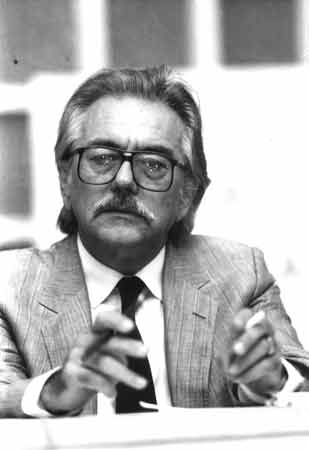
Alberto Asor Rosa, born on September 23, 1933, in Rome, Italy, was a prominent intellectual, literary critic, and professor. Throughout his life, Asor Rosa made significant contributions to Italian literature and political thought, establishing himself as a key figure in contemporary cultural discourse. This article delves into Asor Rosa’s life, achievements, and the historical context that shaped his work.
Early Life and Education
Alberto Asor Rosa was born in Rome into a family that valued education and intellectual pursuits. He grew up during a period of significant political and social upheaval in Italy, which influenced his later work and perspectives. His early education laid the foundation for his future intellectual endeavors, leading him to pursue a career in academia and literary criticism.
The Beginning of a Literary Career
Asor Rosa’s literary career began to take shape in the mid-20th century. His first significant work was a profile of the Italian writer Vasco Pratolini, published when Asor Rosa was just 25 years old. This early success marked the beginning of a prolific career in literary criticism and cultural analysis.
In 1956, following the Hungarian Revolution, Asor Rosa became one of the signatories of the “Manifesto dei 101,” a document that condemned the Soviet intervention in Hungary. This act of defiance showcased his willingness to challenge prevailing political narratives and established him as an intellectual with a strong sense of moral conviction.
Marxist Influences and Key Works
Asor Rosa was heavily influenced by Marxist thought, which is evident in his critical works. In 1965, he published “Scrittori e popolo” (“Writers and People”), a seminal essay that critiqued the populist trends in contemporary Italian literature. He argued against the romanticized portrayal of the working class and called for a more nuanced and realistic representation. This work positioned him as a leading voice in literary criticism and sparked significant debate within Italian intellectual circles.
Between 1968 and 1971, Asor Rosa co-edited the journal “Contropiano” with Mario Tronti, aligning himself with the operaist movement, which focused on the role of the working class in capitalist societies. This period was marked by intense political activity and intellectual exploration, further cementing his reputation as a critical thinker.
Academic Contributions and Literary Criticism
In 1971, Asor Rosa became a professor of Italian Literature at the University of Rome La Sapienza. His academic career was distinguished by his rigorous scholarship and his ability to bridge literary analysis with broader cultural and political themes. During his tenure, he published several influential works, including “Thomas Mann o dell’ambiguità borghese” (“Thomas Mann or the Ambiguity of the Bourgeoisie”) in 1971.
Asor Rosa’s scholarly output included an extensive range of topics, from the cultural impact of the Counter-Reformation to the literary dynamics of the Baroque period. Notable works from this period include “Galileo e la nuova scienza” (“Galileo and the New Science”), “La cultura della controriforma” (“The Culture of the Counter-Reformation”), and “La lirica del Seicento” (“The Poetry of the Seventeenth Century”).
Political Engagement and Public Life
Asor Rosa was not only a scholar but also an active participant in political life. He briefly served as a deputy in the Italian Parliament as a member of the Italian Communist Party (PCI) in the late 1970s and early 1980s. Although his tenure in parliament was short, it reflected his commitment to integrating his intellectual pursuits with practical political engagement.
Throughout the 1980s and 1990s, Asor Rosa continued to influence public discourse through his writings and editorial work. He became the director of “Rinascita,” the PCI’s weekly magazine, in 1990, where he played a pivotal role in shaping the publication’s direction during a critical period of political transformation in Italy.
Later Works and Legacy
In the latter part of his career, Asor Rosa continued to produce thought-provoking works that addressed contemporary cultural and political issues. His later publications include “La sinistra alla prova” (“The Left Put to the Test”), “Un altro Novecento” (“Another Twentieth Century”), and “Letteratura italiana del Novecento. Bilancio di un secolo” (“Twentieth Century Italian Literature: An Assessment of a Century”).
In 2002, Asor Rosa published “L’alba di un mondo nuovo” (“The Dawn of a New World”), a novel set during World War II, reflecting on themes of conflict and transformation. His ability to traverse both scholarly analysis and creative writing underscored his versatility and depth as a writer.
Asor Rosa also played a significant role in academic publishing, editing comprehensive works such as the “Storia europea della letteratura italiana” (“European History of Italian Literature”), which was published in 2009. This monumental project highlighted his commitment to documenting and analyzing the rich tapestry of Italian literary history.
Controversial Stances and Critical Essays
In 2011, Asor Rosa generated controversy with an article in “Il Manifesto” where he suggested the need for a “strong force from above” to address Italy’s political crisis. He called for a state of emergency that would suspend parliamentary immunity and reform electoral laws. This provocative stance sparked intense debate and highlighted his willingness to challenge conventional political wisdom.
His collection of critical essays, “Le armi della critica. Scritti e saggi degli anni ruggenti (1960-1970)” (“The Weapons of Criticism: Writings and Essays from the Roaring Years”), published in 2011, offers a comprehensive overview of his literary and political thought during a tumultuous decade. In 2013, he published “Racconti dell’errore” (“Tales of Error”), a collection of stories exploring themes of death, time, and memory.
Death and Legacy
Alberto Asor Rosa passed away on December 21, 2022, at the age of 89. His death marked the end of a prolific and influential career that spanned over six decades. Asor Rosa’s contributions to literary criticism, political thought, and cultural analysis have left an indelible mark on Italian intellectual history.
Historical Context and Influence
To fully appreciate Asor Rosa’s work, it is essential to understand the historical context in which he operated. Italy’s post-war period was marked by significant political and social upheaval, with the rise and fall of various political movements and ideologies. Asor Rosa’s Marxist background and engagement with the Italian Communist Party placed him at the center of many critical debates about the future direction of Italian society.
His critique of populism and his call for a more realistic portrayal of the working class reflected broader concerns about the role of literature in shaping public consciousness. Asor Rosa’s work bridged the gap between literary analysis and political engagement, demonstrating how cultural production can influence and be influenced by social and political dynamics.
Conclusion
Alberto Asor Rosa’s life and work exemplify the intersection of intellectual rigor and political commitment. From his early critiques of populism in Italian literature to his later reflections on contemporary cultural and political issues, Asor Rosa remained a steadfast advocate for critical thinking and social justice.
His contributions to literary criticism, particularly his analysis of Italian literature, have had a lasting impact on the field. Moreover, his political engagement and public writings have influenced generations of scholars, activists, and policymakers. Asor Rosa’s legacy is one of intellectual courage and unwavering dedication to the pursuit of truth and justice.
As we reflect on his life, it is clear that Alberto Asor Rosa’s work will continue to inspire and challenge future generations. His writings offer valuable insights into the complexities of cultural and political life, reminding us of the importance of critical inquiry and the power of ideas to shape our world.


