
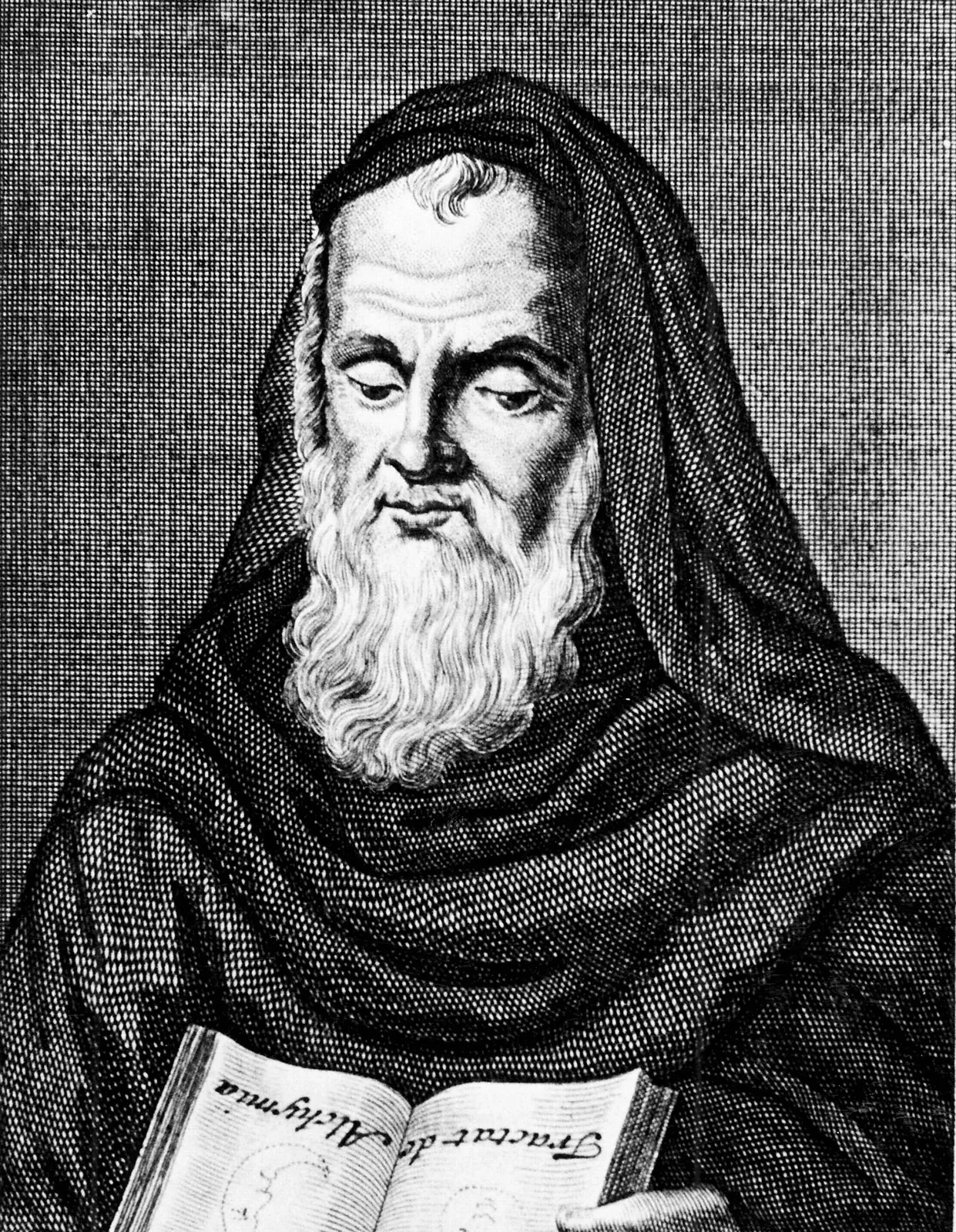
Roger Bacon, an English philosopher and Franciscan friar, is a pivotal figure in the history of science and philosophy. Known for his works on the scientific method and his advocacy for empirical research, Bacon’s contributions have had a lasting impact on the development of modern science. This article delves into Roger Bacon’s age, fame, and life highlights, providing detailed insights and explanations about his remarkable journey and enduring influence.
Early Life and Education
Roger Bacon was born around 1219/1220 in Ilchester, Somerset, England. His early life coincided with a period of intellectual awakening in Europe, marked by the founding of universities and the revival of classical learning. Bacon’s family was relatively affluent, which allowed him to pursue an extensive education.
Bacon began his studies at Oxford University, where he was deeply influenced by the scholarly environment. He later moved to the University of Paris, the leading center of academic learning in medieval Europe. At Paris, he studied under prominent scholars such as Robert Grosseteste and was exposed to the works of Aristotle and other classical philosophers. Bacon’s education at these institutions laid the foundation for his lifelong commitment to learning and empirical investigation.
Academic Career and Scholarly Contributions
After completing his studies, Roger Bacon returned to Oxford, where he became a master and lecturer. His early academic career was marked by a deep engagement with the works of Aristotle and the incorporation of Aristotelian logic and natural philosophy into his teachings. Bacon’s ability to synthesize classical knowledge with contemporary thought made him a respected figure among his peers.
Bacon’s most significant contributions to science and philosophy came through his emphasis on empirical research and the scientific method. He argued that knowledge should be based on observation and experimentation rather than purely on authoritative texts. This approach was revolutionary at a time when scholasticism, which relied heavily on the authority of ancient texts, dominated European intellectual life.
Major Works and Innovations
Roger Bacon’s intellectual legacy is encapsulated in several major works, most notably the “Opus Majus,” “Opus Minus,” and “Opus Tertium.” These texts, written at the behest of Pope Clement IV, aimed to provide a comprehensive account of the sciences and advocate for educational reform.
Opus Majus
The “Opus Majus” is Bacon’s most famous work, a massive encyclopedic treatise that covers a wide range of topics including grammar, logic, mathematics, physics, and philosophy. In this work, Bacon emphasizes the importance of mathematics as the foundation of scientific knowledge and advocates for the empirical study of nature. He also discusses the use of optics and the scientific principles underlying the rainbow and magnifying glasses, demonstrating his advanced understanding of light and vision.
Opus Minus and Opus Tertium
The “Opus Minus” and “Opus Tertium” are supplementary works that expand on the themes introduced in the “Opus Majus.” These texts provide further elaboration on Bacon’s scientific theories and practical applications, such as the construction of lenses and the use of experimental methods in alchemy. Together, these works form a comprehensive vision of scientific inquiry that prefigures the modern scientific method.
Contributions to Experimental Science
Roger Bacon’s advocacy for empirical research and experimentation was groundbreaking. He conducted experiments in optics, alchemy, and astronomy, and his work laid the groundwork for future scientific advancements. Bacon’s experiments with lenses and mirrors, for example, contributed to the development of telescopes and microscopes, which would become essential tools in the scientific revolution.
Bacon also recognized the importance of accurate measurement and the use of instruments in scientific investigation. His emphasis on the precision of observation and the systematic recording of data reflects a modern scientific mindset that was ahead of his time. Bacon’s approach to science was holistic, integrating theoretical knowledge with practical experimentation.
Challenges and Controversies
Despite his significant contributions, Roger Bacon’s career was not without challenges. His unconventional ideas often brought him into conflict with the established academic and ecclesiastical authorities. Bacon’s critiques of the scholastic method and his advocacy for empirical research were seen as radical, leading to suspicions and accusations of heresy.
Bacon’s association with the Franciscan Order also presented challenges. The order’s emphasis on poverty and humility contrasted with Bacon’s pursuit of knowledge and his interest in experimental science. His outspoken nature and his call for educational reform sometimes put him at odds with his superiors, leading to periods of imprisonment and isolation.
Later Life and Legacy
In his later years, Roger Bacon continued to write and conduct research, despite facing increasing opposition from the church and academic institutions. He spent much of his final years in isolation, but his work continued to influence scholars and scientists.
Bacon died around 1292, leaving behind a legacy that would be rediscovered and appreciated in later centuries. His emphasis on empirical research and the scientific method laid the groundwork for the scientific revolution of the 17th century. Figures such as Galileo Galilei, Johannes Kepler, and Isaac Newton built upon Bacon’s ideas, transforming the landscape of science and philosophy.
Historical Context and Nuances
Understanding Roger Bacon’s contributions requires a consideration of the broader historical and cultural context of the 13th century. This period, known as the High Middle Ages, was marked by significant intellectual and cultural developments. The founding of universities, the translation of classical texts into Latin, and the rise of scholasticism created a fertile ground for intellectual inquiry.
Bacon’s work must be seen within this context of a rapidly evolving intellectual landscape. His call for educational reform and his emphasis on empirical research were responses to the limitations of scholasticism and the need for a more dynamic approach to knowledge. Bacon’s integration of Aristotelian logic with experimental science represented a significant shift in the methodology of learning and inquiry.
Modern Relevance and Continuing Influence
Roger Bacon’s work remains highly relevant in today’s scientific and philosophical discourse. His advocacy for the scientific method and empirical research continues to be a cornerstone of modern science. Bacon’s emphasis on observation, experimentation, and the use of instruments has influenced a wide range of scientific disciplines, from physics to biology to chemistry.
In contemporary discussions on the philosophy of science, Bacon’s ideas about the role of empirical evidence and the importance of challenging established authorities resonate strongly. His belief in the potential of science to improve human life and understanding is a principle that continues to guide scientific inquiry and innovation.
Conclusion
Roger Bacon’s life and work are a testament to his extraordinary intellect, curiosity, and commitment to the pursuit of knowledge. From his early days as a student at Oxford and Paris to his later years as a pioneering philosopher and scientist, Bacon’s journey is marked by significant achievements and an enduring impact on the development of modern science.
As we reflect on Roger Bacon’s contributions, it is clear that his work extends far beyond the medieval period in which he lived. His ideas about empirical research, the scientific method, and the integration of theoretical knowledge with practical experimentation have left a lasting legacy that continues to inspire and guide scientists and scholars today.
Roger Bacon’s influence on the scientific revolution and his role as a precursor to modern scientific thought are profound and enduring. His writings continue to be studied and appreciated for their visionary insights and their relevance to contemporary scientific practice. As we celebrate his life and achievements, we are reminded of the enduring importance of curiosity, innovation, and the relentless pursuit of truth in the advancement of human knowledge.


