
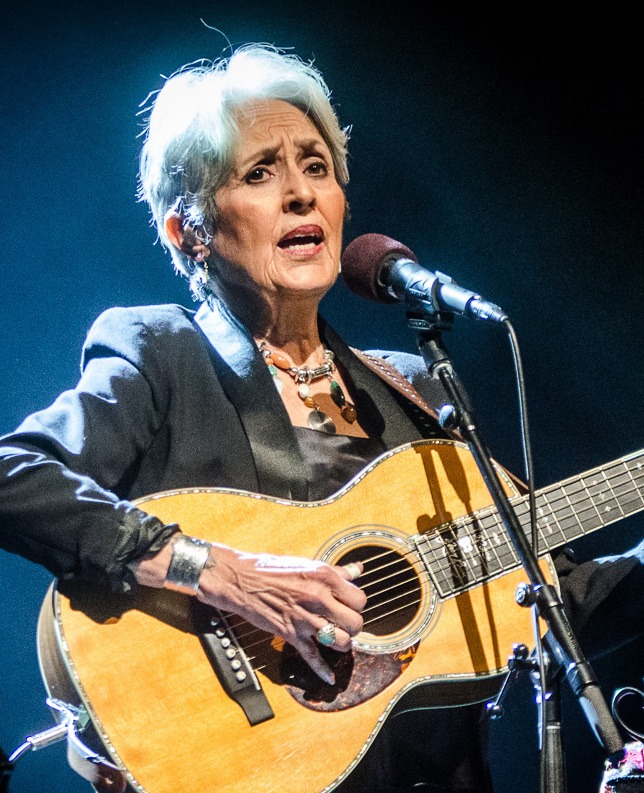
Joan Baez, an iconic American folk singer, songwriter, and activist, has left an indelible mark on music and social justice movements for over six decades. Born on January 9, 1941, in Staten Island, New York, Baez’s ethereal voice and unyielding commitment to civil rights, peace, and human rights have made her a revered figure worldwide. This article delves into the life, career, and impact of Joan Baez, exploring her rise to fame, her influential work, and her enduring legacy.
Early Life and Background
Birth and Family
Joan Chandos Baez was born to Albert Baez, a Mexican-American physicist, and Joan Bridge Baez, a Scottish-American teacher. Her diverse cultural heritage and her parents’ intellectual and progressive inclinations deeply influenced her worldview and artistic pursuits. The Baez family moved frequently due to her father’s academic career, exposing Joan to a variety of social and cultural experiences from an early age.
Early Musical Influences
Baez’s interest in music began in her childhood. She was particularly influenced by the folk music revival of the 1950s, and the work of artists like Pete Seeger and Harry Belafonte. Her family’s Quaker beliefs also instilled in her a strong sense of social justice and nonviolence, which would later become central themes in her music and activism.
Rise to Fame
The Boston Coffeehouse Scene
In the late 1950s, Baez moved to Boston, where she became a regular performer in the burgeoning coffeehouse scene. Her hauntingly beautiful voice and soulful renditions of traditional folk songs quickly garnered attention. Her performances at the Club 47 in Cambridge, Massachusetts, solidified her reputation as a rising star in the folk music community.
Breakthrough at the Newport Folk Festival
Baez’s breakthrough came with her appearance at the Newport Folk Festival in 1959. Her performance captivated audiences and critics alike, leading to a recording contract with Vanguard Records. Her debut album, “Joan Baez” (1960), featured traditional folk songs and showcased her pure, soprano voice. The album was a commercial success and established her as a leading voice in the folk music revival.
Career Highlights
Iconic Albums and Songs
Baez’s discography is extensive, with numerous albums that have achieved critical and commercial success. Some of her most iconic works include:
- “Joan Baez” (1960): Her debut album introduced her voice to the world and included traditional folk songs that became her signature.
- “Joan Baez, Vol. 2” (1961): This album solidified her reputation, featuring songs like “Plaisir d’amour” and “Lily of the West.”
- “Farewell, Angelina” (1965): Marking a transition in her music, this album included songs by Bob Dylan and showcased her evolving artistic style.
- “Diamonds & Rust” (1975): This critically acclaimed album featured the hit title track, which reflects on her relationship with Bob Dylan.
Collaborations with Bob Dylan
Baez is perhaps best known for her collaborations with Bob Dylan. The two artists met in the early 1960s and became close collaborators and partners, both romantically and musically. Baez’s interpretations of Dylan’s songs brought his work to a broader audience, and their joint performances were highlights of the folk music scene. Their relationship, both personal and professional, has been the subject of much fascination and has left a lasting impact on both their careers.
Activism and Music
Throughout her career, Baez’s music has been intertwined with her activism. Her performances at civil rights marches, anti-war rallies, and other political events are legendary. Songs like “We Shall Overcome” became anthems of the Civil Rights Movement, and Baez’s unwavering commitment to social justice has made her a symbol of activism through art.
Major Contributions to Social Movements
Civil Rights Movement
Baez’s involvement in the Civil Rights Movement is one of the most significant aspects of her legacy. She performed at the 1963 March on Washington, where Martin Luther King Jr. delivered his iconic “I Have a Dream” speech. Baez’s rendition of “We Shall Overcome” became an anthem for the movement, and her participation in numerous marches and protests highlighted her commitment to racial equality.
Anti-War Activism
Baez was a vocal opponent of the Vietnam War and used her platform to advocate for peace. She participated in numerous anti-war protests, including the 1969 Moratorium to End the War in Vietnam. Her song “Saigon Bride” poignantly captures the human cost of the war. Baez’s activism also extended to supporting conscientious objectors and draft resistors, further demonstrating her commitment to nonviolence.
Human Rights Advocacy
Beyond civil rights and anti-war efforts, Baez has been a staunch advocate for human rights globally. She has supported causes such as the rights of indigenous peoples, LGBTQ+ rights, and environmental justice. Her founding of Humanitas International Human Rights Committee in 1979 exemplifies her dedication to global human rights advocacy.
Personal Life
Relationships and Family
Baez’s personal life has been the subject of much public interest, particularly her relationships with other prominent figures in the music and political spheres. Her relationship with Bob Dylan is well-documented, and her marriage to activist David Harris, with whom she has a son, Gabriel, further highlights her intertwined personal and activist life.
Spirituality and Beliefs
Baez’s spirituality, influenced by her Quaker upbringing, has played a significant role in her life and work. Her belief in nonviolence and social justice is deeply rooted in her spiritual convictions, and this has consistently informed her activism and musical choices.
Later Career and Legacy
Continued Musical Contributions
Even as musical trends have evolved, Baez has continued to produce and perform music that resonates with audiences. Her later albums, such as “Day After Tomorrow” (2008), have received critical acclaim and demonstrate her enduring relevance in the music world. Her farewell tour, which began in 2018, was a testament to her lasting impact and widespread acclaim.
Honors and Awards
Baez’s contributions to music and social justice have been recognized with numerous honors and awards. These include:
- Grammy Lifetime Achievement Award: Acknowledging her profound influence on music.
- Induction into the Rock and Roll Hall of Fame: Celebrating her contributions to rock and folk music.
- Humanitarian Awards: Recognizing her tireless activism and commitment to human rights.
Influence on Future Generations
Baez’s influence extends far beyond her own generation. She has inspired countless musicians and activists with her commitment to using art as a means of social change. Her legacy is evident in the work of contemporary artists who continue to blend music with activism, ensuring that her impact will be felt for generations to come.
Historical Context
The Folk Music Revival
Baez’s career emerged during the folk music revival of the late 1950s and early 1960s, a period marked by a renewed interest in traditional folk music and its potential for social commentary. This movement was closely tied to the political and social upheavals of the time, including the Civil Rights Movement and the anti-war protests, providing a fertile ground for Baez’s music and activism.
Social and Political Climate
The social and political climate of the 1960s and 1970s, with its focus on civil rights, peace, and social justice, played a crucial role in shaping Baez’s career. Her music not only reflected but also influenced these movements, offering a soundtrack for social change and serving as a rallying cry for activists.
Conclusion
Joan Baez’s life and career are a testament to the power of music as a tool for social change. Her ethereal voice, combined with her unwavering commitment to social justice, has made her an enduring icon in both the music and activist communities. From her early days in the Boston coffeehouse scene to her global influence as a musician and activist, Baez’s contributions have left an indelible mark on the world.
In summary, Joan Baez is a pioneering figure whose work transcends the boundaries of music and activism. Her legacy is one of compassion, resilience, and unwavering dedication to the principles of justice and equality. As we reflect on her remarkable career, we are reminded of the profound impact that one individual can have in shaping a more just and equitable world.


