
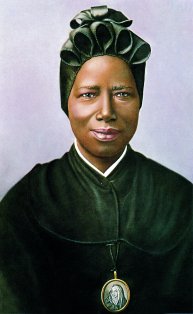
Santa Giuseppina Bakhita, born in 1869 in Oglassa, Darfur, Sudan, is a revered figure in the Catholic Church known for her remarkable journey from slavery to sainthood. Her life story is one of immense suffering, profound faith, and enduring hope. This article delves into her life, highlighting her age, rise to fame, and significant life milestones.
Early Life and Enslavement
Giuseppina Bakhita was born into a prosperous family in Darfur. Her early years were marked by happiness and security, but this changed dramatically when she was about five years old. Bakhita was kidnapped by Arab slave traders, and the trauma of the abduction was so severe that she forgot her birth name and family details. Her captors gave her the name “Bakhita,” meaning “fortunate” in Arabic.
Bakhita was sold multiple times in the slave markets of El Obeid and Khartoum. During her enslavement, she endured unimaginable physical and psychological suffering. One of her owners, a Turkish general, inflicted a brutal form of tattooing on her. Over a hundred intricate patterns were carved into her chest, stomach, and right arm with a razor, and salt was rubbed into the wounds to create permanent scars.
Journey to Freedom
In Khartoum, Bakhita was purchased by Callisto Legnani, the Italian consul, with the intention of freeing her. Legnani had previously bought and liberated other enslaved children. However, due to the loss of her memory and the significant distance from her birthplace, reuniting Bakhita with her family was impossible. Legnani took her into his household, where she lived peacefully for two years, working alongside other servants without being treated as a slave.
In 1884, due to the Mahdist revolt, Legnani was forced to flee Sudan. Bakhita pleaded to accompany him, and together with his friend Augusto Michieli, they traveled to Suakin on the Red Sea and eventually to Italy. In Italy, Michieli and his wife took Bakhita into their home in Mirano, where she became the nanny for their daughter, Mimmina.
Introduction to Christianity
The Michieli family decided to return to Africa and left Bakhita and Mimmina in the care of the Canossian Sisters in Venice. Bakhita began her religious education at the Institute of Catechumens and quickly became drawn to the Catholic faith. When Signora Michieli returned to reclaim her daughter and Bakhita, the latter courageously expressed her desire to remain with the Canossian Sisters.
This decision led to a legal battle, as slavery was illegal in Italy. On November 29, 1889, an Italian court declared Bakhita free. She chose to stay with the Canossian Sisters and was baptized on January 9, 1890, taking the name Giuseppina Margherita Fortunata. On December 7, 1893, she entered the novitiate, and on December 8, 1896, she took her first vows.
Life as a Canossian Sister
In 1902, Giuseppina Bakhita was transferred to a convent in Schio, Vicenza, where she would spend the rest of her life. She worked as a cook, sacristan, and doorkeeper, roles that brought her into close contact with the local community. Known for her gentle demeanor and kind smile, she became affectionately known as “Madre Moretta” (Little Brown Mother).
During World War I, part of the convent was converted into a military hospital, and Bakhita assisted as a nurse. In 1922, she was appointed the convent’s doorkeeper, a position that allowed her to touch many lives with her kindness and humility.
Public Speaking and Widespread Recognition
Despite her shy nature and limited Italian, Bakhita became a sought-after speaker, sharing her life story and her faith journey. Her first memoir, dictated to Sister Teresa Fabris in 1910, was a 31-page manuscript. Later, in 1929, she recounted her experiences to Sister Mariannina Turco, though this second manuscript was lost.
In November 1930, she was interviewed by Ida Zanolini, a lay Canossian and schoolteacher. Zanolini’s book, “Storia Meravigliosa” (Wonderful Story), was published in 1931 and quickly gained popularity, spreading Bakhita’s fame across Italy.
From 1933, Bakhita traveled throughout Italy with Sister Leopolda Benetti, a missionary returned from China, to promote missionary work. Though she spoke only briefly at these events, her presence and story captivated audiences.
Later Years and Death
Bakhita’s health began to decline in 1939, leading her to remain in Schio. Despite her suffering, she continued to inspire those around her with her unwavering faith and cheerful spirit. She passed away on February 8, 1947, after a prolonged and painful illness. Her body was initially buried in a family tomb in Schio, but in 1969, her remains were moved to the Chapel of the Holy Family in the Canossian convent.
Canonization and Legacy
The process of canonization for Giuseppina Bakhita began in 1959, just twelve years after her death. On December 1, 1978, Pope John Paul II declared her “Venerable,” recognizing her heroic virtues. She was beatified on May 17, 1992, and canonized on October 1, 2000. Her feast day is celebrated on February 8.
Santa Giuseppina Bakhita’s life story is a powerful testament to the human spirit’s resilience and the transformative power of faith. Her journey from slavery to sainthood continues to inspire millions around the world. She is often invoked as a symbol of hope and healing, particularly for those who have suffered oppression and injustice.
Conclusion
Santa Giuseppina Bakhita’s life is a remarkable journey of faith, endurance, and transformation. From her early years of unimaginable suffering as a slave to her serene and impactful life as a Canossian sister, Bakhita’s story is a beacon of hope and resilience. Her legacy continues to inspire and encourage people to find strength in faith and to pursue justice and compassion in their own lives.
Her canonization by Pope John Paul II recognized her not only as a saint but also as a universal symbol of the dignity and worth of every human being, regardless of their past. Bakhita’s life reminds us of the power of forgiveness, the importance of human rights, and the enduring value of faith.


