
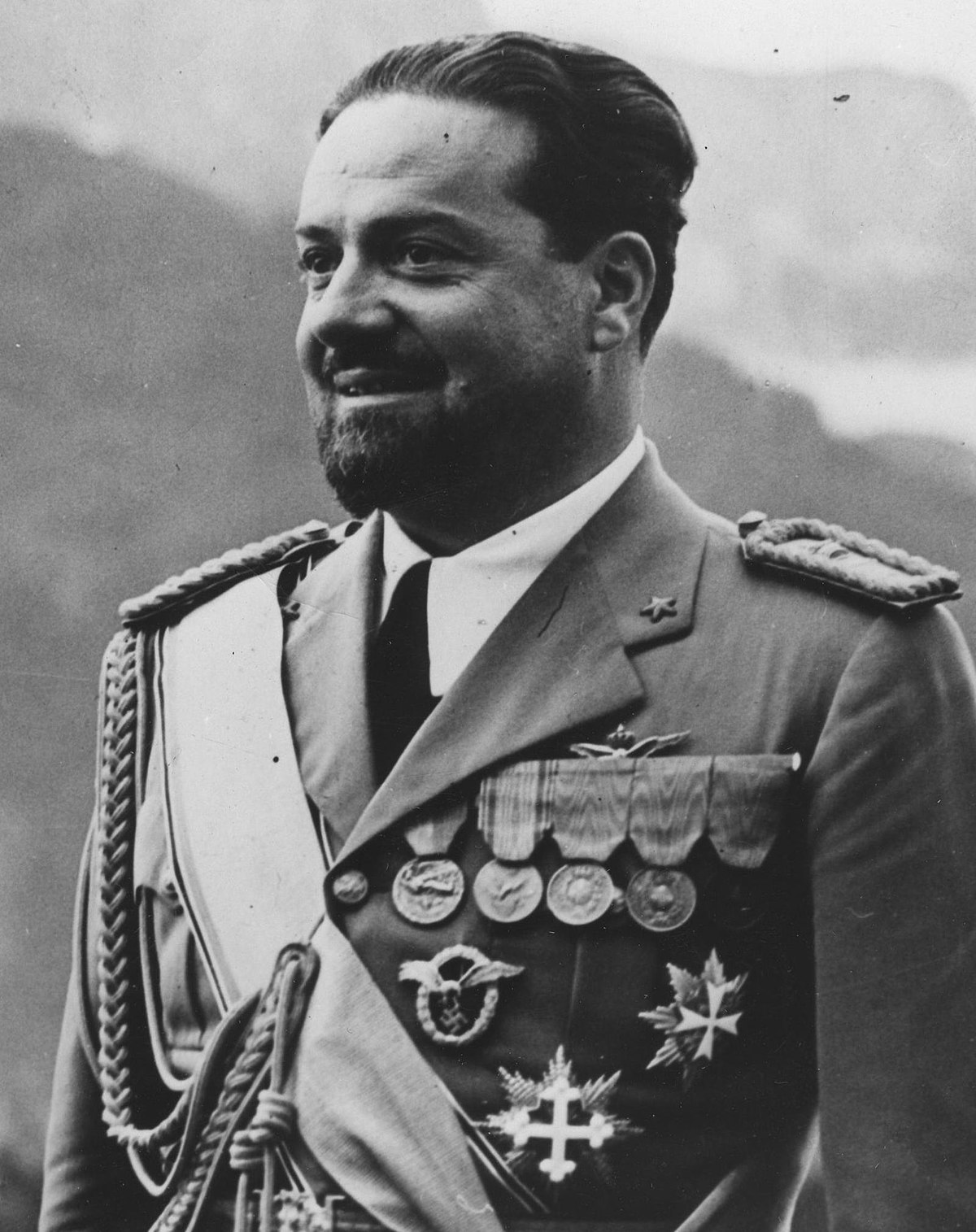
Italo Balbo, born on June 6, 1896, in Quartesana, Ferrara, Italy, is a prominent historical figure known for his significant contributions to Italian aviation and his role in the Fascist regime under Benito Mussolini. Balbo’s life is a blend of military valor, pioneering aviation feats, and political influence. This article delves into the life, fame, and significant highlights of Italo Balbo, offering detailed insights and exploring the nuances of his multifaceted career.
Early Life and Education
Italo Balbo was born into a family marked by a series of tragic events and early deaths. His father, Camillo Balbo, was a dedicated teacher, and his mother, Malvina Zuffi, came from a declining noble family. Balbo’s early education was influenced by his family’s intellectual background. Despite showing an interest in literature and politics from a young age, Balbo was not a stellar student, often struggling with the rigid educational system.
Balbo’s formative years were spent in Ferrara, where he developed a keen interest in the political and social issues of his time. By the age of 15, he was actively involved in Mazzinian politics, advocating for Italian nationalism and republicanism. His early exposure to diverse political ideologies in Ferrara’s cafes and his participation in local political debates shaped his revolutionary spirit.
Military Service and World War I
In 1915, Balbo was called to serve in the Italian Army during World War I. He joined the Alpini, an elite mountain infantry corps, and quickly distinguished himself as a courageous and capable soldier. His valor in various battles earned him multiple commendations, including three Silver Medals for Military Valor and one Bronze Medal.
Balbo’s experience in the war profoundly influenced his political views. The camaraderie and discipline of military life, combined with the horrors of trench warfare, reinforced his belief in strong, decisive leadership and radical political change.
Rise in Fascism
After World War I, Italy faced severe economic and social turmoil. Balbo returned to Ferrara and became increasingly involved in the burgeoning Fascist movement led by Benito Mussolini. In 1921, he formally joined the National Fascist Party and quickly rose through the ranks, leveraging his military experience and charismatic leadership.
Balbo’s aggressive tactics and organizational skills were instrumental in the Fascists’ consolidation of power in Ferrara. He orchestrated violent clashes with socialist and communist groups, employing a strategy of organized squadristi (paramilitary squads) to intimidate and eliminate political opponents. His efforts significantly contributed to the Fascists’ success in establishing control over large parts of Northern Italy.
The March on Rome
One of the pivotal moments in Balbo’s political career was his participation in the March on Rome in October 1922. This coup d’état led by Mussolini resulted in the Fascist takeover of the Italian government. Balbo’s role in the march demonstrated his loyalty and commitment to the Fascist cause, solidifying his position as one of Mussolini’s most trusted lieutenants.
Contributions to Italian Aviation
Balbo’s passion for aviation began during his military service and continued to grow after the war. Recognizing his interest and expertise, Mussolini appointed him as Secretary of State for Air in 1926, and later as Minister of the Air Force. In this role, Balbo revolutionized Italian aviation, focusing on expanding the air force and promoting aeronautical innovation.
Transatlantic Flights
One of Balbo’s most celebrated achievements was organizing and leading transatlantic flights, which showcased Italy’s aviation prowess to the world. In 1933, he commanded a squadron of 24 seaplanes on a historic flight from Rome to Chicago for the Century of Progress International Exposition. This feat earned him international acclaim and cemented his reputation as a pioneering aviator.
Balbo’s successful transatlantic flights demonstrated the capabilities of Italian aviation and bolstered national pride. These expeditions also served as powerful propaganda tools, enhancing Italy’s image on the global stage.
Governorship of Libya
In 1934, Mussolini appointed Balbo as Governor-General of Libya, a role that combined both civil and military authority over the Italian colony. Balbo’s administration focused on infrastructure development, agricultural projects, and improving relations with the local population. His policies were relatively progressive compared to other colonial administrators, emphasizing integration and modernization.
Balbo’s tenure in Libya was marked by significant infrastructure projects, including the construction of roads, schools, and hospitals. His efforts to modernize the colony and improve living conditions for both Italians and Libyans earned him a degree of respect from the local population.
Conflict with Mussolini and the Axis Alliance
Despite his loyalty to Mussolini, Balbo harbored reservations about some of the Duce’s policies, particularly the alliance with Nazi Germany. Balbo was openly critical of Adolf Hitler and expressed concerns about the consequences of aligning Italy with the Axis powers. This dissent led to tensions between Balbo and other high-ranking Fascist officials.
Balbo’s opposition to the alliance with Germany and his vocal criticism of anti-Semitic policies positioned him as a potential rival to Mussolini. However, his popularity and influence within the Fascist Party protected him from immediate retribution.
Death and Legacy
Italo Balbo’s life was abruptly cut short on June 28, 1940, when his plane was shot down by Italian anti-aircraft artillery over Tobruk, Libya. The circumstances of his death remain controversial, with some historians suggesting it was an accidental friendly fire incident, while others speculate it may have been an intentional act by political rivals.
Balbo’s legacy is complex and multifaceted. As a pioneering aviator, his contributions to Italian aviation are undisputed. His leadership in both military and political spheres showcased his organizational skills and charismatic authority. However, his association with the Fascist regime and his involvement in its violent rise to power complicate his historical reputation.
Historical Nuances
Balbo’s life and career illustrate the complexities of Italian Fascism and the internal dynamics of the regime. His early revolutionary zeal, coupled with his later pragmatic governance in Libya, reflect the tensions within Fascist ideology between radical nationalism and practical administration. Balbo’s opposition to some of Mussolini’s policies also highlights the factionalism and ideological diversity within the Fascist Party.
Impact on Modern Italy
Balbo’s influence on modern Italy extends beyond his lifetime. His pioneering efforts in aviation laid the groundwork for Italy’s aeronautical advancements. His controversial yet impactful political career provides a lens through which to examine the broader historical context of Fascist Italy and its lasting implications.
Conclusion
Italo Balbo’s life is a testament to the complexities of historical figures who played significant roles in shaping their times. His contributions to Italian aviation and his leadership within the Fascist regime make him a prominent and controversial figure in 20th-century history. Balbo’s legacy, marked by both remarkable achievements and contentious actions, continues to evoke debate and analysis, reflecting the enduring impact of his multifaceted career.


