
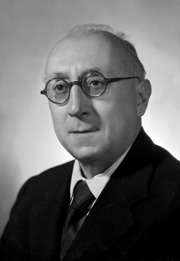
Antonio Banfi, born on September 30, 1886, in Vimercate, Italy, was an influential Italian philosopher, educator, and politician. Renowned for his significant contributions to philosophy, particularly in the fields of logic and phenomenology, Banfi’s legacy extends to his active role in the resistance against fascism and his efforts in shaping post-war Italian culture. This article delves into the life, career, and achievements of Antonio Banfi, providing detailed insights and exploring the nuances of his journey.
Early Life and Education
Antonio Banfi was born into a culturally rich and educated family. His father, Enrico Banfi, was an engineer and the headmaster of the Technical Institute in Mantua, while his maternal grandfather was part of the Milanese nobility. Growing up in an intellectually stimulating environment, Banfi developed a keen interest in literature and philosophy from an early age.
Banfi attended high school at the Virgilio Lyceum in Mantua, where he excelled in his studies. He spent his summers in Vimercate, immersing himself in the vast collection of books in his family’s library. This early exposure to literature and intellectual discourse laid the foundation for his future academic pursuits.
In 1904, Banfi enrolled at the Regia Accademia Scientifica-Letteraria in Milan, where he studied literature. He graduated with honors in 1908, presenting a monograph on Francesco da Barberino as his thesis. Immediately after, he began his teaching career at the Cavalli-Conti Institute in Milan while continuing his studies in philosophy under Giuseppe Zuccante and Piero Martinetti. In 1909, Banfi earned his doctorate in philosophy, focusing on the works of Boutroux, Renouvier, and Bergson.
Academic Career and Philosophical Contributions
Early Teaching and Influence of German Philosophy
In 1910, Banfi traveled to Germany with his friend Cotti, enrolling at the Friedrich-Wilhelms-Universität in Berlin. This period significantly influenced his philosophical development, exposing him to the works of leading German philosophers. He returned to Italy in 1911 and began teaching philosophy at various high schools, eventually securing a permanent position at the Liceo Piana in Alessandria.
During his early academic career, Banfi continued to refine his philosophical ideas, focusing on logic and phenomenology. He published several important works and engaged in extensive research, which earned him recognition in the academic community. In 1924, Banfi obtained his habilitation, marking a significant milestone in his career.
Opposition to Fascism and Involvement in Politics
Banfi’s academic work was paralleled by his political activism, particularly his opposition to fascism. During the rise of Mussolini’s regime, Banfi maintained a firm stance against fascist ideologies. He was removed from his position as the director of the public library in Alessandria due to his outspoken resistance to fascism. Despite facing threats and intimidation from fascist squads, Banfi remained committed to his principles.
In 1925, Banfi was among the signatories of a manifesto against fascist intellectuals, drafted by Benedetto Croce. His political activities continued throughout the 1930s and 1940s, culminating in his active participation in the Italian resistance movement during World War II. Banfi’s contributions to the resistance earned him the status of a combatant partisan, recognized by the Lombardy Partisan Qualifications Commission.
Academic Achievements and Legacy
In 1931, Banfi won a competition for a professorship in the history of philosophy at the University of Genoa. A year later, he was appointed to the University of Milan, where he would spend the most productive years of his academic career. His tenure at Milan was marked by the formation of the “Banfi School,” a group of scholars who significantly influenced Italian philosophical thought.
In 1940, Banfi founded the journal “Studi Filosofici,” which became a central platform for his school’s ideas. His works during this period focused on integrating logic with phenomenology, exploring the intersections between empirical science and philosophical inquiry.
Post-War Contributions and Political Involvement
Role in Post-War Cultural Renewal
After World War II, Banfi played a crucial role in the intellectual and moral renewal of Italy. He was instrumental in founding the “Fronte della Cultura,” an organization aimed at bringing together progressive intellectuals to rebuild the nation’s cultural landscape. His efforts were geared towards promoting modern, democratic values and resisting the remnants of fascist ideology.
Political Career
Banfi’s political involvement extended to his election as a senator in 1948, representing the Democratic Popular Front in the Abbiategrasso district. In the Senate, he was an active member of the Public Education Committee, advocating for educational reforms and the preservation of academic freedom. His legislative work included efforts to enhance the national education system and support universities and secondary schools.
Banfi’s international influence grew through his involvement with the Soviet Union, where he served as the Italian commissioner for the Lenin Peace Prize. He visited the USSR multiple times, forging connections with intellectuals from various cultural backgrounds and contributing to the global exchange of philosophical ideas.
Personal Life and Legacy
Family and Personal Life
Antonio Banfi married Daria Malaguzzi Valeri in 1916, and the couple remained partners in both personal and intellectual pursuits until Banfi’s death. They had one son, who, along with Daria, supported Banfi throughout his career.
Death and Posthumous Recognition
Antonio Banfi’s health began to decline in the summer of 1957, and he passed away on July 22, 1957, in Milan. His death marked the end of a significant era in Italian philosophy, but his legacy continued through the numerous students and scholars he mentored.
Banfi’s contributions to philosophy, education, and politics have left an indelible mark on Italian and international thought. His works are studied and revered for their depth, clarity, and innovative approach to integrating different philosophical traditions. Banfi’s dedication to intellectual freedom, resistance against oppression, and efforts in cultural renewal remain influential to this day.
Honors and Recognitions
Throughout his life, Banfi received numerous honors for his contributions to philosophy and society. He was a member of the prestigious Italian Academy of Sciences and Letters, and his works continue to be a source of inspiration for contemporary philosophers and scholars.
Conclusion
Antonio Banfi’s journey from a small town in Italy to becoming a leading figure in philosophy and politics is a testament to his intellectual prowess and unwavering commitment to social justice. His legacy as a thinker, educator, and activist continues to inspire and shape the discourse in philosophy and beyond.
Banfi’s life and work exemplify the profound impact that dedicated scholarship and principled activism can have on society. As we reflect on his contributions, we recognize the enduring relevance of his ideas and the importance of his role in the cultural and intellectual history of Italy.


