
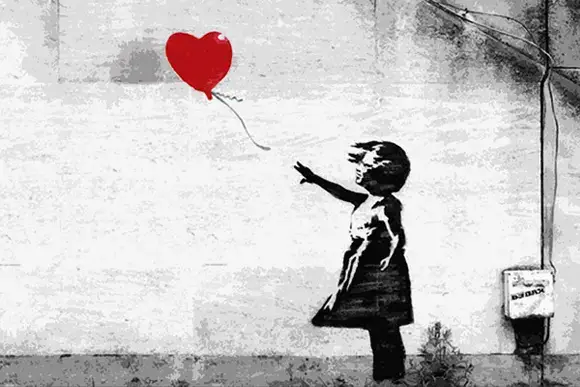
Banksy, the elusive and enigmatic artist, is a prominent figure in the world of contemporary street art. Born in the 1970s, likely in 1974, Banksy hails from Bristol, England. Despite the widespread acclaim and recognition, Banksy’s true identity remains a closely guarded secret, with speculation suggesting that he might be Robin Gunningham, though this claim has been contested and remains unconfirmed.
Early Life and Background
Banksy grew up in a middle or working-class family in Bristol, spending his adolescence in a suburban neighborhood. He began his artistic journey in Barton Hill, a youth center in Bristol where he was first exposed to the world of graffiti and street art. His early works were characterized by traditional graffiti, but he later transitioned to using stencils, a technique that allowed for faster and more intricate designs.
Rise to Fame
Banksy’s rise to fame began in the late 1990s and early 2000s. Bristol became the canvas for his early works, and he soon moved to London, where his distinctive style and thought-provoking pieces started to gain attention. Banksy’s art often addresses political and social issues, employing a satirical and humorous tone that resonates with a broad audience.
Major Works and Collaborations
One of Banksy’s significant collaborations was with the British band Blur in 2003, for whom he designed the cover of their album “Think Tank.” This collaboration marked a turning point in his career, bringing his work to a larger audience.
In 2005, Banksy traveled to the West Bank, where he created several pieces on the controversial separation barrier constructed by Israel. These works highlighted the artist’s commitment to using his art as a form of protest and commentary on global issues.
Banksy continued to push boundaries with his 2006 parody of Paris Hilton’s debut album. He produced and distributed altered copies of the album, which included modified songs and images, critiquing celebrity culture and consumerism.
Banksy’s Art Festivals
Banksy is known for organizing art festivals that attract artists from around the world. In 2008, he hosted the “Cans Festival” in an abandoned tunnel in London. The event featured stencil art and was a nod to the prestigious Cannes Film Festival, showcasing Banksy’s ability to blend high culture with street art.
Documentary and Further Recognition
In 2010, Banksy produced the documentary “Exit Through the Gift Shop,” which provides a glimpse into the world of street art and the story of Thierry Guetta, also known as Mr. Brainwash. The documentary received critical acclaim and further cemented Banksy’s reputation in the art world.
Dismaland
One of Banksy’s most ambitious projects was “Dismaland,” a dystopian theme park created in 2015 near London. The park featured installations and artworks by Banksy and other contemporary artists, offering a darkly humorous critique of consumerism and the amusement park industry. Although Dismaland was open for a short period, it attracted significant media attention and public interest.
Banksy in Italy
Banksy’s influence extends beyond the UK, with notable works appearing in various countries, including Italy. One of his famous pieces, “Madonna with a Gun,” can be found in Naples. Additionally, in 2016, the Palazzo Cipolla in Rome hosted an exhibition titled “War, Capitalism & Liberty,” dedicated to Banksy’s work. The exhibition drew large crowds and highlighted the artist’s global impact.
The Mystery and Myth of Banksy
The mystery surrounding Banksy’s identity has undoubtedly contributed to his mythos. His anonymity adds an element of intrigue and allure to his works, making each piece more significant. Banksy’s art is not just visually striking but also deeply meaningful, addressing critical issues in a way that is accessible and engaging.
The Evolution of Banksy’s Art
Over the years, Banksy’s art has evolved in both style and substance. Initially focused on graffiti, his shift to stencils allowed for more complex and detailed works. His pieces often feature iconic imagery and clever wordplay, making powerful statements on topics such as war, poverty, and the environment.
One of the hallmarks of Banksy’s work is its placement in public spaces. By choosing walls, streets, and buildings as his canvas, Banksy ensures that his art reaches a wide audience, challenging traditional notions of art galleries and exhibitions. This democratization of art has played a crucial role in his widespread appeal.
Banksy’s Influence on Contemporary Art
Banksy’s influence on contemporary art cannot be overstated. He has inspired a new generation of street artists who see the urban environment as a canvas for expression. His ability to merge art with social commentary has set a precedent for artists to engage with current events and societal issues through their work.
Moreover, Banksy’s commercial success has sparked debates about the commodification of street art. While some purists criticize the sale of Banksy’s works for high prices, others argue that it brings recognition and legitimacy to the genre. Banksy himself has remained critical of the art market, often finding ways to subvert it through his actions.
Banksy’s Legacy
Banksy’s legacy is characterized by his unique approach to art and his ability to provoke thought and discussion. His works are not just visually appealing but also serve as a catalyst for social and political discourse. By maintaining his anonymity, Banksy has kept the focus on his art and its message, rather than on his personal life.
In conclusion, Banksy is more than just a street artist; he is a cultural phenomenon. His works have transcended the boundaries of graffiti, influencing the broader art world and society at large. Banksy’s ability to remain relevant and impactful in an ever-changing world speaks to the enduring power of his art and the universal themes it addresses.
As Banksy continues to create and surprise the world with his art, his legacy will undoubtedly grow, inspiring future generations to use their creativity as a force for change.


