
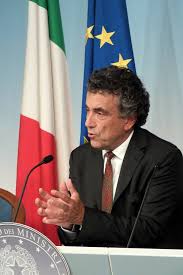
Fabrizio Barca is a distinguished Italian economist, academic, and politician renowned for his significant contributions to economic development and territorial cohesion policies. Born on March 8, 1954, in Turin, Italy, Barca has led a life dedicated to understanding and improving economic structures, both within Italy and internationally. His illustrious career spans academia, government service, and policy-making, earning him a reputation as a leading thinker in his field.
Early Life and Education
Fabrizio Barca was born into a family with a strong intellectual and political background. His father, Luciano Barca, was an economist, a partisan, and a prominent member of the Italian Communist Party (PCI), having served as a parliamentarian and senator. This environment undoubtedly influenced Fabrizio’s early interest in economics and public policy.
Barca pursued his higher education in Rome, where he graduated in Statistical and Demographic Sciences. His academic journey did not stop there; he went on to earn a doctorate in Economics from the prestigious University of Cambridge. This strong educational foundation set the stage for his future endeavors in economic theory and policy.
Academic and Professional Beginnings
Fabrizio Barca began his professional career as an economist with a particular focus on territorial development policies. He quickly made a name for himself as a scholar and educator, teaching Corporate Finance, Economic Policy, and Economic History at several esteemed institutions. These included Bocconi University in Milan, and universities in Modena, Siena, Paris, Urbino, Parma, and Rome.
In 1983, Barca published “Considerazioni sul calcolo del reddito d’impresa in condizioni di incertezza” (“Considerations on Calculating Business Income under Uncertainty”), followed by “Nuove forme dell’accumulazione nell’industria italiana” (“New Forms of Accumulation in the Italian Industry”) in 1985, co-authored with Marco Magnani. These early works showcased his ability to tackle complex economic issues and laid the groundwork for his future contributions.
Contributions to Economic Thought
Barca’s academic contributions are vast and varied. In 1993, he published “Allocazione e riallocazione della proprietà e del controllo delle imprese: ostacoli, intermediari, regole” (“Allocation and Reallocation of Property and Control of Enterprises: Obstacles, Intermediaries, Rules”). His research frequently addressed issues related to small and medium-sized enterprises, corporate governance, and regional policies.
Some of his notable publications include “On Corporate Governance in Italy: Issues, Facts, and Agenda” and “Imprese in cerca di padrone: proprietà e controllo nel capitalismo italiano” (“Enterprises Looking for Owners: Property and Control in Italian Capitalism”), both published in 1996. These works highlighted the intricacies of corporate ownership and control in Italy, contributing significantly to the discourse on corporate governance and economic policy.
Recognition and Awards
Fabrizio Barca’s contributions to economics have been widely recognized. In 1998, he edited “Storia del capitalismo italiano: dal dopoguerra a oggi” (“History of Italian Capitalism: From Post-War to Today”), a comprehensive examination of Italy’s economic evolution. The following year, he was appointed a Grand Officer of the Order of Merit of the Italian Republic, one of the highest honors in Italy.
In 2005, the University of Parma awarded him an honorary degree in Political Economy, acknowledging his significant contributions to the interpretation and analysis of Italy’s economic development and the evolution of its production system. This honor also recognized his role in creating the institutional and operational framework for territorial development policies.
Government Service and Policy Influence
Barca’s expertise extended beyond academia into practical policy-making. He served as the head of the Research Division at the Bank of Italy and as the head of the Department for Development Policies at the Italian Ministry of the Treasury. His work in these roles was instrumental in shaping Italy’s economic strategies and policies.
In 2011, Fabrizio Barca was appointed Minister without Portfolio with responsibility for Territorial Cohesion in the technocratic government led by Mario Monti. This role allowed him to directly influence national policy, focusing on reducing regional disparities and promoting balanced economic development across Italy. His tenure as minister lasted until 2013, during which he played a critical role in implementing cohesion policies and addressing economic imbalances.
International Influence and Collaboration
Barca’s influence extends beyond Italy. He served as the president of the Territorial Policies Committee of the Organisation for Economic Co-operation and Development (OECD). In this capacity, he contributed to international discussions on regional development and economic policy.
For the European Commission, Barca authored “An Agenda for a Reformed Cohesion Policy,” an independent report that provided a comprehensive analysis and set out recommendations for reforming cohesion policies within the European Union. This work underscored his commitment to improving economic policies not just in Italy but across Europe.
Publications and Thought Leadership
Throughout his career, Fabrizio Barca has continued to publish influential works that shape economic thought and policy. In 2006, he authored “Federalismo, equità, sviluppo: i risultati delle politiche pubbliche analizzati e misurati dai conti pubblici territoriali” (“Federalism, Equity, Development: The Results of Public Policies Analyzed and Measured by Territorial Public Accounts”), further demonstrating his expertise in public policy analysis.
His book “Italia frenata: paradossi e lezioni della politica per lo sviluppo” (“Italy Halted: Paradoxes and Lessons of Development Policy”), published by Donzelli, reflects on the challenges and lessons learned from Italy’s development policies. This work is particularly insightful in understanding the complexities and paradoxes that often accompany public policy initiatives.
Personal Philosophy and Legacy
Fabrizio Barca’s approach to economics and public policy is deeply rooted in a commitment to equity, development, and the ethical implications of economic decisions. His work consistently emphasizes the importance of addressing regional disparities and promoting inclusive growth. Barca’s dedication to these principles is evident in both his academic writings and his practical policy work.
Barca’s legacy is multifaceted. As an academic, he has educated and inspired countless students and colleagues. As a public servant, he has shaped policies that aim to create a more balanced and equitable economic landscape. His contributions to both national and international economic thought have left a lasting impact on the field.
Recent Endeavors and Continuing Influence
After his tenure as minister, Fabrizio Barca continued to engage in public discourse and policy analysis. In April 2013, he announced his alignment with the Democratic Party (PD), highlighting the challenges faced by then-party secretary Pier Luigi Bersani. His potential candidacy for the leadership of the PD underscored his ongoing influence and the respect he commands within political and academic circles.
Barca’s ongoing work and commentary continue to shape discussions on economic policy and development. His insights are sought after by policymakers, academics, and international organizations, reflecting his enduring relevance and expertise.
Conclusion
Fabrizio Barca’s life and career are a testament to the impact that dedicated scholarship and public service can have on society. His work spans multiple domains, from academic research and teaching to government service and international policy-making. Through his publications, policy contributions, and public service, Barca has consistently demonstrated a commitment to improving economic structures and promoting equitable development.
His legacy is one of thoughtful analysis, practical policy-making, and a deep commitment to addressing economic disparities. As we reflect on his contributions, we recognize the profound influence he has had on economic thought and policy, both in Italy and beyond. Fabrizio Barca remains a leading figure in the ongoing effort to create more just and equitable economic systems, and his work continues to inspire and guide future generations.


