
Introduction
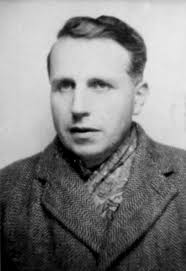
Georges Bataille, born on September 10, 1897, in Billom, Puy-de-Dome, France, was an influential philosopher, writer, and intellectual whose work traversed surrealism, sociology, and esotericism. His thought-provoking ideas and controversial writings have left a significant mark on 20th-century thought, influencing a wide array of disciplines. This article delves into Bataille’s life, career, and lasting impact, providing detailed insights into his multifaceted contributions and the historical context in which he thrived.
Early Life and Education
Childhood and Family Background
Georges Bataille’s early life was marked by personal and familial turmoil. His father was afflicted with syphilis, which led to blindness and paralysis, and his mother struggled with mental instability. In 1900, the family moved to Reims, where Bataille received a strict Catholic education. The outbreak of World War I forced Bataille and his mother to flee, leaving his paralyzed father behind, who soon died, instilling in Bataille a profound sense of guilt.
Education and Religious Aspirations
Bataille’s early education took him to several cities, including Chartres, Paris, and Madrid. He briefly considered becoming a monk but lost his faith after a romantic disappointment, exacerbated by his stringent Catholic beliefs. Despite this, he continued his academic pursuits and, in 1922, after a stint teaching at the University of Madrid, returned to Paris to work at the Bibliothèque Nationale.
Intellectual Circles and Surrealism
Parisian Intellectual Scene
The early 1920s in Paris were a period of intense intellectual activity, and Bataille quickly immersed himself in the vibrant cultural milieu. He joined the surrealist circles led by André Breton but soon found himself at odds with Breton’s vision. Bataille’s approach was more grounded in materialism and a darker, more chaotic view of human nature, leading to a complete break with the surrealist movement.
Marriage and Personal Relationships
In 1928, Bataille married actress Sylvia Makles, who later married psychoanalyst Jacques Lacan. This period was marked by both personal and professional upheavals as Bataille navigated the intellectual and emotional landscapes of his time.
Founding “Contre-Attaque” and Esoteric Circles
Opposition to Fascism
As fascism spread across Europe, Bataille and other intellectuals, including Roger Caillois, founded the journal “Contre-Attaque” in 1935 to defend traditional community values betrayed by socialism. This initiative reflected Bataille’s deepening engagement with political and social issues, positioning him against the rising tide of authoritarianism.
Esoteric and Sociological Endeavors
In 1936, Bataille founded the esoteric group “Acéphale” and its more public counterpart, the “Collège de Sociologie.” These groups attracted prominent thinkers like Pierre Klossowski, Jean-Paul Sartre, Claude Lévi-Strauss, Walter Benjamin, and Theodor Adorno. The discussions held within these circles were pivotal in shaping mid-20th-century intellectual thought.
Philosophical and Literary Contributions
Major Works and Theories
Bataille’s writings span a range of genres, including philosophy, literature, and sociology. His most notable works include:
- “La Part maudite” (The Accursed Share): In this economic theory, Bataille explores the concept of excess and the need for societies to expend surplus resources in non-productive ways, such as in art, war, or religious rituals.
- “L’Érotisme” (Eroticism): This book delves into the relationship between sex, death, and the sacred, arguing that eroticism is a form of transgression that reveals fundamental truths about human existence.
- “Histoire de l’œil” (Story of the Eye): A surreal and provocative novella that blends eroticism with philosophical inquiry, reflecting Bataille’s fascination with the intersection of the sacred and the profane.
Influence on Contemporary Thinkers
Bataille’s ideas have profoundly influenced many significant intellectuals, including Roland Barthes, Jacques Derrida, Maurice Blanchot, and Michel Foucault. His exploration of taboo subjects and his challenge to traditional moral values resonated with these thinkers, contributing to the development of postmodern philosophy and critical theory.
Health Challenges and Final Years
Battle with Tuberculosis
Bataille’s later years were plagued by health issues, particularly tuberculosis. Despite receiving treatment, his condition weakened his immune system, leading to his death on July 8, 1962. His health struggles did not deter him from his intellectual pursuits; rather, they seemed to deepen his existential inquiries.
Legacy and Posthumous Recognition
Even after his death, Georges Bataille’s work continued to gain recognition and influence. His writings are celebrated for their radical critique of contemporary society, their exploration of the darker aspects of human nature, and their profound philosophical insights. Bataille’s legacy endures in the fields of philosophy, literature, and cultural studies, where his ideas continue to provoke and inspire.
Historical Context and Impact
The Intellectual Climate of Early 20th-Century France
Bataille’s work must be understood within the broader context of early 20th-century French intellectual life. This period was marked by rapid social and political changes, including the aftermath of World War I, the rise of fascism, and the tensions between modernity and tradition. Bataille’s engagement with these issues positioned him at the forefront of intellectual debates, even as his ideas often challenged the mainstream.
Contributions to Surrealism and Beyond
While Bataille is often associated with surrealism, his work transcended this movement, incorporating elements of sociology, anthropology, and esotericism. His contributions to surrealism were significant, particularly his critique of its more utopian aspirations. Bataille’s focus on the irrational and the violent aspects of human nature offered a counterpoint to the idealism of many of his contemporaries.
Key Publications and Concepts
Published in 1949, “La Part maudite” is one of Bataille’s most significant works. It presents an economic theory centered on the concept of surplus and expenditure. Bataille argues that societies produce excess resources that must be spent in non-productive ways to maintain social stability. This theory challenges traditional economic models focused solely on production and accumulation.
“L’Érotisme” (Eroticism)
In “L’Érotisme,” Bataille explores the connections between eroticism, death, and the sacred. He suggests that eroticism involves a transgression of boundaries, revealing fundamental truths about human existence. This work delves into taboo subjects and challenges conventional moral frameworks, reflecting Bataille’s interest in the darker aspects of human nature.
“Histoire de l’œil” (Story of the Eye)
“Histoire de l’œil,” published in 1928, is a surreal novella that combines eroticism with philosophical inquiry. The narrative, filled with provocative imagery and themes, reflects Bataille’s fascination with the intersection of the sacred and the profane. This work exemplifies his ability to blend literary creativity with deep philosophical insights.
Influence on Postmodern Thought
Bataille’s exploration of taboo subjects, his critique of traditional values, and his radical philosophical inquiries have profoundly influenced postmodern thought. Thinkers like Roland Barthes, Jacques Derrida, and Michel Foucault have drawn on Bataille’s ideas in their own work, extending his legacy into new intellectual territories.
Conclusion
Georges Bataille’s life and work represent a profound and enduring contribution to 20th-century thought. His exploration of taboo subjects, his challenge to traditional values, and his radical philosophical inquiries continue to provoke and inspire. Bataille’s legacy endures in the fields of philosophy, literature, and cultural studies, where his ideas continue to resonate and influence new generations of thinkers.
Bataille’s journey from a troubled childhood to becoming a towering figure in intellectual circles underscores his resilience and intellectual rigor. His ability to engage with and critique contemporary society, while delving into the deepest and often darkest aspects of human nature, sets him apart as a unique and influential thinker. As we navigate the complexities of the modern world, Bataille’s insights offer valuable perspectives on the human condition, challenging us to confront the limits of our understanding and the boundaries of our existence.


