
Introduction
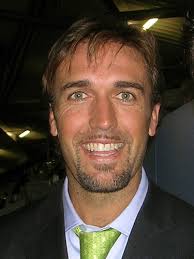
Gabriel Omar Batistuta, born on February 1, 1969, in Avellaneda, Santa Fe, Argentina, is widely recognized as one of the greatest strikers in football history. Known affectionately as “Batigol,” Batistuta’s career is marked by his incredible goal-scoring ability, his loyalty to his teams, and his profound impact on both club and international football. This article provides a comprehensive look at Batistuta’s life, career, and legacy, offering detailed insights and exploring the nuances of his journey to fame.
Early Life and Career Beginnings
Childhood and Early Interests
Gabriel Batistuta grew up in a modest family in Avellaneda, where he developed an early passion for football. His talent was evident from a young age, and he quickly progressed through the ranks of local football clubs.
Early Professional Career
Batistuta’s professional career began with Newell’s Old Boys in the Argentine Primera División during the 1988/89 season. Although he scored only four goals in sixteen matches, his potential was undeniable. His performance caught the attention of larger clubs, leading to his transfer to River Plate the following season. However, his time at River Plate was marred by limited playing opportunities and only four goals in seven appearances.
Rise to Prominence
Breakthrough at Boca Juniors
In 1990, Batistuta moved to Boca Juniors, one of Argentina’s most prestigious clubs. This transfer marked a turning point in his career. At Boca Juniors, he scored thirteen goals in twenty-nine matches, showcasing his exceptional goal-scoring abilities and earning the attention of the national team selectors.
International Success with Argentina
Batistuta’s performances at Boca Juniors earned him a call-up to the Argentine national team. In 1991, he played a crucial role in Argentina’s Copa America victory, finishing as the tournament’s top scorer. This achievement solidified his reputation as a prolific striker and set the stage for his international career.
Career in Italy: Fiorentina and Beyond
Move to Fiorentina
In 1991, Batistuta made a significant move to Italy’s Serie A, joining Fiorentina for a transfer fee of five billion lire. His first season in Italy saw him score thirteen goals in twenty-seven appearances, although the team was relegated to Serie B. Despite this setback, Batistuta chose to stay with Fiorentina, demonstrating his loyalty and commitment to the club.
Fiorentina’s Return to Serie A
Batistuta’s determination paid off as he helped Fiorentina secure promotion back to Serie A in 1994. His partnership with fellow forward Francesco “Ciccio” Baiano was instrumental in this achievement. The 1994/95 season saw Batistuta break records, scoring in the first eleven consecutive matches and finishing as the league’s top scorer with twenty-six goals.
Peak of His Career
The 1995/96 season was one of the most successful in Batistuta’s career. Fiorentina finished third in Serie A and won the Coppa Italia, with Batistuta playing a pivotal role. His exceptional performance continued in the Supercoppa Italiana, where he scored twice against AC Milan, leading Fiorentina to victory.
Relationship with Fiorentina Fans
Batistuta’s success on the field and his loyalty to Fiorentina endeared him to the club’s fans. Despite some personal challenges and media scrutiny, his dedication to the team never wavered. His passionate celebration after scoring against Milan in the Supercoppa Italiana, where he famously shouted “Irina te amo” into the camera, is still remembered fondly by fans.
Challenges and Injuries
In February 1999, Batistuta suffered the most severe injury of his career during a match against Milan. This injury sidelined him for over a month and significantly impacted Fiorentina’s performance that season. Despite his rapid recovery, Fiorentina lost their lead in the league and could not reclaim it, underscoring Batistuta’s importance to the team.
Transfer to AS Roma and Later Career
Move to AS Roma
In the summer of 2000, Batistuta transferred to AS Roma in a high-profile move. His impact was immediate, and he played a crucial role in helping Roma secure the Serie A title in the 2000/01 season. His goal-scoring prowess and leadership on the field were vital to the team’s success.
Brief Stint at Inter Milan
After his successful stint with Roma, Batistuta joined Inter Milan in 2003. However, his time at Inter was short-lived, and he soon moved to Qatar to play for Al-Arabi.
Final Years in Qatar
From 2003 to 2005, Batistuta played for Al-Arabi in Qatar. Despite being in the twilight of his career, he continued to demonstrate his goal-scoring abilities, cementing his legacy as one of football’s greatest strikers.
International Career and Achievements
World Cup Appearances
Batistuta represented Argentina in three World Cups (1994, 1998, and 2002). He scored a total of ten goals in World Cup matches, making him Argentina’s top scorer in World Cup history at the time. His performances in the 1994 and 1998 tournaments were particularly memorable, showcasing his ability to perform on the world stage.
Copa America Success
In addition to his 1991 Copa America triumph, Batistuta played a significant role in Argentina’s 1993 Copa America victory. His contributions in these tournaments further solidified his reputation as one of Argentina’s greatest strikers.
Legacy and Impact on Argentine Football
Batistuta’s impact on Argentine football is immense. His goal-scoring records and contributions to the national team have left an indelible mark on the sport. He remains a beloved figure in Argentina, admired for his skill, determination, and sportsmanship.
Personal Life and Post-Retirement
Family and Personal Challenges
Gabriel Batistuta is married to Irina Fernández, and the couple has four children. Throughout his career, Batistuta has been known for his humility and dedication to his family. Despite the challenges and pressures of professional football, he has maintained a strong family bond.
Health Issues and Advocacy
After retiring from professional football, Batistuta faced significant health challenges, including severe pain in his ankles due to the physical toll of his career. He underwent surgery and treatment to alleviate his pain and has since become an advocate for better medical care for athletes.
Business Ventures and Philanthropy
Post-retirement, Batistuta has been involved in various business ventures, including real estate and agriculture. He has also engaged in philanthropic activities, supporting initiatives that promote sports and provide opportunities for young athletes.
Legacy and Honors
Records and Achievements
Batistuta’s career is decorated with numerous records and achievements. He is Fiorentina’s all-time top scorer in Serie A, and his goal-scoring feats for both club and country are legendary. His ability to score consistently at the highest levels of competition has earned him a place among football’s elite.
Recognition and Awards
Throughout his career, Batistuta received several individual awards, including being named the Serie A Footballer of the Year and receiving the Silver Ball at the 1999 FIFA World Player of the Year awards. His contributions to football have been recognized globally, and he remains an iconic figure in the sport.
Influence on Future Generations
Batistuta’s legacy extends beyond his playing career. His style of play, professionalism, and dedication have inspired countless young footballers around the world. He is often cited as a role model for aspiring strikers, and his influence can be seen in the careers of many contemporary football stars.
Conclusion
Gabriel Batistuta’s journey from a young footballer in Argentina to one of the most prolific strikers in the history of the sport is a testament to his talent, determination, and love for the game. His remarkable career, marked by incredible goal-scoring records, loyalty to his teams, and significant contributions to international football, has left an indelible mark on the sport.
Batistuta’s legacy is not only defined by his achievements on the field but also by his character off it. His humility, resilience, and dedication to his family and community continue to inspire. As we reflect on his life and career, Gabriel Batistuta stands out as a true legend of football, whose impact will be felt for generations to come.


