
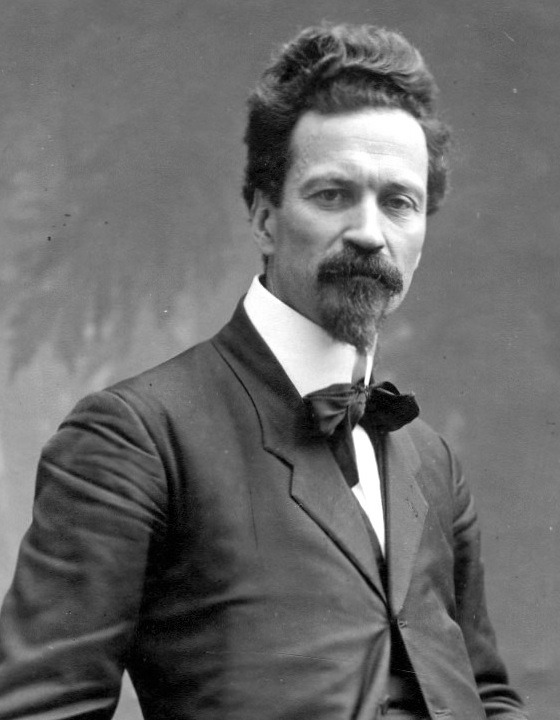
Cesare Battisti, born on February 4, 1875, in Trento, then part of the Austro-Hungarian Empire, is a figure of significant historical importance in Italian history. His life story, marked by patriotic fervor and dedication to the cause of Italian irredentism, spans a journey from academia to active participation in politics and the military. This article delves into his age, achievements, and the defining moments of his life, providing a comprehensive understanding of his legacy.
Early Life and Education
Cesare Battisti was born into a family with a strong sense of duty and patriotism. His father, also named Cesare Battisti, was a merchant, and his mother, Maria Teresa Fogolari, came from a noble background. Battisti’s early education took place in Trento, after which he moved to Graz for further studies. It was here that he became involved with the German Marxist group, a connection that led to the founding of a newspaper, which was promptly censored.
Following his stint in Graz, Battisti transferred to Florence, where he pursued higher education. He graduated with a degree in Letters in 1898, followed by another degree in Geography. These academic pursuits laid the foundation for his later work in geographical and naturalistic studies.
Shift to Activism and Politics
Battisti’s shift from academia to activism was influenced by his uncle, don Luigi Fogolari, who was condemned to death for conspiracy against Austria but was later pardoned. Inspired by his uncle’s patriotism, Battisti embraced the ideals of irredentism—a movement advocating for the unification of all Italian-speaking territories.
Abandoning his academic career, Battisti dedicated himself to social and political causes. He authored several notable guides on Trento and the surrounding regions, as well as the significant volume “Il Trentino.” His engagement with social issues led him to champion the improvement of workers’ conditions, the establishment of an Italian university in Trieste, and the autonomy of Trentino.
In 1900, Battisti founded the socialist newspaper “Il Popolo” and the illustrated weekly “Vita Trentina,” which he directed for many years. His political journey saw him elected to the Austrian Parliament (Reichsrat) in 1911 and to the Diet of Innsbruck in 1914.
World War I and Military Service
With the outbreak of World War I, Battisti’s commitment to the Italian cause intensified. On August 17, 1914, just two weeks after the war began, he fled to Italy, where he became a fervent advocate for Italian intervention against the Austro-Hungarian Empire. His efforts included public speeches and articles in major Italian cities, including Treviglio.
When Italy entered the war on May 24, 1915, Battisti enlisted as a volunteer with the Alpini Battalion, 50th Company. He distinguished himself in combat at Montozzo and later at Passo del Tonale and Monte Baldo, earning commendations for his bravery. Promoted to lieutenant, Battisti was actively involved in military operations until his capture in 1916.
Capture and Execution
In July 1916, while leading his troops at Monte Corno, Battisti was captured by Austro-Hungarian forces along with Lieutenant Fabio Filzi. They were recognized, imprisoned, and subjected to a humiliating public display through the streets of Trento. Despite being condemned to death for treason, Battisti remained steadfast in his loyalty to Italy, denying any betrayal and asserting his status as a soldier captured in action.
His execution on July 12, 1916, was marked by controversy. Battisti requested to be shot instead of hanged, but this was denied. The first attempt at hanging failed, yet instead of granting clemency, the execution was repeated with a new rope. His final words, “Viva Trento italiana! Viva l’Italia!” (“Long live Italian Trento! Long live Italy!”), echoed his lifelong commitment to the Italian cause.
Legacy
Cesare Battisti’s legacy is preserved in numerous monuments, squares, and streets named in his honor across Italy. In Trento, a grand mausoleum on Doss Trento stands as a symbolic reminder of his sacrifice. The mountain where he was captured is now called Monte Corno Battisti, a tribute to his enduring impact on Italian history.
Battisti is also remembered in popular culture, notably in the song “La canzone del Piave,” alongside other national heroes like Nazario Sauro and Guglielmo Oberdan. His widow, Ernesta Bittanti, and their three children continued his legacy, with Battisti’s story serving as an inspiration for future generations.
Historical Context and Influence
Battisti’s life and actions must be viewed within the broader historical context of Italian irredentism and the political landscape of early 20th-century Europe. The irredentist movement sought to unite all Italian-speaking regions under one nation, challenging the Austro-Hungarian Empire’s control over territories with significant Italian populations, such as Trentino and Trieste.
Battisti’s involvement in the movement was not just a personal mission but part of a larger struggle for national identity and self-determination. His work in politics, journalism, and the military exemplified the multifaceted approach irredentists took to achieve their goals.
The Impact of His Academic and Journalistic Work
Before his full transition into activism and politics, Battisti’s academic contributions, particularly in geography, played a crucial role in fostering a sense of Italian identity in Trentino. His publications on the region’s geography and natural history were not merely scientific endeavors but also acts of cultural affirmation, asserting the Italian character of the land and its people.
His journals, “Il Popolo” and “Vita Trentina,” served as platforms for promoting socialist and irredentist ideas, mobilizing public opinion, and advocating for social and political reforms. These publications were instrumental in shaping the discourse around Italian nationalism and the fight for autonomy and unification.
Political Career and Legislative Achievements
Battisti’s election to the Austrian Parliament and the Diet of Innsbruck represented significant milestones in his political career. These positions allowed him to advocate for the rights and interests of Italian-speaking populations within the Austro-Hungarian Empire. His legislative efforts focused on improving living conditions, advancing education, and securing greater autonomy for Trentino.
Despite operating within the constraints of an empire often hostile to irredentist aspirations, Battisti’s political work laid the groundwork for future progress. His ability to navigate the complex political landscape of the time demonstrated his strategic acumen and unwavering commitment to his cause.
Conclusion
Cesare Battisti’s life story is a testament to the power of dedication and patriotism. From his early academic pursuits to his active involvement in politics and his ultimate sacrifice in the fight for Italian unification, Battisti’s contributions have left an indelible mark on Italian history. His legacy continues to inspire, reminding us of the enduring struggle for national identity and self-determination.


