
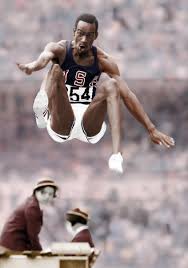
Bob Beamon, born Robert Beamon on August 29, 1946, in South Jamaica, Queens, New York, is an American former track and field athlete who is best known for his world record in the long jump at the 1968 Mexico City Olympics. Beamon’s incredible leap of 8.90 meters (29 feet, 2.5 inches) shattered the previous world record by a remarkable margin and stood unbroken for nearly 23 years. This article delves into Beamon’s life, his rise to fame, and the significant highlights of his career, providing detailed insights and explanations.
Early Life and Challenges
Beamon’s early life was fraught with challenges. His mother died of tuberculosis when he was just eight months old, leaving him to be raised by his grandmother. Growing up in a tough neighborhood, Beamon faced numerous hardships, including poverty and exposure to crime. His father was absent, which further complicated his upbringing. Despite these adversities, Beamon found solace and discipline in sports.
Beamon attended Jamaica High School, where he excelled in track and field. His talent was noticed by Larry Ellis, a prominent track coach, who helped guide him towards a future in athletics. Under Ellis’s mentorship, Beamon became a member of the “All American” track team, which provided him with a structured environment away from the streets.
College Years and Early Athletic Career
In 1965, Beamon’s athletic prowess earned him a scholarship to the University of Texas at El Paso (UTEP). During his time at UTEP, Beamon’s focus was on the long jump, and he quickly made a name for himself by placing second in the nation. His time at UTEP was also marked by his involvement in the civil rights movement. In a significant protest, Beamon boycotted a meet in Brigham Young University, which he believed promoted racist attitudes. This act of defiance resulted in his suspension from the university and loss of his scholarship.
Without a coach and facing numerous personal challenges, Beamon was taken under the wing of Olympic champion Ralph Boston. Boston, who became his unofficial coach and mentor, helped him prepare for the 1968 Olympics in Mexico City. Despite his turbulent personal life, including marital issues and financial struggles, Beamon persevered.
The 1968 Mexico City Olympics and the Record-Breaking Jump
On October 18, 1968, Bob Beamon made history at the Mexico City Olympics. The conditions on the day of the event were less than ideal, with a strong headwind and impending thunderstorms. However, the high altitude of Mexico City, which provided thinner air, played a crucial role in the athletes’ performance.
During the event, Beamon’s first jump was extraordinary. He sprinted down the runway and launched himself into the air with such force and technique that he seemed to defy gravity. When he landed, it was clear that he had done something exceptional. However, the measuring equipment was not designed to measure such a long distance, and it took several minutes before the official distance was announced: 8.90 meters (29 feet, 2.5 inches). Beamon had broken the previous world record by 55 centimeters (21.75 inches), a margin so large that it left spectators and officials in awe.
Beamon’s reaction to the news was one of shock and disbelief. He fell to his knees, overwhelmed by the realization of his achievement. His leap became known as the “Leap of the Century,” and his performance is considered one of the greatest moments in Olympic history.
Post-Olympic Life and Legacy
After the Olympics, Beamon returned to the United States as a national hero. He struggled to recapture the magic of his Olympic performance in subsequent competitions. In 1972, he earned a degree in sociology from Adelphi University, but his attempts to compete professionally in sports, including basketball, were unsuccessful.
Despite these struggles, Beamon’s Olympic record remained unbroken until 1991, when Mike Powell jumped 8.95 meters (29 feet, 4.5 inches) at the World Championships in Tokyo. Although Beamon’s record was surpassed, his Olympic record still stands, and his leap remains a benchmark in the history of athletics.
In the years following his athletic career, Beamon dedicated himself to helping young people. He worked with various organizations, including the Chicago State University, where he served as the director of athletics. Beamon’s story is one of triumph over adversity, and he has used his platform to inspire and motivate others.
Historical Context and Impact
Bob Beamon’s record-breaking jump took place during a time of significant social and political upheaval. The 1968 Mexico City Olympics were marked by protests and demonstrations, including the famous Black Power salute by Tommie Smith and John Carlos. Beamon’s achievement provided a moment of unity and celebration amid the turmoil.
Beamon’s leap also had a profound impact on the sport of track and field. It demonstrated the potential for human achievement and pushed the boundaries of what was thought possible in the long jump. His record became a target for future athletes, motivating them to push their limits.
Personal Insights and Reflections
Beamon’s life story is a testament to resilience and the power of sports to transform lives. From a troubled childhood to achieving one of the most iconic records in sports history, Beamon’s journey is inspiring. His willingness to stand up for his beliefs, as seen in his protest against racial discrimination, highlights his character and commitment to social justice.
Reflecting on his career, Beamon has often spoken about the importance of mentorship and guidance. His relationship with Ralph Boston was instrumental in his success, and he has sought to provide similar support to the next generation of athletes.
Conclusion
Bob Beamon’s life and career are marked by extraordinary achievements and significant challenges. His record-breaking jump at the 1968 Mexico City Olympics remains one of the most memorable moments in sports history. Beyond his athletic prowess, Beamon’s story is one of overcoming adversity and using his platform to inspire and support others.
Beamon’s legacy continues to influence the world of athletics and serves as a reminder of the heights that can be reached with determination, perseverance, and the right support. As we reflect on his life and achievements, Bob Beamon stands as a symbol of excellence and resilience, embodying the spirit of the Olympic Games and the enduring impact of sports on society.


