
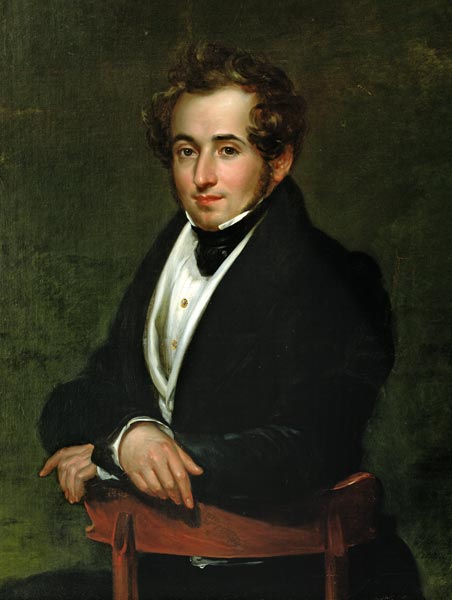
Introduction
Vincenzo Salvatore Carmelo Francesco Bellini, born on November 3, 1801, in Catania, Italy, is one of the most celebrated Italian opera composers of the 19th century. Renowned for his beautifully melodic compositions, Bellini’s works have left an indelible mark on the world of opera. This article explores his age, fame, and significant life highlights, providing a comprehensive look at his contributions to music and his enduring legacy.
Early Life and Education
Childhood and Family Background
Vincenzo Bellini was born into a family with a strong musical background. His grandfather, Vincenzo Tobia Bellini, was a well-known composer, and his father, Rosario Bellini, was an organist. This rich musical environment nurtured Bellini’s early interest in music. Showing prodigious talent from a young age, he began studying music seriously in his hometown of Catania.
Formal Music Education
In 1819, Bellini moved to Naples to study at the prestigious Real Collegio di Musica, now the Conservatorio di San Pietro a Majella. Here, he studied under the guidance of renowned composer Nicola Antonio Zingarelli, who directed Bellini towards classical studies. During this time, Bellini composed several sacred pieces, symphonies, and arias, showcasing his budding talent.
Early Compositions and Initial Success
Adelson e Salvini
Bellini’s first opera, “Adelson e Salvini,” was composed as his graduation piece in 1825. It premiered at the conservatory’s theater and received positive reviews, marking Bellini’s promising entry into the world of opera.
Bianca e Gernando
Following the success of his debut, Bellini was commissioned to write “Bianca e Gernando” (originally titled “Bianca e Fernando”) for the Teatro San Carlo in Naples in 1826. The opera was well-received and solidified Bellini’s reputation as a rising star in the operatic world.
Rise to Prominence
Move to Milan
In 1827, Bellini moved to Milan, one of the epicenters of opera in Italy. Here, he met influential figures in the music industry, which helped him secure important commissions. His opera “Il Pirata,” which premiered at La Scala in 1827, was a major success and established Bellini as a leading composer of his time.
Collaboration with Felice Romani
Bellini formed a fruitful collaboration with librettist Felice Romani. Together, they created several successful operas, including “La Straniera” (1829) and “Zaira” (1829). Although “Zaira” was less successful, it did not deter Bellini’s upward trajectory in the operatic world.
La Sonnambula and Norma
Bellini’s operas “La Sonnambula” (1831) and “Norma” (1831) are considered masterpieces of the bel canto style. “Norma,” in particular, featuring the famous aria “Casta Diva,” is often hailed as Bellini’s magnum opus. These operas showcased Bellini’s ability to blend beautiful melodies with dramatic intensity, cementing his status as a preeminent composer.
Later Works and Move to Paris
I Puritani
In 1835, Bellini composed “I Puritani,” his final opera, for the Théâtre-Italien in Paris. The opera was a resounding success and further demonstrated Bellini’s matured style, characterized by intricate vocal lines and rich orchestration. “I Puritani” was pivotal in solidifying Bellini’s international fame.
Influence of French Music
During his time in Paris, Bellini interacted with leading composers of the time, including Fryderyk Chopin and Gioachino Rossini. These interactions influenced his musical style, enriching his compositions with new colors and techniques. Bellini’s time in Paris also saw him compose several chamber works and art songs, expanding his repertoire beyond opera.
Personal Life and Challenges
Romantic Relationships
Bellini’s personal life was marked by a series of romantic entanglements. His love life, often tumultuous, provided inspiration for some of his most passionate music. However, his relationships were also sources of personal strife and distraction from his work.
Health Struggles
Bellini’s health was a recurring concern throughout his life. He suffered from a chronic intestinal ailment, which eventually led to his untimely death. Despite his health issues, Bellini remained dedicated to his craft, composing prolifically until his final days.
Legacy and Posthumous Recognition
Untimely Death
Vincenzo Bellini died on September 23, 1835, at the young age of 33. His death was attributed to an intestinal infection, possibly exacerbated by the stress and demands of his career. Bellini was initially buried in the Père Lachaise Cemetery in Paris, alongside other notable artists such as Chopin and Cherubini. In 1876, his remains were transferred to the Cathedral of Catania, his birthplace.
Influence on Opera
Bellini’s influence on the development of Italian opera cannot be overstated. His mastery of the bel canto style, characterized by beautiful, flowing melodies and expressive vocal lines, set a new standard for operatic composition. Bellini’s works have remained a staple of the operatic repertoire, beloved by audiences and performers alike.
Honors and Commemorations
In recognition of his contributions to music, Bellini has been honored in various ways. The Teatro Massimo Bellini in Catania is named after him, and his image appeared on the Italian 5,000 lire banknote from 1985 until the adoption of the Euro. Bellini’s legacy continues to be celebrated through performances of his operas worldwide.
Modern Performances and Interpretations
Continued Popularity
Bellini’s operas remain popular in the modern repertoire, frequently performed by leading opera houses around the world. Productions of “Norma,” “La Sonnambula,” and “I Puritani” continue to attract audiences with their captivating music and dramatic narratives.
Influence on Contemporary Music
Bellini’s melodic innovations have influenced generations of composers, both in opera and beyond. His emphasis on lyrical beauty and emotional expression has left a lasting impact on the development of Western music. Contemporary singers and musicians often study Bellini’s works to master the bel canto technique.
Conclusion
Vincenzo Bellini’s life and work represent a pinnacle of 19th-century Italian opera. His ability to create deeply emotional and melodically rich music has ensured his place among the greatest composers in history. Despite his short life, Bellini’s contributions to music continue to resonate, inspiring new generations of artists and captivating audiences around the world. His legacy as a master of melody and a pioneer of the bel canto style remains firmly established in the annals of classical music.


