
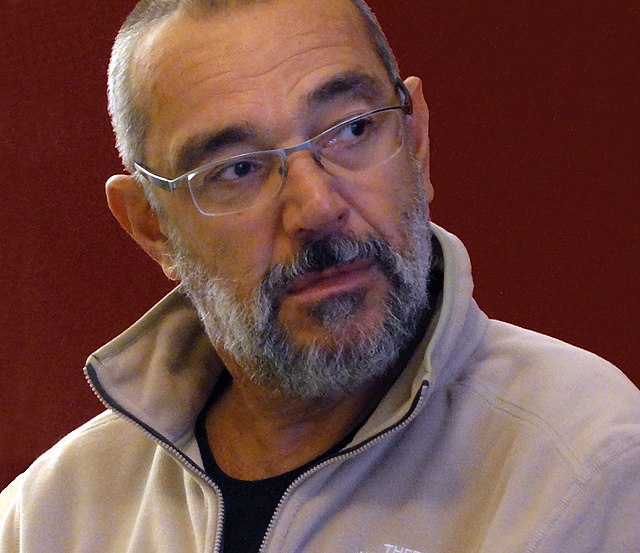
Andrea Benetti, born on January 15, 1964, in Bologna, Italy, is a renowned painter, photographer, and designer. He is celebrated for his unique contribution to contemporary art through the creation of the “Manifesto of Neo-Rupestrian Art.” This manifesto, crafted in 2006 and presented at the 53rd Venice Biennale in 2009, marks a significant milestone in Benetti’s career and sets the stage for his innovative approach to art, deeply rooted in prehistoric inspirations.
Early Life and Education
Andrea Benetti’s early life in Bologna was steeped in the rich cultural heritage of the city. His interest in art was evident from a young age, and he pursued formal education in the arts, where he honed his skills in painting, photography, and design. Bologna, known for its historical significance and vibrant artistic community, provided the perfect backdrop for Benetti’s burgeoning talent.
The Birth of Neo-Rupestrian Art
Benetti’s major breakthrough came with the conceptualization of the “Manifesto of Neo-Rupestrian Art.” This manifesto draws inspiration from the earliest known form of art—cave paintings. By referencing and reinterpreting the symbols and styles of prehistoric art, Benetti seeks to bridge the ancient and the contemporary, creating a dialogue between the past and the present.
His works often incorporate abstract elements reminiscent of cave paintings, utilizing natural pigments and materials to evoke the texture and essence of ancient art forms. This unique blend of modern techniques and primitive inspirations has garnered Benetti significant acclaim in the art world.
Collaborations and Academic Influence
Over the years, Andrea Benetti has collaborated with various prestigious institutions, both in Italy and abroad. Notable collaborations include projects with Johns Hopkins University and several Italian universities such as Bologna, Ferrara, Bari, Rome Tre, Lecce, and Bergamo. These collaborations have cemented his influence in the academic study of art, with many universities including his Neo-Rupestrian Art in their research programs.
Benetti’s works are housed in numerous museums and institutional collections worldwide, including the United Nations, the Quirinale (the official residence of the President of Italy), the Italian Chamber of Deputies, the Vatican, and several embassies around the globe.
Recognition and Critical Acclaim
The 2010s were a particularly fruitful decade for Benetti. His works were acquired by prominent institutions, leading to high-profile receptions at the Quirinale, the Italian Chamber of Deputies, and the Vatican. In 2012, he met Pope Benedict XVI, and in 2014, he had the honor of meeting Pope Francis. These encounters reflect the significant cultural and religious recognition of his contributions to art.
Benetti’s art has been extensively reviewed by university professors and esteemed art critics, further validating his impact on the contemporary art scene. His inclusion in major Italian encyclopedias like Treccani and De Agostini, as well as international platforms like WikiArt and Wikipedia (available in thirty languages), underscores his global influence.
Awards and Honors
In 2020, Andrea Benetti received the prestigious 49th “Nettuno d’Oro” award, the oldest and most esteemed artistic honor in Bologna. This award, established in 1971, is presented annually to the city’s most distinguished artist, highlighting Benetti’s enduring impact on the cultural landscape of his hometown.
Artistic Technique and Style
Andrea Benetti’s artistic process is distinctive and meticulous. His paintings begin with the creation of a bas-relief on canvas using gypsum. This is then treated with natural pigments and substances, followed by a thin layer of resin. The final step involves applying oil paint to specific parts of the work.
The irregularities of the bas-relief aim to symbolically emulate the three-dimensionality of rocky surfaces. The use of natural pigments, often in shades of ochre and brown, evokes the colors and textures of various rock types found in nature. This technique not only pays homage to prehistoric art but also introduces a tactile, almost sculptural quality to his paintings.
Personal Life and Philosophy
While much of Andrea Benetti’s public persona revolves around his artistic achievements, his personal life and philosophy are equally fascinating. He believes in the timeless nature of art and its ability to connect different eras and cultures. This belief is reflected in his Neo-Rupestrian Art, which transcends time by merging ancient inspirations with contemporary execution.
Benetti’s work is not just about creating art for aesthetic appreciation; it is a philosophical journey that invites viewers to contemplate the origins of human creativity and its evolution over millennia. His art serves as a reminder of the enduring power of symbols and the universal language of visual expression.
Legacy and Future Prospects
As Andrea Benetti continues to create and innovate, his legacy grows stronger. His influence on contemporary art, particularly through the Neo-Rupestrian movement, positions him as a pivotal figure in bridging the past and present. Future generations of artists and art enthusiasts will undoubtedly continue to draw inspiration from his work.
Benetti’s ongoing projects and collaborations promise to further expand his impact on the art world. His commitment to exploring new techniques and pushing the boundaries of traditional art forms ensures that his contributions will remain relevant and influential for years to come.
Conclusion
Andrea Benetti’s journey from Bologna to the global art stage is a testament to his talent, vision, and dedication. His ability to fuse ancient art forms with contemporary techniques has carved out a unique niche in the art world, earning him critical acclaim and widespread recognition. As we look to the future, Andrea Benetti’s art will undoubtedly continue to inspire and provoke thought, bridging the gap between the distant past and the present day.


