
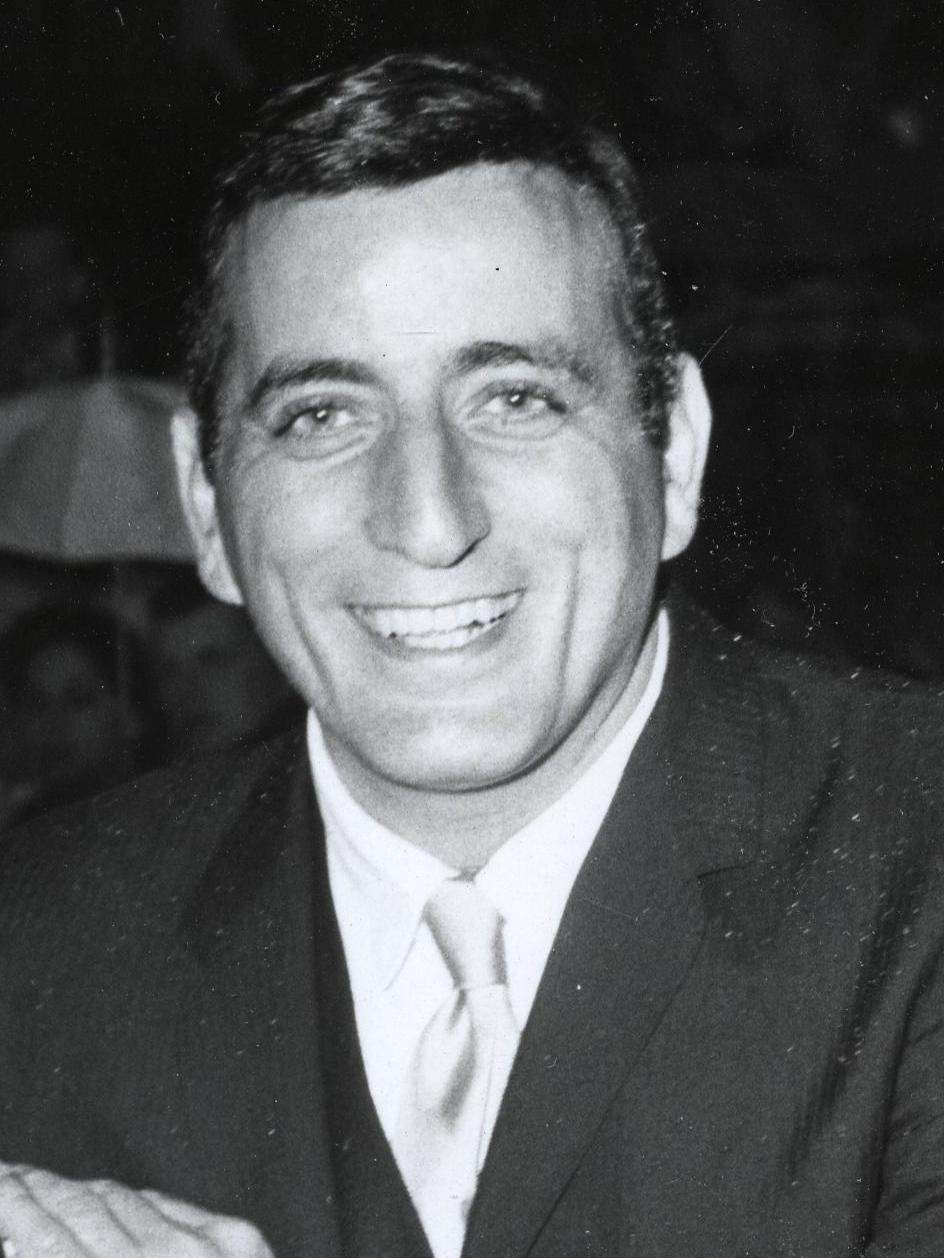
Tony Bennett, born Anthony Dominick Benedetto on August 3, 1926, in Astoria, Queens, New York, is an iconic American singer known for his contributions to jazz and popular music. With a career spanning over seven decades, Bennett has become a beloved figure in the music industry, renowned for his smooth voice, impeccable phrasing, and timeless appeal. This comprehensive exploration delves into his age, rise to fame, and significant life highlights, offering detailed insights and historical context.
Early Life and Musical Beginnings
Tony Bennett was born into an Italian-American family, with his father John Benedetto, an immigrant from Reggio Calabria, and his mother Anna Suraci, a seamstress. Growing up during the Great Depression, Bennett experienced financial hardships but found solace and inspiration in music. His uncle, a tap dancer, introduced him to the world of performing arts, and by the age of ten, Bennett was already singing at public events, including the opening of the Triborough Bridge.
Bennett attended the High School of Industrial Arts in Manhattan, where he honed his skills in music and painting. However, he dropped out at sixteen to help support his family, taking on various jobs while continuing to pursue his passion for singing. His early performances in restaurants and clubs in Queens helped him build a local reputation and gain valuable experience as an entertainer.
Military Service and Post-War Career
In 1944, Bennett was drafted into the U.S. Army during World War II. He served in the 63rd Infantry Division in France and Germany, participating in the liberation of a concentration camp and witnessing the horrors of war firsthand. These experiences left a profound impact on him, shaping his worldview and deepening his appreciation for life and art.
After the war, Bennett took advantage of the G.I. Bill to study bel canto singing at the American Theatre Wing. He performed under the stage name “Joe Bari” and continued to sing in various clubs and restaurants. His big break came in 1949 when he was discovered by Pearl Bailey, a jazz singer and actress, who invited him to open for her show in Greenwich Village. This performance caught the attention of comedian Bob Hope, who suggested he change his stage name to Tony Bennett.
Rise to Fame in the 1950s
Bennett’s career took off in the early 1950s when he signed with Columbia Records. His first major hit, “Because of You,” produced by Mitch Miller and orchestrated by Percy Faith, topped the charts for ten weeks and sold over a million copies. This success was followed by other hits like “Cold, Cold Heart,” “Blue Velvet,” and “Stranger in Paradise,” which solidified Bennett’s status as a leading crooner of the era.
During this time, Bennett married Patricia Beech, and the couple had two sons, Danny and Dae. However, the demands of his career and constant touring put a strain on his personal life, leading to their eventual divorce in 1971.
Transition to Jazz and Continued Success
In the mid-1950s, Bennett began to explore jazz more deeply. His 1955 album “The Beat of My Heart” featured collaborations with jazz greats like Herbie Mann and Nat Adderley, showcasing Bennett’s versatility and expanding his musical repertoire. He continued to work with renowned jazz musicians, recording two albums with the Count Basie Orchestra in the late 1950s.
Bennett’s popularity was further boosted by his television appearances, including his own summer replacement series, “The Tony Bennett Show.” In 1962, he performed at Carnegie Hall, a landmark event in his career that featured 44 songs and an orchestra of jazz legends. That same year, he recorded “I Left My Heart in San Francisco,” a song that became his signature tune and won him two Grammy Awards. The accompanying album went gold and solidified Bennett’s place in the pantheon of great American singers.
Challenges and Reinvention in the 1960s and 1970s
The 1960s brought significant changes to the music industry with the rise of rock and roll and the British Invasion. While Bennett’s popularity waned among younger audiences, he continued to perform and record, albeit with mixed commercial success. His foray into acting with the film “The Oscar” in 1966 was not well-received, and his record label, Columbia, pressured him to adapt to the changing musical landscape.
Despite these challenges, Bennett remained committed to his artistic vision. In the 1970s, he recorded two critically acclaimed albums with jazz pianist Bill Evans, “The Tony Bennett/Bill Evans Album” and “Together Again,” which highlighted his deep connection to jazz.
Personal Struggles and Career Resurgence
During the 1970s, Bennett faced personal struggles, including a battle with drug addiction and the collapse of his second marriage to Sandra Grant, with whom he had two daughters, Joanna and Antonia. In 1979, he suffered an overdose and reached out to his eldest son, Danny, for help.
Danny Bennett, recognizing his father’s immense talent and potential for a comeback, took over as his manager. Under Danny’s guidance, Tony Bennett experienced a remarkable career resurgence in the 1980s and 1990s. He returned to Columbia Records and began reaching new audiences through innovative collaborations and performances.
Revival and Legacy in the 1980s and Beyond
Bennett’s revival was marked by a series of successful albums and high-profile performances. He won a Grammy Award in 1993 for his album “Perfectly Frank,” a tribute to Frank Sinatra, and another Grammy in 1994 for “Steppin’ Out,” a tribute to Fred Astaire. His appearance on “MTV Unplugged” in 1994 introduced him to a younger generation and earned him two more Grammy Awards.
Bennett’s collaborations with contemporary artists, such as the Red Hot Chili Peppers, Elvis Costello, and later Lady Gaga, further broadened his appeal. His duet albums “Duets: An American Classic” (2006) and “Duets II” (2011) were critically acclaimed and commercially successful, with the latter making him the oldest artist to achieve a number one album on the Billboard 200 chart.
In 1997, Bennett was inducted into the Big Band and Jazz Hall of Fame, and he received a Grammy Lifetime Achievement Award in 2001. He published his autobiography, “The Good Life,” in 1997, offering fans a glimpse into his remarkable journey.
Personal Life and Final Years
In his later years, Bennett continued to perform and record, maintaining a busy schedule well into his 80s and 90s. In 2007, he married his third wife, Susan Crow, a former teacher and philanthropist. Despite his advancing age, Bennett’s passion for music remained undiminished.
In 2016, Bennett celebrated his 90th birthday with a star-studded concert at Radio City Music Hall, featuring performances by Lady Gaga, Stevie Wonder, and other luminaries. His final album, “Love for Sale,” a collaboration with Lady Gaga, was released in 2021 to critical acclaim.
Conclusion
Tony Bennett’s life and career are a testament to his enduring talent, resilience, and love for music. From his early days singing in Italian restaurants to his status as a global icon, Bennett’s journey has been marked by both triumphs and challenges. His contributions to jazz and popular music have left an indelible mark on the industry, and his ability to connect with audiences of all ages has cemented his legacy as one of the greatest singers of all time.
Tony Bennett passed away on July 21, 2023, at the age of 96, leaving behind a rich legacy of music and an enduring influence on the world of entertainment.


