
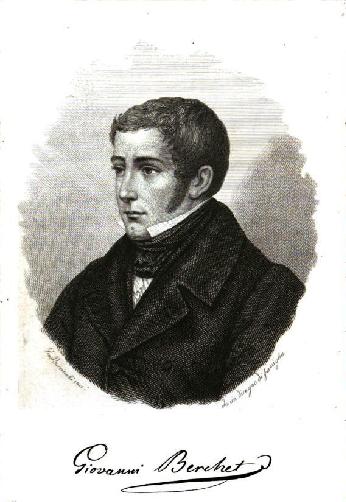
Giovanni Berchet, born on December 23, 1783, in Milan, Italy, and passed away on December 23, 1851, in Turin, is a renowned figure in Italian literature and politics. As a seminal poet, writer, and one of the foremost exponents of Italian Romanticism, Berchet’s contributions have left an enduring impact on the cultural and political landscape of Italy. This article delves into the life, career, and legacy of Giovanni Berchet, providing detailed insights and exploring the nuances of his influence.
Early Life and Education
Giovanni Berchet was the eldest of eight children, born to Federico Berchet, a Swiss textile merchant, and Caterina Silvestri. His early exposure to literature and the arts was a precursor to his lifelong passion for writing and poetry. Berchet’s proficiency in languages and his keen interest in literature were evident from a young age. He showcased his translation skills by rendering significant works such as Thomas Gray’s “The Bard” and Oliver Goldsmith’s “The Vicar of Wakefield” into Italian, demonstrating a deep understanding and appreciation of literary art.
Literary Contributions
The Semiserious Letter
In 1816, Berchet published “Lettera semiseria di Grisostomo al suo figliolo” (The Semiserious Letter of Chrysostom to His Son), a pivotal work that marked a turning point in Italian literature. This work is often regarded as the manifesto of Italian Romanticism. Writing under the pseudonym Grisostomo, which means “golden-mouthed” in Greek, Berchet crafted a letter ostensibly addressed to his son, who was in boarding school. The letter served as a medium to critique the prevailing literary norms and advocate for a new Romantic literature.
In this seminal piece, Berchet used a fictional narrative to promote Romantic ideals. He recommended German ballads like G.A. Bürger’s “Der wilde Jäger” (The Wild Huntsman) and “Lenore” as exemplary works of the new literary movement. The “Lettera semiseria” effectively parodied classical literature’s rigid conventions, proposing instead a more emotional and popular form of poetry that resonated with the common people.
Purpose and Impact
The primary purpose of Berchet’s “Lettera semiseria” was to highlight the importance of popular poetry over classical and mythological themes, which he termed “poetry of the dead.” Berchet argued for modernizing Italian literature by drawing inspiration from contemporary European works. He identified the audience for this new literature as the general populace, distinguishing them from the overly sophisticated “Parigini” (Parisians) and the uncultured “Ottentotti” (Hottentots). This approach resonated with other Romantic poets, including Giacomo Leopardi, Ugo Foscolo, and Alessandro Manzoni, who also sought to infuse Italian literature with new life and relevance.
Political Involvement
The Conciliatore and Carboneria
Berchet’s literary endeavors were closely intertwined with his political activities. In 1818, he co-founded “Il Conciliatore,” a publication that became the voice of Romantic poets and thinkers. This platform allowed Berchet and his contemporaries to disseminate their ideas on literature and politics, advocating for liberal reforms and national unity.
In 1820, Berchet joined the Carboneria, a secret society dedicated to Italian unification and independence from Austrian rule. His involvement in the Carboneria marked a significant shift in his life, intertwining his literary work with his commitment to political activism. Berchet participated in the 1821 uprisings, which were ultimately suppressed. To avoid arrest, he fled into exile, first to Paris, then to London, and finally to Belgium.
Exile and Continued Work
During his exile in Belgium, Berchet continued to write and produce significant literary works. He penned “I profughi di Parga” (The Refugees of Parga) in 1821, a poem that reflected his political sentiments and support for the Greek War of Independence. This was followed by “Romanze” (Ballads) between 1822 and 1824, and “Le fantasie” (The Fantasies) in 1829. These works solidified Berchet’s reputation as a leading Romantic poet and an advocate for national and individual freedom.
Return to Italy and Final Years
The Five Days of Milan
Berchet returned to Italy in 1845, amid growing unrest and calls for independence. In 1848, he actively participated in the Five Days of Milan, a major insurrection against Austrian rule. The event was a crucial moment in the struggle for Italian unification, although it ultimately failed to achieve immediate success.
Political Career and Legacy
After the failure of the First Italian War of Independence, Berchet sought refuge in Piedmont. In 1850, he aligned with the historical right and was elected to the Piedmontese Parliament. His time in political office was short-lived, as he passed away on his 68th birthday, December 23, 1851. Berchet was buried in the Monumental Cemetery of Turin, where his contributions to literature and politics are commemorated.
Historical Context and Influence
The Romantic Movement
Berchet’s work must be understood within the broader context of the Romantic movement, which emphasized emotion, individualism, and the glorification of the past and nature. This movement was a reaction against the rationalism and formality of the Enlightenment, seeking instead to express deep personal and nationalistic feelings. Berchet’s advocacy for popular poetry aligned with these ideals, aiming to create a literary tradition that spoke directly to the people and their experiences.
Italian Unification
Berchet’s political activities were part of the larger Risorgimento, the movement for Italian unification. His writings and involvement in revolutionary activities contributed to the growing sense of Italian national identity. Berchet’s vision of a unified Italy, free from foreign domination, resonated with the aspirations of many Italians and influenced subsequent generations of patriots and writers.
Conclusion
Giovanni Berchet’s life and work represent a confluence of literary brilliance and passionate political activism. As a poet, he was instrumental in shaping Italian Romanticism, advocating for a literature that was both modern and deeply rooted in the popular consciousness. As a political activist, he tirelessly fought for Italian unification and independence, leaving an indelible mark on the nation’s history.
Berchet’s legacy endures through his writings and the lasting impact of his ideas on Italian literature and culture. His commitment to modernizing literature and his unwavering dedication to political freedom continue to inspire and resonate, making him a timeless figure in the annals of Italian history.


