
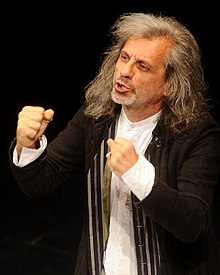
Alessandro Bergonzoni, born on July 21, 1958, in Bologna, Italy, is a renowned Italian actor, writer, playwright, and comedian. Known for his surreal and absurdist style, Bergonzoni’s work in theater and literature has earned him a reputation as one of the most innovative and thought-provoking artists in contemporary Italian culture. This comprehensive overview explores Bergonzoni’s life, career, and significant milestones, providing detailed insights and historical context.
Early Life and Education
Childhood and Early Interests
Alessandro Bergonzoni grew up in Bologna, a city known for its rich cultural and artistic heritage. From a young age, Bergonzoni displayed a keen interest in literature and the performing arts. His early exposure to the creative world influenced his unique style, characterized by a playful yet profound manipulation of language and ideas.
Academic Background
Bergonzoni attended the Accademia Antoniana in Bologna, where he developed his foundational skills in acting and performance. Concurrently, he pursued a degree in law at the University of Bologna, balancing his academic studies with his burgeoning passion for the arts. This diverse educational background provided Bergonzoni with a unique perspective that would later inform his creative works.
Theatrical Debut and Early Career
Initial Foray into Theater
In 1982, at the age of 24, Bergonzoni made his theatrical debut with a self-written play titled “Scemeggiata.” This work marked the beginning of his collaboration with Claudio Calabrò, a theater director and actor who would become a significant figure in Bergonzoni’s career. The play was well-received and set the stage for Bergonzoni’s future in theater.
Developing a Unique Style
Bergonzoni’s early works, such as “Chi cabaret fa per tre” (1983) and “La regina del Nautilus” (1984), showcased his distinctive style that blended humor, surrealism, and linguistic inventiveness. These performances were characterized by their exploration of the absurd and the unconventional, earning Bergonzoni critical acclaim and a growing audience.
Expansion into Radio and Television
Radio and Television Appearances
In 1985, Bergonzoni expanded his reach into radio, bringing his unique comedic style to a broader audience. The following year, he made his television debut on the Rai Uno program “Il bello della diretta,” hosted by Loretta Goggi. These appearances helped solidify Bergonzoni’s reputation as a versatile performer capable of engaging audiences across different media.
National Recognition
Bergonzoni’s 1987 theatrical production “Non è morto nè Flic nè Floc” garnered national attention and critical praise, earning him a special mention at the IDI Critics’ Award. This period marked a significant milestone in Bergonzoni’s career, as he began to establish himself as a prominent figure in Italian comedy and theater.
Literary Contributions and Further Acclaim
First Book and Literary Success
In 1989, Bergonzoni published his first book, “Le balene restino sedute,” a collection of comedic and surreal prose. The book was a commercial success and won the Palma d’Oro at the Bordighera Prize for Best Comic Book of the Year in 1990. The success of this publication further cemented Bergonzoni’s status as a talented writer and comedian.
Continued Theatrical Innovation
Throughout the early 1990s, Bergonzoni continued to innovate in the theater. His 1992 production “Anghingò” marked a transitional phase in his career, as he began to experiment with more complex narrative structures and thematic depth. The same year, he released his second book, “È già mercoledì e io no,” published by Mondadori, which was met with critical acclaim.
Mid-Career Developments and Broader Influence
Recognition and Awards
In 1994, Bergonzoni’s theatrical work “La cucina del frattempo” showcased his continued evolution as a playwright and performer. The following year, his third book, “Il grande Fermo e i suoi piccoli andirivieni,” was published by Garzanti. This novel demonstrated Bergonzoni’s ability to blend humor with poignant storytelling, further enhancing his literary reputation.
Expansion into Film and Other Media
In 1996, Bergonzoni made his debut as a screenwriter and actor in the short film “Piccola Mattanza,” directed by Claudio Calabrò and presented at the Torino Film Festival. This foray into film allowed Bergonzoni to explore new creative avenues and reach a wider audience. He also began collaborating with various publications, contributing humorous and thought-provoking columns to magazines such as “Carnet.”
Later Career and Continued Innovation
Theatrical and Literary Achievements
Bergonzoni’s work in the late 1990s and early 2000s continued to push the boundaries of theater and literature. In 1997, his play “Zius” and the publication “Silences – Il teatro di Alessandro Bergonzoni,” which collected six of his theatrical texts, underscored his ongoing commitment to artistic experimentation. His 1998 performance at the Institut Français in Paris received widespread acclaim, further establishing his international reputation.
Social Engagement and Advocacy
In 2000, Bergonzoni began collaborating with the “Casa dei Risvegli – Luca De Nigris,” an association dedicated to the recovery and rehabilitation of coma patients. His involvement included creating promotional content and serving as a spokesperson, demonstrating his commitment to using his platform for social good.
Major Works and Recognitions
In 2005, Bergonzoni published “Non ardo dal desiderio di diventare uomo finché posso essere anche donna bambino animale o cosa,” a book that encapsulated his unique blend of humor and introspection. This period also saw Bergonzoni’s first public art exhibition at the Museo Archeologico in Aosta and his participation in the Venice Film Festival with the film “Quijote,” directed by Mimmo Paladino.
Recent Works and Ongoing Influence
Continued Theatrical Success
In 2007, Bergonzoni premiered his theatrical work “NEL,” which earned him the UBU Award for Best Actor in Italian Theater. This recognition highlighted his continued relevance and impact in the world of theater. He also engaged in various artistic collaborations, contributing to the new Gallery of Modern Art in Bologna and participating in the “Bologna si rivela” art project.
Literary Contributions and Performances
Bergonzoni’s commitment to literary and theatrical innovation remained unwavering in the 2010s. His 2010 project “Tàchete,” which evolved into the performance “Urge,” premiered at the Festival “Fuori” in Reggio Emilia, demonstrating his ongoing dedication to creative exploration.
Artistic and Social Engagement
Bergonzoni’s recent works have continued to blend his artistic pursuits with social advocacy. His involvement in initiatives such as Artefiera and his ongoing support for the “Casa dei Risvegli – Luca De Nigris” underscore his commitment to using art as a vehicle for social change.
Conclusion
Alessandro Bergonzoni’s career spans over four decades and encompasses a wide range of creative endeavors, from theater and literature to film and social advocacy. His unique style, characterized by surrealism, absurdity, and linguistic innovation, has left an indelible mark on Italian culture. Bergonzoni’s work continues to inspire and challenge audiences, reflecting his unwavering dedication to artistic and social progress.
As we look to the future, Alessandro Bergonzoni’s legacy as a pioneering artist and advocate for social change remains firmly established. His contributions to theater, literature, and beyond serve as a testament to the power of creativity and the enduring impact of the arts on society.


