
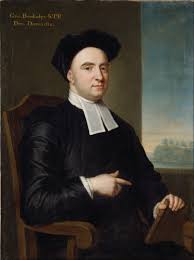
George Berkeley, born on March 12, 1685, in Kilkenny, Ireland, was an influential philosopher whose work profoundly shaped the development of modern philosophy. As a major figure in the tradition of British empiricism, Berkeley is best known for his theory of immaterialism, which posits that reality consists solely of minds and their ideas. This comprehensive overview explores Berkeley’s life, his philosophical contributions, and the historical context of his work.
Early Life and Education
Childhood and Academic Background
George Berkeley was born into a relatively affluent Anglo-Irish family. He attended Kilkenny College and later the prestigious Trinity College in Dublin, where he excelled in various subjects, including mathematics, logic, classical literature, theology, and philosophy. His broad academic background laid the foundation for his future philosophical inquiries.
Influences and Early Interests
During his studies at Trinity College, Berkeley became deeply influenced by the works of major philosophers such as John Locke, Nicolas Malebranche, Pierre Gassendi, René Descartes, and Isaac Newton. These thinkers shaped his intellectual trajectory, particularly his interest in the nature of knowledge and perception.
Academic Career and Early Works
Teaching at Trinity College
After completing his studies, Berkeley remained at Trinity College, where he was appointed as a lecturer and later as a junior fellow. His teaching responsibilities included subjects such as theology, Hebrew, and Greek. During this period, Berkeley began to develop his own philosophical ideas, diverging from the materialist perspectives that dominated the intellectual landscape of his time.
Early Publications
In 1707, Berkeley published his first works, “Arithmetica” and “Miscellanea Mathematica,” which showcased his mathematical prowess. These early publications were followed by “Of Infinites,” a treatise that addressed the concept of infinity, reflecting his engagement with both mathematical and philosophical problems.
Major Philosophical Contributions
Immaterialism and the Principle of Perception
Berkeley’s most significant philosophical contribution is his theory of immaterialism, articulated in his seminal work “A Treatise Concerning the Principles of Human Knowledge” (1710). This theory challenges the prevailing notion of material substance, asserting instead that reality consists only of minds and their perceptions. Berkeley famously encapsulated this idea with the phrase “esse est percipi” (to be is to be perceived).
According to Berkeley, what we consider physical objects do not exist independently of our perception of them. Instead, they are collections of sensory experiences or ideas. For example, a tree exists only as a series of perceptions—its color, shape, texture, and so forth—experienced by a mind. If no one perceives the tree, it does not exist. However, Berkeley argued that God, an omnipresent mind, continuously perceives all things, ensuring their existence.
Dialogues and Further Developments
In 1713, Berkeley published “Three Dialogues between Hylas and Philonous,” a more accessible exposition of his immaterialist philosophy. In this work, the character Philonous (representing Berkeley) engages in a philosophical debate with Hylas, defending the immaterialist view against common objections. This dialogue format made Berkeley’s ideas more comprehensible to a broader audience and solidified his reputation as a leading philosopher.
Critique of Materialism and Skepticism
Berkeley’s immaterialism was also a critique of the materialist and skeptical tendencies of his time. He argued that materialism leads to atheism and skepticism by denying the need for a divine perceiver. By asserting that God perceives all things, Berkeley aimed to provide a foundation for both the existence of the external world and the presence of a divine order.
Later Career and Travels
Diplomatic and Academic Pursuits
In 1713, Berkeley moved to London and became involved in diplomatic and academic circles. He traveled extensively, including a significant journey to Italy in 1716 as a tutor to the son of the Bishop of Clogher. During his travels, Berkeley continued to refine his philosophical ideas and engage with other intellectuals.
Marriage and Missionary Ambitions
In 1728, Berkeley married Anne Forster, the eldest daughter of John Forster, the Speaker of the Irish House of Commons. With a substantial inheritance from his wife’s family, Berkeley pursued his ambition to establish a missionary college in Bermuda to educate and convert Native Americans. He set sail for America in 1728 and settled in Rhode Island while awaiting funding for his project. Despite his efforts, the financial support from the British government never materialized, forcing Berkeley to abandon his mission and return to London in 1731.
Later Works and Achievements
“Alciphron” and “The Analyst”
Back in London, Berkeley published “Alciphron, or The Minute Philosopher” (1732), a work that defended Christianity against the freethinkers of his time. In 1734, he published “The Analyst,” a critique of the foundations of calculus, aimed particularly at Newtonian mathematicians. This work highlighted Berkeley’s continued engagement with mathematical and philosophical issues.
Bishop of Cloyne
In 1734, Berkeley was appointed the Bishop of Cloyne in Ireland, a position he held until his death. As bishop, he focused on pastoral duties, philosophical writing, and addressing social issues. During his time in Cloyne, Berkeley wrote “The Querist” (1735-1737), a series of questions addressing economic and social problems in Ireland, and “Siris” (1744), a treatise on the medicinal uses of tar-water that also explored broader philosophical themes.
Philosophical Legacy and Historical Context
Rejection of Materialism
Berkeley’s philosophy emerged during a period when materialism and empiricism were gaining prominence. His rejection of material substance and his emphasis on perception and the immaterial nature of reality were radical departures from the dominant philosophical trends. Berkeley’s ideas challenged the assumptions of both the scientific and philosophical communities, provoking significant debate.
Influence on Later Thinkers
Berkeley’s work influenced subsequent philosophers, including David Hume and Immanuel Kant, who grappled with the implications of his immaterialism. While Hume developed his own empiricist philosophy, he acknowledged the importance of Berkeley’s critique of materialism. Kant, on the other hand, integrated some of Berkeley’s insights into his transcendental idealism, which posited that the mind plays a crucial role in shaping our experience of reality.
Contributions to Empiricism
As one of the key figures in the tradition of British empiricism, Berkeley’s emphasis on sensory experience and perception contributed to the development of modern epistemology. His ideas laid the groundwork for further explorations into the nature of knowledge, perception, and reality, influencing both philosophical and scientific discourse.
Personal Life and Death
Family and Personal Interests
Throughout his life, Berkeley maintained a deep commitment to his family and his philosophical pursuits. His marriage to Anne Forster brought stability and support, and together they had several children. Berkeley’s personal interests extended beyond philosophy to include theology, economics, and social reform, reflecting his broad intellectual curiosity.
Final Years and Death
In his later years, Berkeley’s health began to decline, exacerbated by the death of his son William in 1751. Seeking a more suitable environment for his health, he moved to Oxford in 1752. Despite his declining health, Berkeley continued to engage with philosophical issues until his death from a stroke on January 14, 1753, at the age of 67.
Conclusion
George Berkeley’s life and work represent a significant chapter in the history of philosophy. His radical immaterialism challenged the materialist assumptions of his time and offered a novel perspective on the nature of reality, perception, and knowledge. Berkeley’s emphasis on the role of perception and the immaterial nature of existence continues to inspire and provoke thought among philosophers and scholars.
As we continue to explore and engage with Berkeley’s ideas, his contributions to philosophy remain relevant and influential. George Berkeley stands as a towering figure in the intellectual landscape, whose work continues to shape and inspire philosophical inquiry.


