
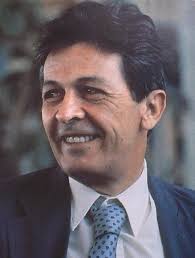
Enrico Berlinguer, born on May 25, 1922, in Sassari, Italy, was a prominent Italian politician who became the Secretary of the Italian Communist Party (PCI). His leadership and vision significantly influenced Italian and European politics during the Cold War era. This article provides a comprehensive overview of Berlinguer’s life, his political career, and the lasting impact of his work.
Early Life and Education
Childhood and Family Background
Enrico Berlinguer was born into a politically active family. His father, Mario Berlinguer, was a lawyer and a deputy in the Italian Parliament, representing the Sardinian Action Party. This political environment profoundly influenced young Enrico, instilling in him a deep commitment to social justice and political activism.
Academic Pursuits
Berlinguer attended the University of Sassari, where he pursued a degree in law. His academic interests were diverse, including philosophy and jurisprudence. He planned to write his thesis on “Philosophy of Law: From Hegel to Croce and Gentile,” indicating his early engagement with philosophical and political thought.
Entry into Politics
Joining the Italian Communist Party
In October 1943, amidst the turmoil of World War II, Berlinguer joined the Italian Communist Party (PCI). His involvement in the party quickly grew, and he became the Secretary of the PCI’s youth section in Sassari. By early 1944, he was actively participating in the “bread riots” in Sassari, a series of protests driven by food shortages and economic hardship. His arrest and subsequent release highlighted his commitment and rising prominence within the party.
Rise within the PCI
After his release, Berlinguer’s political career accelerated. He moved to Rome and became a member of the National Secretariat of the Communist Youth Movement. In 1945, following Italy’s liberation, he took on a significant role in Milan as the head of the PCI’s central youth commission. His efforts culminated in his election to the PCI’s Central Committee in 1948, where he began to influence the party’s direction significantly.
Political Career and Leadership
Secretary-General of the Communist Youth
From 1949 to 1956, Berlinguer served as the Secretary-General of the Italian Communist Youth Federation. During this period, he also held the presidency of the World Federation of Democratic Youth, reflecting his growing influence in international communist circles. His leadership was characterized by efforts to modernize the party and appeal to younger generations.
Marriage and Personal Life
In 1957, Berlinguer married Letizia Laurenti, with whom he had four children: Bianca, Marco, Maria, and Laura. His family life was closely intertwined with his political career, providing him with personal stability amidst his demanding public responsibilities.
Parliamentary Career
Berlinguer was elected to the Italian Parliament in 1968, representing the Lazio region. As a member of the Foreign Affairs Committee, he played a crucial role in shaping Italy’s foreign policy, particularly concerning relations with the Soviet Union and the broader communist movement.
Secretary of the Italian Communist Party
Ascension to Secretary-General
In March 1972, during the XIII National Congress of the PCI in Milan, Berlinguer was elected Secretary-General of the party. His election marked the beginning of a transformative period for the PCI. Under his leadership, the party adopted a more independent stance from the Soviet Union, promoting the idea of “Eurocommunism.”
Eurocommunism and the Historic Compromise
Berlinguer’s most significant contribution to European politics was his advocacy for Eurocommunism, a form of communism that sought to adapt Marxist principles to the democratic and social contexts of Western Europe. He envisioned a form of socialism that respected democratic institutions and sought broad alliances across political spectrums.
The “Historic Compromise” was a pivotal element of this strategy. Berlinguer aimed to form an alliance between the PCI and the Christian Democracy (DC) party to stabilize Italy’s political system and address the socio-economic challenges of the time. Although this compromise faced significant obstacles and ultimately did not fully materialize, it demonstrated Berlinguer’s pragmatic and innovative approach to politics.
Challenges and Controversies
1973 Coup in Chile
Berlinguer’s political career was marked by several international events that tested his leadership. The 1973 military coup in Chile, which overthrew the democratically elected socialist president Salvador Allende, had a profound impact on him. He publicly expressed his disillusionment with the Soviet Union’s role in global politics, emphasizing the need for the PCI to pursue a more autonomous and democratic path.
Red Brigades and Terrorism
The rise of domestic terrorism in Italy during the 1970s, particularly the activities of the Red Brigades, posed significant challenges to Berlinguer’s vision of a peaceful and democratic transition to socialism. He condemned the violence unequivocally and worked tirelessly to distance the PCI from extremist elements, advocating for democratic processes and social reforms.
Later Years and Legacy
Continued Influence and Health Challenges
Despite facing numerous political and personal challenges, Berlinguer remained a central figure in Italian politics throughout the 1980s. His health began to decline, but he continued to lead the PCI with determination and resilience.
Death and National Mourning
On June 7, 1984, while delivering a speech in Padua for the European Parliament elections, Berlinguer suffered a cerebral hemorrhage. He died four days later on June 11, 1984. His death was met with widespread national mourning, reflecting the deep respect and admiration he had earned across Italy’s political spectrum.
Posthumous Recognition
Berlinguer’s contributions to Italian politics and the international communist movement have been widely recognized. His efforts to democratize and modernize the PCI left a lasting impact on the party and on European leftist politics. Streets, squares, and institutions in Italy have been named in his honor, commemorating his legacy and ideals.
Historical Context and Impact
The Cold War and Italian Politics
Berlinguer’s political career unfolded during the Cold War, a period marked by intense ideological battles between the capitalist West and the communist East. Italy, as a frontline state in this global struggle, experienced significant political turbulence, with the PCI playing a central role in the country’s political landscape.
Influence on European Communism
Berlinguer’s advocacy for Eurocommunism influenced communist parties across Western Europe, inspiring them to adopt more democratic and reformist approaches. His emphasis on human rights, democratic institutions, and social justice resonated with many and contributed to a broader rethinking of communist strategies in democratic societies.
Legacy in Modern Politics
Berlinguer’s legacy continues to influence contemporary political discourse in Italy and beyond. His commitment to democratic principles, social justice, and pragmatic reform serves as a model for progressive political movements. His ideas and leadership style remain relevant as politicians and activists grapple with the challenges of balancing ideological commitments with practical governance.
Conclusion
Enrico Berlinguer’s life and career are a testament to his dedication to political activism, social justice, and democratic reform. From his early days in Sassari to his leadership of the Italian Communist Party, Berlinguer consistently championed the rights of the working class and sought to create a more just and equitable society.
His vision of Eurocommunism and the Historic Compromise reflected his pragmatic and innovative approach to politics, aiming to bridge ideological divides and foster stability in a turbulent era. Despite facing significant challenges, Berlinguer’s unwavering commitment to his ideals left a lasting impact on Italian and European politics.
As we reflect on his contributions, Enrico Berlinguer’s legacy continues to inspire those who strive for a more just and democratic world. His life serves as a reminder of the power of principled leadership and the enduring importance of pursuing social and political change.


