
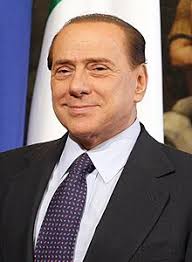
Silvio Berlusconi, born on September 29, 1936, in Milan, Italy, was a prominent businessman, media tycoon, and politician. His life story is a fascinating mix of entrepreneurial success, political influence, and personal controversies, making him one of the most influential and polarizing figures in modern Italian history.
Early Life and Business Ventures
Silvio Berlusconi’s early life was marked by his academic achievements and entrepreneurial spirit. He graduated with a law degree from the University of Milan. His career began in the construction industry, where he made his mark with significant projects such as “Milano 2,” a satellite city designed to provide modern living spaces just outside of Milan. This project, launched between 1969 and 1979, was followed by the development of “Milano 3” and the commercial center “Il Girasole.”
Entry into the Media Industry
In 1980, Berlusconi ventured into the media industry, transforming a local cable TV station in Milano 2 into a national network. This led to the creation of Canale 5, the first private national TV channel in Italy, breaking the state broadcaster RAI’s monopoly. He also founded Publitalia, an advertising sales company. These ventures were consolidated under the Fininvest holding company, established in 1978. Berlusconi’s success with Canale 5 paved the way for the acquisition of Italia 1 and Rete 4, further expanding his media empire.
Personal Life and Marriages
In 1985, Berlusconi divorced his first wife, Carla Dall’Oglio, and officially partnered with actress Veronica Lario (née Miriam Bartolini), whom he married in 1990. The couple had three children together. This period also saw Berlusconi facing legal challenges, such as the 1985 order by a judge to shut down his TV stations due to regulatory issues. However, Prime Minister Bettino Craxi intervened, legalizing national private broadcasting and reinforcing the RAI-Fininvest duopoly.
AC Milan and “The Segrate War”
In 1986, Berlusconi became the president of AC Milan, leading the football club to a period of unprecedented success both nationally and internationally. The club flourished under the management of renowned coaches like Arrigo Sacchi, Fabio Capello, and Carlo Ancelotti.
Simultaneously, Berlusconi was embroiled in the so-called “Segrate War,” a fierce battle for control of the publishing house Mondadori against Carlo De Benedetti. The conflict ended with a division of assets, with Berlusconi gaining the book publishing sector and the weekly magazine Panorama, while De Benedetti acquired the Espresso and other local newspapers.
Political Career: The Rise of Forza Italia
The early 1990s were a tumultuous time in Italian politics, with traditional parties collapsing under corruption scandals. In January 1994, Berlusconi announced his entry into politics, founding Forza Italia, a center-right political party. Within three months, Forza Italia gained over 20% of the vote in the general elections, forming a coalition with the National Alliance, Northern League, and other parties. Berlusconi became Prime Minister in 1994, but his first term was short-lived due to internal conflicts and a corruption investigation.
Return to Power and Legislative Achievements
Despite the setback, Berlusconi remained a significant political figure. He led the opposition and participated in the Bicameral Commission for Constitutional Reforms. In 1999, Forza Italia nearly secured 30% of the vote in the European elections, prompting Massimo D’Alema to resign as Prime Minister.
Berlusconi’s political comeback occurred in the 2001 general elections, where his coalition, the House of Freedoms, won a decisive victory. His second term as Prime Minister was marked by economic reforms and controversial legal changes that some critics argued were designed to shield him from prosecution. Despite these controversies, Berlusconi’s administration achieved notable successes, including improving Italy’s international image and diplomatic relations.
The Later Years and Continuing Influence
The second Berlusconi government was the longest-serving in the history of the Italian Republic, lasting until the European elections of 2004. Despite setbacks, such as poor regional election results in 2005, Berlusconi remained a dominant force in Italian politics.
In the 2008 general elections, Berlusconi led the People of Freedom (PdL) party, a merger of Forza Italia and the National Alliance, to victory. His third term as Prime Minister saw Italy grappling with the global financial crisis, leading to austerity measures and widespread public discontent.
Berlusconi’s political career was marred by numerous legal issues, including accusations of corruption and tax fraud. In 2013, he was convicted of tax fraud and banned from holding public office, although his political influence continued. He re-established Forza Italia in 2013 after the dissolution of the PdL.
The Final Act: European Parliament and Senate Return
Despite his legal battles, Berlusconi made a political comeback in 2018, regaining eligibility for public office. He was elected to the European Parliament in 2019 and won a Senate seat in the 2022 general elections, representing the Monza constituency.
Death and Legacy
Silvio Berlusconi passed away on June 12, 2023, at the age of 86, at the San Raffaele Hospital in Milan. His death marked the end of an era for Italian politics and media.
Berlusconi’s legacy is complex and multifaceted. His business acumen and political strategies significantly shaped Italy’s media landscape and political scene. Despite numerous scandals and legal issues, Berlusconi’s impact on Italian society and politics is undeniable. He was a master of communication, using his media empire to influence public opinion and political outcomes.
Conclusion
Silvio Berlusconi’s life was a blend of business innovation, political ambition, and personal controversy. His rise from a construction entrepreneur to a media mogul and then a dominant political figure illustrates his remarkable adaptability and resilience. Berlusconi’s story is one of success and scandal, triumph and tribulation.
Berlusconi’s influence extended beyond Italy, with his media strategies and political maneuvers providing a model for other aspiring politicians and business leaders. His tenure as Prime Minister saw significant changes in Italy’s economic and political landscape, reflecting his ability to navigate complex challenges and maintain his relevance over decades.
In examining Berlusconi’s life and career, it is essential to recognize the duality of his legacy. On one hand, he was a visionary entrepreneur who transformed Italian media and left an indelible mark on the country’s political history. On the other hand, his career was plagued by legal issues and allegations of corruption, which continue to fuel debate about his true impact on Italian society.
Ultimately, Silvio Berlusconi’s life highlights the intricate interplay between business, media, and politics. His ability to harness the power of communication and influence public perception remains a key aspect of his enduring legacy. As we reflect on Berlusconi’s contributions and controversies, it is clear that his story will continue to be a subject of study and discussion for years to come.


