
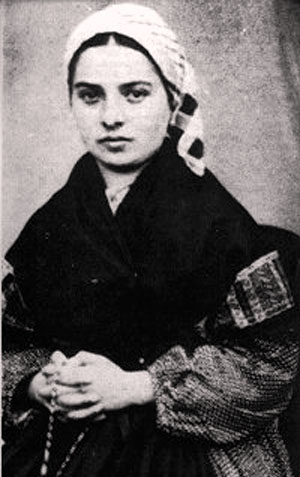
Bernadette Soubirous, widely known as Bernadette of Lourdes, was born on January 7, 1844, in Lourdes, France. She is best known for her visions of the Virgin Mary, which led to the establishment of Lourdes as one of the world’s most important pilgrimage sites. Her life, marked by poverty, illness, and profound faith, has inspired millions of believers worldwide.
Early Life and Family Background
Marie-Bernarde Soubirous, affectionately called Bernadette, was the eldest of six children born to François Soubirous, a miller, and Louise Castérot. The family faced significant financial hardships due to François’s poor business decisions, which resulted in the loss of their mill. Consequently, the Soubirous family had to live in the Cachot, a former prison cell that was damp and unhealthy, exacerbating Bernadette’s asthma and general poor health. She also suffered from malnutrition and was predisposed to tuberculosis. In 1854, she narrowly survived a cholera outbreak.
The Apparitions at Massabielle
On February 11, 1858, at the age of 14, Bernadette experienced the first of 18 visions of a “lady” at the grotto of Massabielle. On that day, Bernadette went with her sister and a friend to gather firewood. Lagging behind because she struggled to cross a stream, she felt a sudden gust of wind and saw a light. She described seeing a young girl, smiling and surrounded by light, who instructed her to pray for sinners and to perform acts of penance.
Bernadette’s claim of seeing the Virgin Mary initially divided the local community of Lourdes. Skeptics, including local clergy and officials, were wary of her claims, while others were enthusiastic and believed in the miraculous nature of her visions. The local priest, Abbé Peyramale, initially skeptical, was intrigued by the spiritual fervor that the apparitions inspired.
The Lady’s Messages
During the apparitions, Bernadette reported that the “lady” asked for a chapel to be built at the site and for people to come there in procession. Despite being met with skepticism, especially from church officials, the tide began to turn when Bernadette asked the lady her name on March 25, 1858, during the Feast of the Annunciation. The lady replied, in the local dialect, “I am the Immaculate Conception.”
This revelation was significant because just four years earlier, in 1854, Pope Pius IX had proclaimed the dogma of the Immaculate Conception, which stated that Mary was conceived without original sin. Bernadette, an illiterate peasant girl, could not have known this theological concept, which convinced many, including Abbé Peyramale, of the authenticity of her visions.
Miracles and Recognition
The spring that Bernadette unearthed at the grotto during one of her visions became known for its miraculous healing properties. Numerous pilgrims reported cures after using the water, and these events contributed to the growing belief in the sanctity of the site. Among the seemingly inexplicable actions Bernadette performed during her visions, such as eating grass and smearing her face with mud, were later interpreted as acts of penance and humility.
Life After the Apparitions
After the apparitions ended, Bernadette sought to escape public attention by joining the Sisters of Charity at Nevers in 1866. At the convent, she lived a life of humility and service despite her worsening health. Bernadette’s life continued to be marked by illness, including chronic asthma and tuberculous tumors on her knees. She often recalled the words of the Virgin Mary, who had told her, “I do not promise you happiness in this life, but in the next.”
Death and Legacy
Bernadette Soubirous died on April 16, 1879, at the age of 35, from complications related to her long-term illnesses. Today, she is the patron saint of the sick, reflecting her lifelong suffering and compassionate intercession.
An extraordinary phenomenon associated with Bernadette is the incorruptibility of her body. When her body was exhumed years after her death, it was found to be remarkably preserved, a condition that many believe to be a sign of her sanctity. Her body remains on display in a glass coffin at the Convent of Saint Gildard in Nevers, France.
Canonization and Sainthood
Bernadette was beatified in 1925 and canonized in 1933 by Pope Pius XI, not solely because of her visions but for her unwavering faith, humility, and virtuous life. Her canonization underscored her exemplary life and the significant impact her visions had on the Catholic faith.
The Impact of Lourdes
Lourdes has since become one of the most important pilgrimage sites in the world, attracting millions of visitors each year who seek physical and spiritual healing. The Sanctuary of Our Lady of Lourdes includes the Grotto of Massabielle, where the apparitions occurred, as well as several basilicas and a hospital for pilgrims.
The site is especially known for the healing properties of its spring water. The Catholic Church has officially recognized 70 miracles attributed to the water of Lourdes, although thousands more have been reported by pilgrims over the years.
Historical Context and Influence
Bernadette’s visions occurred during a period of intense religious and political turmoil in France. The country, having undergone the Enlightenment and the French Revolution, was grappling with issues of faith, secularism, and the role of the Catholic Church in public life. The apparitions at Lourdes and the subsequent establishment of a major pilgrimage site played a significant role in reaffirming the Catholic faith in a predominantly secularized society.
Conclusion
Bernadette of Lourdes’ life is a powerful testament to faith, resilience, and humility. Her experiences and the subsequent recognition of her visions have had a lasting impact on the Catholic Church and continue to inspire millions of believers around the world. Her story is one of divine encounter and human suffering, culminating in a legacy that transcends her earthly life.
Lourdes remains a beacon of hope and healing, its significance rooted in the simple faith of a young girl from a humble background. Bernadette’s life and legacy remind us of the profound impact that faith and devotion can have on the world.


