
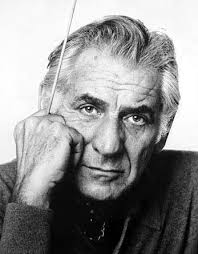
Leonard Bernstein, born on August 25, 1918, in Lawrence, Massachusetts, was an influential American composer, conductor, pianist, and music educator. Known for bridging the gap between classical and popular music, Bernstein’s work left a lasting impact on the 20th-century music landscape. His compositions for Broadway musicals like “West Side Story” and his profound contributions to orchestral music have solidified his place as one of the most significant musicians of his time.
Early Life and Education
Leonard Bernstein was born to Ukrainian-Jewish parents, Samuel and Jennie Bernstein. His father initially opposed his musical aspirations, preferring that he pursue a more stable career. However, Leonard’s undeniable talent and passion for music eventually won his father’s support. Bernstein began piano lessons at the age of ten and quickly demonstrated extraordinary musical abilities.
Bernstein attended Harvard University, where he studied music under the guidance of influential figures such as Walter Piston. His time at Harvard was pivotal, exposing him to a broad range of musical styles and ideas. After graduating in 1939, he continued his studies at the Curtis Institute of Music in Philadelphia, where he studied piano with Isabella Vengerova, orchestration with Randall Thompson, and conducting with Fritz Reiner.
Breakthrough as a Conductor
Bernstein’s breakthrough came in 1943 when he was appointed assistant conductor of the New York Philharmonic. His big moment arrived unexpectedly on November 14, 1943, when he was called to substitute for the ailing Bruno Walter. The concert at Carnegie Hall was broadcast nationally, and Bernstein’s performance was met with critical acclaim, launching him into the limelight. This debut is considered one of the most remarkable in the history of conducting.
Marriage and Personal Life
In 1951, Bernstein married Chilean actress and pianist Felicia Montealegre. Their marriage, while loving, was complex due to Bernstein’s bisexuality, which he openly acknowledged later in his life. Despite personal challenges, the couple had three children: Jamie, Alexander, and Nina. Felicia supported Bernstein’s career and collaborated with him on various projects, including performances where she provided spoken narration.
Major Compositions and Musicals
Bernstein’s compositions span a wide range of genres, but he is perhaps best known for his contributions to musical theater. His work on “West Side Story,” a modern retelling of Shakespeare’s “Romeo and Juliet,” remains one of his most celebrated achievements. The musical, which premiered in 1957, features unforgettable songs such as “Maria,” “Tonight,” and “Somewhere,” showcasing Bernstein’s ability to blend classical music with jazz and Latin rhythms.
Other notable works include:
- “On the Town” (1944): A musical about three sailors on leave in New York City, which includes the famous song “New York, New York.”
- “Candide” (1956): An operetta based on Voltaire’s novella, known for its overture and the song “Glitter and Be Gay.”
- “Wonderful Town” (1953): A musical comedy that tells the story of two sisters from Ohio trying to make it in New York City.
Conducting and Directorship
Bernstein’s tenure as the music director of the New York Philharmonic from 1958 to 1969 was marked by his dynamic conducting style and innovative programming. He was the first American-born conductor to hold this prestigious position. Bernstein’s impact extended beyond the concert hall; he was a passionate advocate for making classical music accessible to broader audiences.
He was a prolific recording artist, working extensively with Columbia/CBS Masterworks (now Sony Classical). His collaborations with renowned musicians such as pianist Glenn Gould, violinist Isaac Stern, and mezzo-soprano Janet Baker resulted in numerous acclaimed recordings. Bernstein’s interpretations of works by composers like Mahler, Beethoven, and Brahms are considered definitive by many critics and music lovers.
Educational Contributions
Bernstein’s commitment to music education was evident through his “Young People’s Concerts” with the New York Philharmonic, which were televised from 1958 to 1972. These concerts introduced classical music to millions of children and adults, making Bernstein a beloved figure in American homes. His ability to explain complex musical concepts in an engaging and accessible manner set a new standard for music education.
Later Years and Continued Influence
After stepping down as the music director of the New York Philharmonic, Bernstein continued to conduct, compose, and teach. He maintained a busy schedule, guest conducting with major orchestras around the world, including the Vienna Philharmonic, where he developed a particularly strong connection. His later compositions, such as the “Chichester Psalms” (1965) and “Mass” (1971), reflect his ongoing exploration of different musical styles and themes.
Bernstein’s influence extended to his role as a social activist. He used his platform to support various causes, including civil rights and the anti-war movement. His work “Songfest” (1977), for instance, is a celebration of American poets and a reflection of Bernstein’s belief in the power of art to bring about social change.
Legacy and Recognition
Leonard Bernstein’s legacy is multifaceted. He was a trailblazer who broke down barriers between classical and popular music, a charismatic conductor who brought a new level of excitement to orchestral performances, and an educator who inspired generations of musicians and music lovers. His awards and honors include multiple Grammy Awards, the Kennedy Center Honors, and the National Medal of Arts.
Bernstein passed away on October 14, 1990, in New York City. His death marked the end of an era, but his music and teachings continue to resonate. The Leonard Bernstein Office, established by his children, ensures that his legacy lives on through ongoing performances, recordings, and educational initiatives.
Conclusion
Leonard Bernstein’s life and work embody the transformative power of music. From his early days as a prodigious talent to his legendary status as a composer and conductor, Bernstein’s contributions have left an indelible mark on the world of music. His ability to connect with audiences, whether through a Broadway musical or a symphony orchestra, remains unparalleled. As we reflect on his achievements, it is clear that Leonard Bernstein’s influence will endure for generations to come.


