
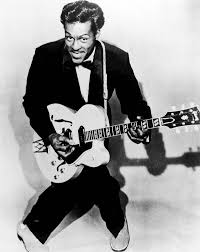
Chuck Berry, born Charles Edward Anderson Berry on October 18, 1926, in Saint Louis, Missouri, is a name synonymous with rock and roll. Often regarded as one of the founding fathers of the genre, Berry’s influence on the music industry is immeasurable. This article explores his early life, rise to fame, key career moments, and enduring legacy, providing a detailed insight into the life of this legendary musician.
Early Life and Influences
Chuck Berry grew up in a middle-class African-American family, the fourth of six children. His father, a deacon and a contractor, and his mother, a certified public school principal, provided a stable and supportive environment. Despite this, Berry’s youth was marred by encounters with the law. He attended Sumner High School, where he first developed a love for music, performing in a vocal quartet. However, in 1944, at the age of 17, Berry was arrested for armed robbery and served three years in a reformatory.
It was during his time in the reformatory that Berry honed his musical skills, forming a vocal quartet and performing for the other inmates. This experience solidified his passion for music, which would become the driving force of his life.
Early Musical Career
After his release, Berry married Themetta “Toddy” Suggs in 1948, and they had their first child in 1950. During this period, Berry worked various jobs, including as a factory worker and janitor, while playing music on the side. His big break came in 1952 when he began performing with Johnnie Johnson’s trio. This collaboration would prove pivotal, with Johnson’s piano playing complementing Berry’s innovative guitar style.
Berry’s exposure to a mix of musical styles, including blues, country, and R&B, helped him develop a unique sound. His ability to blend these genres would later become a hallmark of his music, setting him apart from his contemporaries.
Breakthrough and Rise to Fame
In May 1955, Berry traveled to Chicago, where he met Muddy Waters. Waters suggested Berry contact Leonard Chess of Chess Records. Berry auditioned with a reworked version of the country song “Ida Red,” which he retitled “Maybellene.” Chess was impressed, and the song was recorded and released as Berry’s debut single.
“Maybellene” became an instant hit, selling over a million copies and reaching number one on the R&B charts. This success marked the beginning of Berry’s meteoric rise in the music industry. He followed this with a string of hits, including “Roll Over Beethoven,” “School Days,” “Rock and Roll Music,” and the iconic “Johnny B. Goode.”
Impact on Rock and Roll
Chuck Berry’s music was revolutionary. He was one of the first musicians to combine blues and country music, creating a new sound that would become the foundation of rock and roll. His guitar solos, characterized by their distinctive double-stop licks, set a new standard for rock guitarists. Berry’s songwriting also broke new ground, with lyrics that spoke to the teenage experience, celebrating cars, school, and young love.
Berry’s influence extended beyond his music. His energetic stage presence, complete with his signature “duck walk,” made him a captivating performer. His style and charisma inspired countless musicians, including The Beatles, The Rolling Stones, and Bob Dylan.
Legal Troubles and Setbacks
Despite his success, Berry’s career was not without its challenges. In 1959, he was arrested under the Mann Act for transporting a minor across state lines for immoral purposes. He was convicted and sentenced to five years in prison, though the sentence was later reduced to three years on appeal. This legal battle tarnished his reputation and disrupted his career.
Berry’s troubles continued into the 1970s and 1980s. In 1979, he served a four-month prison sentence for tax evasion. In 1990, he faced a lawsuit from women who accused him of installing cameras in the bathroom of his restaurant. Despite these setbacks, Berry’s influence and legacy in music remained intact.
Later Career and Legacy
After his release from prison in the early 1960s, Berry struggled to regain his former success. However, the British Invasion of the mid-1960s, led by bands like The Beatles and The Rolling Stones, reignited interest in his music. These bands often cited Berry as a major influence, covering his songs and introducing his music to a new generation.
Berry continued to perform and record throughout his life. In 1972, he had a surprise hit with the novelty song “My Ding-a-Ling,” which became his only number-one single on the Billboard Hot 100. He remained a popular live performer, known for his energetic shows and enduring appeal.
In 1986, Berry was the subject of the documentary film “Hail! Hail! Rock ‘n’ Roll,” directed by Taylor Hackford. The film celebrated Berry’s 60th birthday with a concert featuring performances by rock luminaries like Keith Richards, Eric Clapton, and Etta James. The documentary highlighted Berry’s significant contributions to rock music and his lasting impact on the genre.
Personal Life and Final Years
Chuck Berry’s personal life was as colorful as his music career. He was married to Themetta Suggs for over 68 years, and they had four children together. Despite his legal troubles and personal challenges, Berry remained dedicated to his family and his music.
In his later years, Berry continued to perform regularly. He was a fixture at the Blueberry Hill club in St. Louis, where he played monthly shows well into his 80s. His final studio album, “Chuck,” was announced on his 90th birthday in 2016 and released posthumously in 2017. The album featured new original songs and served as a fitting capstone to his illustrious career.
Berry passed away on March 18, 2017, at the age of 90. His death marked the end of an era, but his music and legacy continue to live on.
Historical Context and Influence
Chuck Berry’s rise to fame occurred during a time of significant social and cultural change in America. The 1950s and 1960s were marked by the Civil Rights Movement, which sought to end racial segregation and discrimination. Berry’s success as an African-American musician during this period was groundbreaking, as he broke through racial barriers and achieved widespread popularity.
Berry’s music also played a role in the cultural revolution of the 1960s. His songs, with their rebellious spirit and celebration of youth, became anthems for a generation seeking change and freedom. Berry’s influence extended beyond music, shaping the cultural landscape of the time.
Honors and Awards
Throughout his career, Chuck Berry received numerous accolades and honors. He was one of the first inductees into the Rock and Roll Hall of Fame in 1986, recognizing his pivotal role in the development of the genre. Berry was also honored with a Grammy Lifetime Achievement Award in 1984 and the Kennedy Center Honors in 2000.
In addition to these awards, Berry’s music continues to be celebrated and covered by artists worldwide. His songs have been featured in countless films, television shows, and commercials, ensuring that his legacy endures.
Conclusion
Chuck Berry’s impact on music and culture is undeniable. As a pioneer of rock and roll, he shaped the sound and style of the genre, influencing generations of musicians and fans. Despite facing numerous challenges and legal issues, Berry’s talent and contributions to music remained unparalleled.
Berry’s legacy lives on through his timeless songs and the countless artists he inspired. His innovative guitar work, dynamic stage presence, and relatable lyrics set the standard for rock music and continue to resonate with audiences today. Chuck Berry will always be remembered as one of the true legends of rock and roll.


