
Introduction
Larry Joe Bird, born on December 7, 1956, in West Baden Springs, Indiana, USA, is an iconic figure in the world of basketball. Known as one of the greatest basketball players of all time, Bird’s influence extends beyond his playing career, leaving a lasting impact on the sport. This comprehensive biography explores Larry Bird’s life, his rise to fame, and the significant milestones that define his legacy.
Early Life and Basketball Beginnings
Larry Bird grew up in the small town of French Lick, Indiana, where he quickly emerged as a basketball prodigy. His high school career at Springs Valley High School was marked by outstanding performances, earning him a scholarship to Indiana University. However, Bird’s journey took an unexpected turn when he left Indiana University before playing a single game, opting instead to work as a garbage truck driver. This decision was influenced by personal and financial pressures, but it wasn’t long before Bird’s passion for basketball drew him back to the court.
College Stardom at Indiana State University
Encouraged by friends and family, Bird enrolled at Indiana State University. His return to basketball was nothing short of spectacular. Bird led the Indiana State Sycamores to the 1979 NCAA Championship game, a historic match-up against Magic Johnson’s Michigan State Spartans. Although Bird’s team lost, the game remains the most-watched college basketball game in history. Bird’s college career was distinguished by numerous accolades, including the Naismith Award and the Wooden Award, recognizing him as the best college player in the nation.
NBA Career with the Boston Celtics
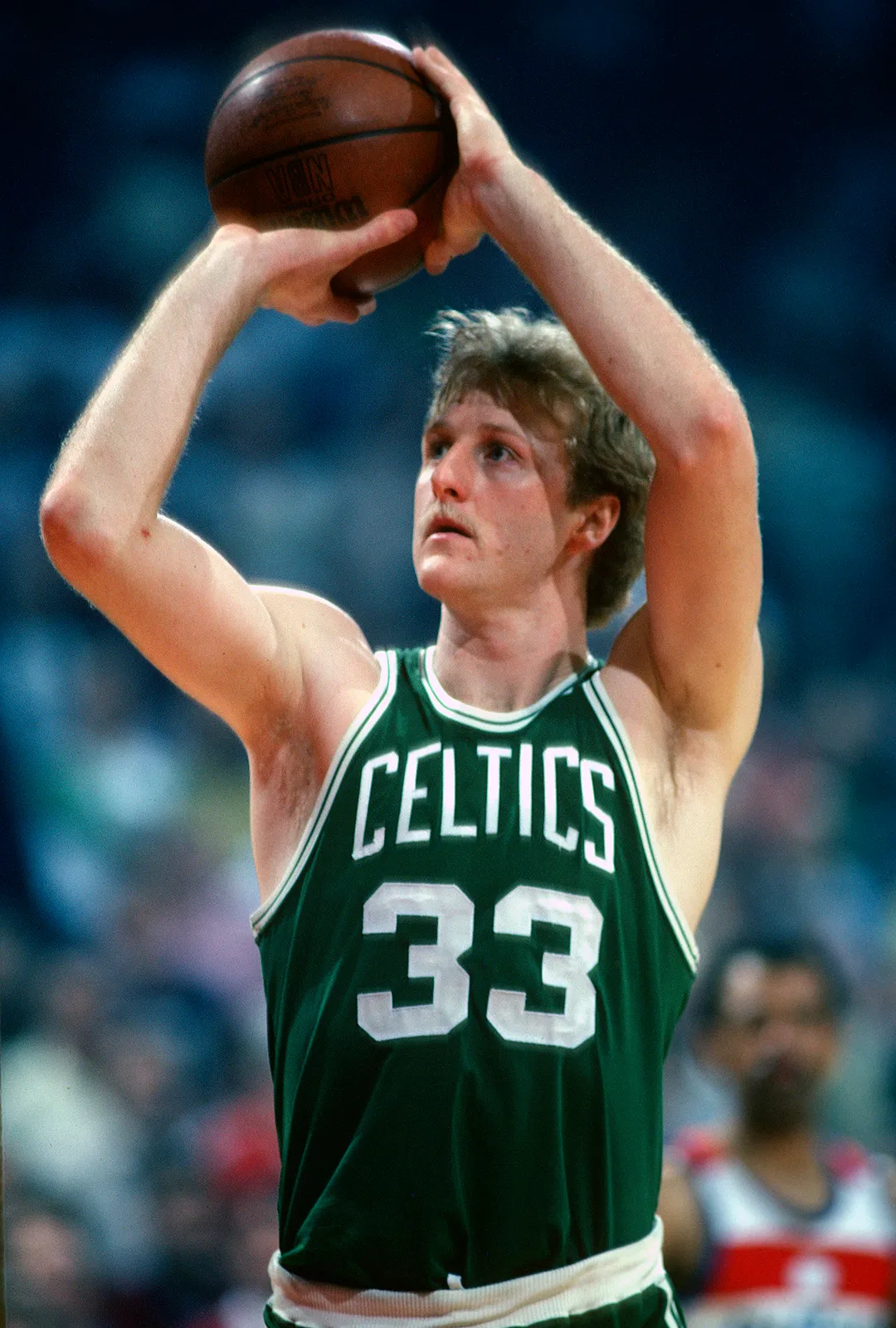
Bird’s professional career began when he was drafted by the Boston Celtics in 1978. Standing 6 feet 9 inches tall, Bird played the small forward and power forward positions. His impact was immediate, earning NBA Rookie of the Year honors and transforming the Celtics into championship contenders. Over a 13-year career with the Celtics, Bird won three NBA championships (1981, 1984, 1986) and was named NBA Finals MVP twice.
Legendary Rivalries and Team Dynamics
Bird’s rivalry with Magic Johnson, which began in college, continued in the NBA and is considered one of the greatest in sports history. Their battles on the court were epic, showcasing not only individual brilliance but also the fierce competition between the Celtics and the Los Angeles Lakers. Bird’s career averages of 24.3 points, 10.0 rebounds, and 6.3 assists per game underscore his versatility and dominance. His exceptional shooting skills earned him three NBA Three-Point Shootout titles, further cementing his reputation as a premier shooter.
The “Larry Bird Rule” and Leadership
Bird’s leadership extended beyond his on-court performances. Known for his work ethic, Bird was often the first to arrive at practice and the last to leave. His commitment and natural charisma made him a respected leader among teammates. The NBA’s “Larry Bird Rule,” which allows teams to exceed the salary cap to re-sign their own players, was named in his honor, reflecting his immense value to the Celtics.
Olympic Glory and Retirement
In 1992, Bird was a key member of the “Dream Team,” the U.S. basketball team that dominated the Barcelona Olympics and won the gold medal. Shortly after the Olympics, Bird announced his retirement from professional basketball. His decision was influenced by chronic back issues, which had plagued him throughout his later career. Bird’s retirement ceremony was a poignant moment, as fans and peers celebrated his extraordinary contributions to the game.
Post-Playing Career: Coaching and Executive Roles
Bird’s impact on basketball continued after his playing days. In 1997, he became the head coach of the Indiana Pacers, leading the team to three consecutive Eastern Conference Finals and the NBA Finals in 2000. Bird’s coaching prowess earned him the NBA Coach of the Year Award in 1998. After stepping down as coach, Bird served as the Pacers’ President of Basketball Operations, further shaping the team’s future.
Legacy and Honors
Larry Bird’s legacy is etched in the annals of basketball history. He was inducted into the Naismith Memorial Basketball Hall of Fame in 1998, and the Boston Celtics retired his iconic number 33 jersey. In 1996, Bird was named one of the NBA’s 50 Greatest Players, a testament to his enduring influence on the sport.
Bird’s career is a narrative of perseverance, talent, and leadership. From his humble beginnings in French Lick to his status as a basketball legend, Bird’s journey is an inspiration to aspiring athletes and fans alike. His story exemplifies the values of hard work, dedication, and the pursuit of excellence.
Conclusion
Larry Bird’s life and career are a testament to his unparalleled skill, determination, and influence in the world of basketball. From his early days in Indiana to his legendary status with the Boston Celtics, Bird’s impact on the sport is immeasurable. His contributions as a player, coach, and executive continue to resonate, making him a true icon of basketball.
Larry Bird’s story is not just about his achievements on the court but also about his character, leadership, and the lasting legacy he has created. As one of the greatest basketball players of all time, Bird’s name will forever be synonymous with excellence in the sport.


