
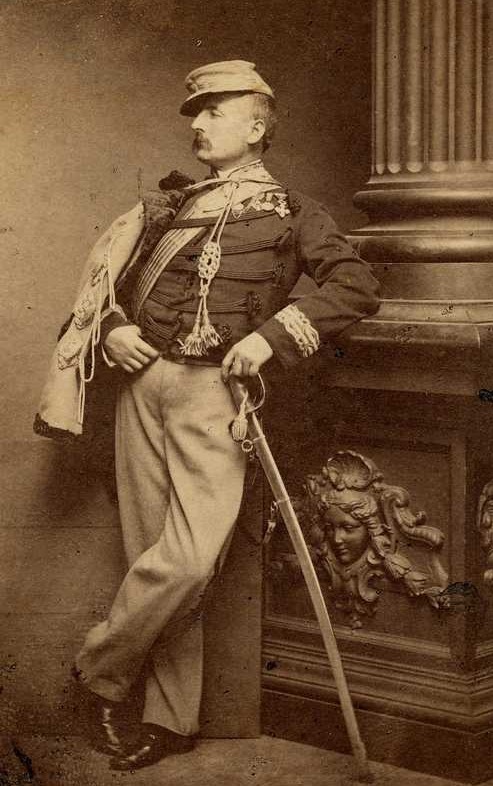
Nino Bixio, born Gerolamo Bixio on October 2, 1821, in Genoa, Italy, was a prominent figure in the Italian Risorgimento, the movement for Italian unification. His life was marked by adventure, military prowess, and a steadfast commitment to the cause of Italian independence. This comprehensive biography explores Bixio’s life, career, and enduring legacy.
Early Life and Background
Nino Bixio was born to Tommaso Bixio, the director of the Genoa Mint, and Colomba Caffarelli. Tragically, his mother passed away when he was just nine years old, a loss that profoundly affected him. His father remarried, but Nino’s relationship with his stepmother was strained, leading to a turbulent family life.
By the age of 15, Nino had decided to leave his difficult home environment. He joined the crew of the brigantine “Oreste e Pilade” as a cabin boy, embarking on a journey that would take him across the Atlantic to the Americas. This period of maritime adventure helped shape his resilient and independent character.
Return to Italy and Early Military Career
After three years of seafaring, Bixio returned to Italy in 1837, only to find that his family had little interest in his homecoming. He was not allowed back into his family home and instead lived in the narrow streets of Genoa, relying on the support of his siblings. His stepmother’s manipulative attempts to use him for the advancement of his brother’s naval career led to his imprisonment for defying paternal authority.
Despite these challenges, Bixio joined the Sardinian navy as a volunteer. He quickly proved his worth and was well-regarded by his superiors. His maritime skills and tenacity earned him a position as a naval cadet. However, it was his encounter with political ideas and figures that would significantly influence his future.
Involvement in the Risorgimento
Bixio’s exposure to the political climate in Paris, where he joined his brother Alessandro, was a turning point. There, he became involved with the French Mazzinian faction led by Giuseppe Mazzini, a key figure in the Italian unification movement. This association deepened his commitment to the cause of Italian independence.
Returning to Italy, Bixio became an active participant in the revolutionary fervor of the 1840s. He engaged in the insurrections of 1848, fighting in the First Italian War of Independence. His bravery was evident in battles such as Treviso, Verona, and Governolo. He also played a crucial role in the defense of the Roman Republic against French forces in 1849, where he was severely wounded.
Personal Life and Marriage
In 1855, Bixio married Adelaide Parodi, despite the initial opposition from their families. The couple had four children: Garibaldi, Piccarda, Giuseppina, and Camillo. This period marked a transition in Bixio’s life as he balanced his military and personal responsibilities.
Military Achievements and Political Career
Bixio’s military career flourished during the Second Italian War of Independence in 1859, where he fought alongside Giuseppe Garibaldi. His leadership and strategic acumen were pivotal in various battles, earning him the Military Cross of Savoy. He further cemented his legacy during the Expedition of the Thousand in 1860, a critical campaign that led to the unification of Southern Italy with the Kingdom of Sardinia.
Garibaldi, recognizing Bixio’s capabilities, entrusted him with the command of the First Brigade of the Turr Division. Bixio’s effective military governance and success in liberating key territories like Calabria were instrumental in the campaign’s success. His political career began in earnest in 1861 when he was elected as a deputy in the newly established Italian Parliament. He was re-elected multiple times, playing a significant role in shaping the young nation.
The Struggle for Rome and Later Military Engagements
Bixio’s commitment to the unification of Italy remained unwavering. He found himself mediating between the diplomatic approach of Camillo Benso di Cavour and the more direct military strategy of Garibaldi regarding the annexation of Rome. Despite his efforts, the conflict culminated in the Third Italian War of Independence in 1866. Bixio fought valiantly, although the Italian forces suffered setbacks, such as the defeat at the Battle of Custoza.
Nevertheless, the war’s outcome was favorable for Italy, with Austria ceding the Veneto region. Bixio continued his military service, participating in the Battle of Mentana in 1867, where he was captured but later honored with a medal for his bravery.
Later Years and Exploration
In 1870, Bixio was appointed a senator and took part in the capture of Rome, completing the unification of Italy. His contributions to the Risorgimento earned him a place among Italy’s most revered national heroes.
After his military career, Bixio turned to business and exploration. He embarked on various ventures, including expeditions to South America and Asia. His adventurous spirit led him to Sumatra, where he sought to expand his business interests.
Death and Legacy
Nino Bixio’s life was cut short on December 16, 1873, when he succumbed to cholera in Sumatra. He was 52 years old. Despite his untimely death, Bixio’s legacy as a fearless patriot and key figure in the Italian unification movement remains enduring.
Impact on Italian Unification
Bixio’s contributions to the Italian Risorgimento were substantial. His military leadership, particularly during the Expedition of the Thousand, played a crucial role in the successful unification of Italy. His ability to inspire and lead men in battle, coupled with his political acumen, made him a pivotal figure in the creation of a unified Italian state.
Military Strategy and Leadership
Bixio’s strategic brilliance was evident in numerous campaigns. His ability to adapt to different combat situations and his understanding of guerrilla warfare were critical in the success of the Garibaldian forces. His leadership in the battles of Treviso, Verona, and the defense of the Roman Republic showcased his tactical prowess and unyielding determination.
Political Influence
As a politician, Bixio’s efforts to mediate between differing factions within the Italian unification movement were invaluable. His role in bridging the gap between Cavour’s diplomatic strategies and Garibaldi’s militant approach helped navigate the complex political landscape of the time. Bixio’s political career, marked by his election to the Italian Parliament and later to the Senate, underscored his commitment to the newly unified Italy.
Cultural and Historical Significance
Bixio’s life and actions have left an indelible mark on Italian history. His story is one of resilience, bravery, and unwavering dedication to the cause of freedom and unity. He is remembered not only as a military hero but also as a symbol of the indomitable spirit that drove the Risorgimento.
Memorials and Honors
Italy honors Nino Bixio through various memorials and dedications. Streets, schools, and public buildings bear his name, ensuring that his legacy is remembered by future generations. His contributions to Italy’s unification are celebrated annually, particularly on key dates associated with the Risorgimento.
Conclusion
Nino Bixio’s life was characterized by adventure, struggle, and triumph. From his early seafaring days to his pivotal role in the Italian unification, Bixio’s legacy is one of profound significance. His bravery in battle, strategic acumen, and political efforts were instrumental in shaping modern Italy.
As Italy continues to evolve, the legacy of Nino Bixio serves as a reminder of the sacrifices and dedication required to achieve national unity and independence. His story is a testament to the power of determination and the enduring impact of those who fight for their beliefs.


