
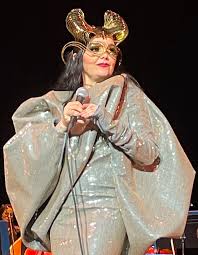
Björk Guðmundsdóttir, known mononymously as Björk, is an Icelandic singer, songwriter, composer, actress, and record producer. Born on November 21, 1965, in Reykjavík, Iceland, Björk’s eclectic musical style and innovative approach have made her a global icon in the music industry. Her career, spanning over four decades, is marked by artistic innovation, genre-blending music, and a distinctive voice that has captivated audiences worldwide.
Early Life and Musical Beginnings
Björk was born into a creative and culturally rich environment. Her mother, Hildur Rúna Hauksdóttir, was an activist, while her father, Guðmundur Gunnarsson, was a union leader and electrician. Raised in a commune influenced by the countercultural movements of the 1960s and 70s, Björk was exposed to a variety of artistic influences from a young age. This unconventional upbringing played a significant role in shaping her unique artistic perspective.
Björk’s musical journey began early. She started taking piano and flute lessons as a child and recorded her first album at the age of 11. The self-titled album, “Björk,” featured covers of popular Icelandic folk songs and a few original compositions. Although it did not achieve significant commercial success, it established Björk as a prodigious talent in Iceland.
Rise to Fame with the Sugarcubes
In the early 1980s, Björk became involved in the Icelandic punk scene, joining several bands and collaborating with various musicians. Her big break came with the formation of the Sugarcubes in 1986. The band, which included Björk’s then-husband Þór Eldon, achieved international success with their debut album “Life’s Too Good” (1988). The single “Birthday” became a hit, and the band’s unique sound, blending punk, pop, and avant-garde elements, gained them a cult following.
Despite the success of the Sugarcubes, Björk felt constrained by the band’s collaborative nature and began to pursue solo projects. The Sugarcubes disbanded in 1992, allowing Björk to fully embark on her solo career.
Solo Career and Breakthrough with “Debut”
Björk’s solo career took off with the release of her album “Debut” in 1993. The album marked a significant departure from her work with the Sugarcubes, incorporating elements of electronic, house, and jazz music. Produced by Nellee Hooper, “Debut” was a critical and commercial success, selling over two million copies worldwide. The album’s singles, including “Human Behaviour” and “Venus as a Boy,” received extensive airplay and established Björk as a solo artist of considerable talent and originality.
“Debut” earned Björk several awards, including the Best International Female Artist at the BRIT Awards. The album’s innovative blend of genres and Björk’s distinctive vocal style set the stage for her future work, characterized by constant experimentation and boundary-pushing creativity.
Continued Success with “Post” and “Homogenic”
Björk followed up the success of “Debut” with the release of “Post” in 1995. The album continued to explore electronic and dance music, featuring collaborations with producers like Tricky and Graham Massey. “Post” included hit singles such as “Army of Me,” “It’s Oh So Quiet,” and “Hyperballad.” The album was another critical and commercial success, solidifying Björk’s reputation as an innovative and influential artist.
In 1997, Björk released “Homogenic,” an album that marked a significant shift in her sound. Moving away from the eclecticism of her previous albums, “Homogenic” focused on a cohesive sonic palette that combined electronic beats with lush orchestral arrangements. The album’s themes were deeply personal, reflecting Björk’s experiences and emotions. Songs like “Jóga,” “Bachelorette,” and “Hunter” showcased her ability to blend the organic and synthetic, creating a unique and immersive listening experience. “Homogenic” received widespread acclaim and is considered one of Björk’s masterpieces.
Acting Career and “Dancer in the Dark”
In 2000, Björk took on the lead role in Lars von Trier’s film “Dancer in the Dark.” Her performance as Selma, a Czech immigrant facing blindness, was critically acclaimed and earned her the Best Actress Award at the Cannes Film Festival. Björk also composed the film’s soundtrack, “Selmasongs,” which included the Oscar-nominated song “I’ve Seen It All.”
Despite the accolades, Björk found the acting experience emotionally and physically draining, leading her to distance herself from film roles. Nonetheless, her performance in “Dancer in the Dark” remains a testament to her versatility and talent as an artist.
Experimental Projects and Continued Innovation
Following her foray into film, Björk continued to push the boundaries of music with a series of innovative albums. “Vespertine” (2001) saw her exploring themes of intimacy and introspection, using microbeats and delicate arrangements. The album was a critical success, with tracks like “Pagan Poetry” and “Hidden Place” highlighting her ability to create deeply emotional and textured music.
In 2004, Björk released “Medúlla,” an album composed almost entirely of vocal sounds. Collaborating with artists like Mike Patton, Rahzel, and Robert Wyatt, Björk created a work that was both experimental and accessible. “Medúlla” received praise for its originality and daring, further cementing Björk’s status as a pioneer in contemporary music.
Later Works and Multimedia Projects
Björk’s later works have continued to explore new territories. “Volta” (2007) featured a diverse range of influences, from African rhythms to electronic beats, and included collaborations with Timbaland and Antony Hegarty. The album was well-received and demonstrated Björk’s ongoing commitment to artistic exploration.
In 2011, Björk released “Biophilia,” a multimedia project that combined music, interactive apps, and educational programs. The album explored themes of nature, technology, and humanity, and was accompanied by a series of innovative live performances. “Biophilia” received critical acclaim for its ambitious scope and interdisciplinary approach.
Björk’s 2015 album “Vulnicura” dealt with themes of heartbreak and healing, reflecting her personal experiences. The album’s raw emotionality and innovative production resonated with fans and critics alike. “Utopia” (2017) followed, exploring themes of love and utopia through lush arrangements and otherworldly sounds.
Personal Life and Legacy
Björk’s personal life has often been in the public eye, but she has maintained a degree of privacy. She has a son, Sindri, with her former partner Þór Eldon, and a daughter, Isadora, with artist Matthew Barney. Her relationships and family life have influenced her music, adding depth and authenticity to her work.
Björk’s legacy as an artist is profound. She has consistently challenged the norms of popular music, blending genres and pushing technological boundaries. Her influence can be seen in a wide range of artists across different genres, from electronic music to indie rock.
Cultural and Historical Context
Björk’s work is deeply rooted in her Icelandic heritage, which has shaped her artistic sensibilities. Iceland’s unique landscape and cultural traditions have inspired her music and visual aesthetics. Additionally, her involvement in the global music scene has positioned her as a bridge between different cultures and artistic movements.
Throughout her career, Björk has been a vocal advocate for environmental causes and women’s rights. Her activism and public statements reflect her commitment to social and environmental issues, aligning her artistic identity with her values.
Impact on Music and Art
Björk’s impact on music and art is vast. Her willingness to experiment and innovate has set her apart as a true visionary. She has collaborated with a diverse range of artists, including electronic musicians, classical composers, and visual artists, creating a body of work that transcends traditional boundaries.
Her contributions to music technology, particularly through projects like “Biophilia,” have opened new possibilities for interactive and immersive art. Björk’s ability to integrate music, technology, and visual art has made her a pioneer in multimedia storytelling.
Conclusion
Björk’s career is a testament to the power of artistic innovation and personal expression. From her early days in Iceland to her global success, she has remained true to her vision, continually pushing the boundaries of what music can be. Her influence on contemporary music and art is immeasurable, and her work continues to inspire and challenge audiences around the world.
As Björk continues to create and explore new artistic avenues, her legacy as a groundbreaking artist and cultural icon is assured. Her journey is one of courage, creativity, and relentless pursuit of artistic truth, making her one of the most compelling figures in modern music.


