
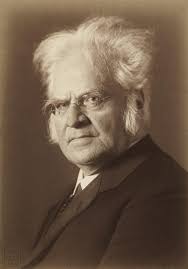
Bjørnstjerne Bjørnson, born on December 8, 1832, in the small Norwegian village of Kvikne, is a towering figure in Norwegian literature and a key player in the country’s cultural and political history. As a poet, novelist, playwright, and Nobel laureate, Bjørnson’s contributions to literature and national identity are profound and enduring. This comprehensive biography delves into his life, career, and the legacy he left behind.
Early Life and Education
Bjørnstjerne Bjørnson was born into a family with strong ties to the Lutheran church. His father, Peter Bjørnson, was a Lutheran pastor, and his mother, Inger Elise Nordraach, came from a family of modest means. In 1837, when Bjørnson was just five years old, his family moved to Nesset in the Romsdal district, a picturesque region that would later inspire much of his writing.
Bjørnson’s education began in the local schools of Molde, where he demonstrated a precocious talent for storytelling and a deep interest in literature. In 1850, he moved to Christiania (now Oslo) to further his studies. It was during this period that he discovered his passion for theater and began writing his first play, “Valborg,” which marked the beginning of his prolific career.
Early Career and Literary Beginnings
Bjørnson’s early works were deeply influenced by his fervent nationalism and his desire to see Norway gain independence from Sweden. His commitment to national causes is evident in his writings, which often celebrate Norwegian history, culture, and landscapes. In 1857, he published “Synnøve Solbakken,” a novel that was both a critical and commercial success. This work, along with his subsequent novels and plays, helped to establish him as one of Norway’s foremost literary figures.
In 1856, Bjørnson traveled to Sweden and later to Copenhagen, where he became acquainted with the works of Nicolai Grundtvig, a Danish pastor and philosopher whose ideas about “happy Christianity” had a lasting impact on him. This period also saw the publication of “Arne” (1858), another highly acclaimed novel that further solidified his reputation.
Theatrical Achievements and National Influence
Bjørnson’s passion for theater led him to become the artistic director of the Norwegian Theatre in Bergen in 1857, succeeding Henrik Ibsen. His tenure there was marked by significant contributions to Norwegian drama and a commitment to promoting Norwegian culture through the arts. He continued to write plays that resonated with nationalistic themes, such as “The Newlyweds” (1865) and “Sigurd Slembe” (1862), which were both well-received.
In 1859, Bjørnson returned to Christiania and became a journalist for “Aftenbladet.” His writing was not limited to fiction and drama; he was also a vocal advocate for political and social issues, often using his platform to promote democratic values and Norwegian independence.
Personal Life and Continued Literary Success
In 1858, Bjørnson married Karoline Reimers, with whom he had six children. His personal life was intertwined with his literary and political endeavors, as his family often supported and participated in his various activities. His home became a center of intellectual and cultural life, attracting many prominent figures of the time.
Throughout the 1860s and 1870s, Bjørnson continued to write and publish prolifically. His works from this period, such as “En glad Gut” (A Happy Boy, 1860) and “Fiskerjenten” (The Fisher Girl, 1868), are notable for their vivid depictions of Norwegian rural life and their exploration of human emotions and moral dilemmas.
Political Involvement and Later Works
Bjørnson’s involvement in politics intensified during the latter part of his career. He became a staunch advocate for the independence of Norway from Sweden, a cause that he championed through his writings and public speeches. His political activism often put him at odds with the authorities and led to several controversies, but it also earned him widespread admiration and respect.
The 1870s and 1880s were marked by a shift in Bjørnson’s religious views. Influenced by the scientific theories of Charles Darwin and the social changes of the time, he moved away from his earlier religious beliefs and embraced a more rationalistic and humanistic worldview. This shift is reflected in his later works, such as “Redaktøren” (The Editor, 1874) and “En Fallit” (A Bankruptcy, 1875), which exhibit a more critical and realistic approach to social issues.
Nobel Prize and Legacy
In 1903, Bjørnstjerne Bjørnson was awarded the Nobel Prize in Literature, recognizing his noble, magnificent, and versatile poetry, which had distinguished itself by its clarity of inspiration and rare purity of spirit. This prestigious award was a testament to his significant contributions to literature and his influence on Norwegian culture.
One of his last major works was “Når den ny vin blomstrer” (When the New Wine Blooms), published in 1909. The play is a patriotic piece that reflects his lifelong dedication to his country and its cultural heritage.
Bjørnson’s impact on Norwegian literature and national identity cannot be overstated. He was a pioneer in many respects, from his promotion of Norwegian language and culture to his advocacy for social and political reforms. His literary works continue to be studied and celebrated for their artistic merit and their profound insights into human nature and society.
Death and Posthumous Recognition
Bjørnstjerne Bjørnson passed away on April 26, 1910, in Paris, at the age of 77. His death was widely mourned in Norway and beyond, as he was recognized as one of the great literary and cultural figures of his time. His funeral in Oslo was a significant event, attended by many dignitaries, writers, and admirers.
Bjørnson’s legacy endures through his extensive body of work, which includes novels, plays, poems, and essays. His writings continue to inspire and influence new generations of readers and writers, both in Norway and around the world. His commitment to truth, nature, and national identity remains a guiding principle for those who seek to understand and appreciate the rich cultural heritage of Norway.
Cultural and Historical Context
Bjørnstjerne Bjørnson’s life and work were deeply intertwined with the cultural and political context of 19th-century Norway. During this period, Norway was striving for independence from Sweden, and there was a growing movement to establish a distinct Norwegian national identity. Bjørnson’s writings played a crucial role in this movement, as they celebrated Norwegian history, folklore, and landscapes.
Bjørnson was also a contemporary of other significant literary figures, such as Henrik Ibsen, with whom he had a complex relationship. While they were friends and collaborators at times, their differing views on literature and society often put them at odds. Despite these differences, both writers contributed immensely to the development of modern Norwegian literature.
Contributions to Literature and National Identity
Bjørnstjerne Bjørnson’s contributions to literature are vast and varied. He is best known for his novels and plays, which explore themes of love, morality, and national identity. His writing is characterized by its emotional depth, vivid descriptions, and commitment to social justice.
His works often highlight the struggles and triumphs of ordinary people, reflecting his belief in the inherent dignity and worth of every individual. This focus on the human experience, combined with his patriotic fervor, made his writings resonate deeply with readers and helped to shape the cultural consciousness of Norway.
Legacy and Influence
Bjørnstjerne Bjørnson’s influence extends beyond his literary achievements. He was a pioneer in the development of Norwegian theater and a tireless advocate for cultural and political reform. His efforts to promote the Norwegian language and national identity have had a lasting impact on the country’s cultural landscape.
Many writers and artists have been inspired by Bjørnson’s work, including Nobel laureates Knut Hamsun and Sigrid Undset. His legacy is also evident in the numerous schools, streets, and cultural institutions named in his honor.
Conclusion
Bjørnstjerne Bjørnson’s life and work are a testament to his profound impact on Norwegian literature and national identity. From his early days as a passionate young writer to his later years as a Nobel laureate and cultural icon, Bjørnson’s dedication to truth, nature, and social justice has left an indelible mark on the literary world.
His writings continue to inspire and challenge readers, offering insights into the human condition and the complexities of national identity. As we reflect on his legacy, it is clear that Bjørnstjerne Bjørnson’s contributions to literature and society will endure for generations to come.


