
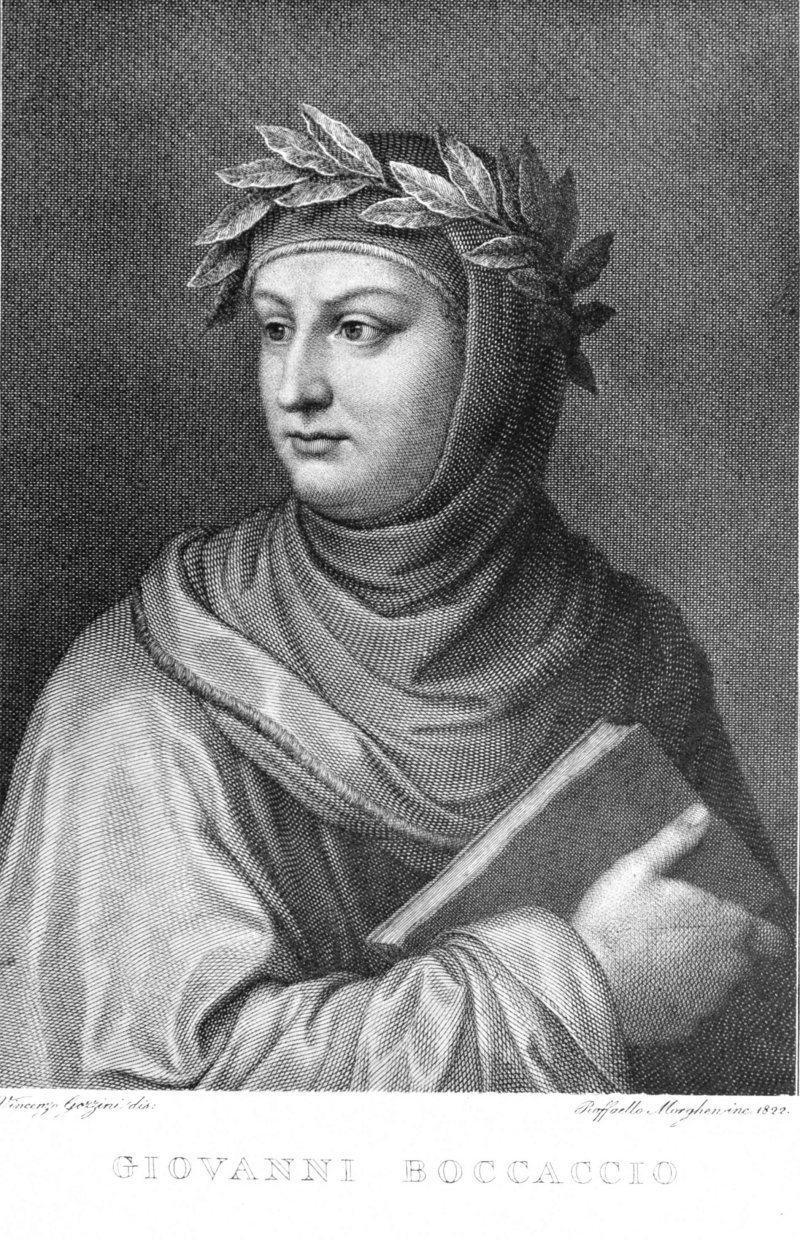
Giovanni Boccaccio, born in 1313, is celebrated as one of the great Italian writers of the Middle Ages. His literary prowess, marked by works such as “The Decameron,” has earned him a lasting legacy in the world of literature. Boccaccio’s life and achievements provide a fascinating glimpse into the cultural and intellectual landscape of medieval Europe.
Early Life and Background
Giovanni Boccaccio was born in 1313 in Certaldo, a small town in Tuscany, though some sources suggest he might have been born in Florence or even Paris. His father, Boccaccino di Chellino, was a wealthy merchant associated with the Bardi family, a prominent banking dynasty in Florence. His mother was of lower social standing, and Boccaccio was born out of wedlock. When Boccaccio was six years old, his father married Margherita de’ Mardoli.
From a young age, Boccaccio exhibited a strong inclination towards literature. He pursued his literary interests as an autodidact, immersing himself in the study of Latin literature. His admiration for Dante Alighieri began early, significantly shaping his literary aspirations. However, his father had different plans for him, initially sending him to Naples to learn the trade of a merchant.
Education and Early Career
In Naples, Boccaccio struggled with the commercial trade and later shifted to studying canon law, again at his father’s behest. Neither field held his interest, and he failed to excel in both. Despite these challenges, Boccaccio thrived in the vibrant cultural environment of the Neapolitan court. His father’s position as a counselor and chamberlain to King Robert of Anjou afforded him access to the court, where he interacted with poets and scholars.
Literary Beginnings
During his time in Naples, Boccaccio began writing his first works. Among these early efforts were “Filostrato” (1336-1338), a poem in ottava rima detailing the tragic love story of Troilus and Criseyde, “Filocolo” (1336-1339), a prose romance, and “Teseida delle nozze d’Emilia” (1339-1340), an epic poem. These works showcased his growing literary talent and set the stage for his later masterpieces.
Return to Florence and Mature Works
In 1340, financial troubles forced Boccaccio’s father to call him back to Florence. The transition from the lively court of Naples to the more somber atmosphere of Florence was difficult for Boccaccio. However, this period of his life saw some of his most significant literary achievements. The death of his father during the Black Death of 1348 left Boccaccio free to pursue his literary interests fully.
“The Decameron”
Boccaccio’s most famous work, “The Decameron,” was written between 1348 and 1351. This collection of 100 tales is framed by a story about ten young people who flee to the countryside to escape the plague ravaging Florence. Over ten days, each character tells a story each day, resulting in a rich tapestry of medieval life, love, and humor. “The Decameron” is celebrated for its vivid characterizations, social commentary, and narrative complexity. Despite its initial prohibition until 1559, the invention of the printing press later made it one of the most widely read and influential works of its time.
Public Service and Further Literary Pursuits
Boccaccio held various public offices in Florence, often serving as an ambassador. Between 1354 and 1365, he undertook diplomatic missions to Avignon, where he met Popes Innocent VI and Urban V. His deepening involvement in public life did not hinder his literary output. During this period, he also learned Greek with the help of the Calabrian monk Leonzio Pilato, who translated Homer’s “Iliad” and “Odyssey” for him.
Boccaccio’s works during this period include:
- “Genealogia Deorum Gentilium” – A Latin treatise on the genealogy of the gods.
- “Corbaccio” – A satirical prose work.
- “Elegia di Madonna Fiammetta” – A psychological novel exploring themes of love and betrayal.
Later Years and Legacy
In the later years of his life, Boccaccio continued to be active both in literature and public service. He spent significant time in his hometown of Certaldo, where he wrote in Latin and engaged in scholarly pursuits. One of his notable contributions was his commentary on Dante’s “Divine Comedy,” although he could not complete it due to health issues.
Friendship with Petrarch
Boccaccio’s friendship with Francesco Petrarch, another towering figure of Italian literature, was a significant influence on his work. The two first met in 1350 and maintained a close correspondence throughout their lives. Petrarch’s humanist ideas deeply influenced Boccaccio’s literary and scholarly endeavors.
Death and Posthumous Influence
Giovanni Boccaccio passed away on December 21, 1375, in Certaldo. His epitaph, “Studium fuit alma poesis” (His passion was noble poetry), aptly captures the essence of his life’s work. Boccaccio’s contributions to literature, particularly through “The Decameron,” have left an enduring legacy. His works have been studied and admired for centuries, influencing countless writers and scholars.
Boccaccio’s Impact on Literature
Boccaccio’s influence extends far beyond his own time. “The Decameron” provided a model for later works, including Geoffrey Chaucer’s “The Canterbury Tales.” Boccaccio’s use of vernacular language, his exploration of human nature, and his narrative structure set a precedent for future literary endeavors. His works offer invaluable insights into the social, cultural, and intellectual currents of 14th-century Europe.
Scholarly Works and Legacy
Boccaccio’s scholarly works, such as “Genealogia Deorum Gentilium,” contributed to the Renaissance revival of classical mythology. His efforts to reconcile classical traditions with contemporary Christian thought paved the way for the humanist movement that would flourish in the 15th century. Boccaccio’s literary and scholarly achievements continue to be celebrated and studied, affirming his place as a cornerstone of Western literature.
Conclusion
Giovanni Boccaccio’s life and work exemplify the rich cultural tapestry of medieval Italy. From his early struggles with mercantile and legal studies to his flourishing as a literary giant, Boccaccio’s journey is a testament to the enduring power of storytelling and scholarship. His works, especially “The Decameron,” remain a vital part of the literary canon, offering timeless insights into the human condition.
Boccaccio’s legacy is not only found in his writings but also in his influence on subsequent generations of writers and scholars. His ability to blend humor, tragedy, and social commentary in his narratives has inspired countless storytellers. As we continue to explore and appreciate his works, Giovanni Boccaccio stands as a beacon of literary excellence and a profound observer of the complexities of life.


