
Introduction
Usain Bolt, known as “Lightning Bolt,” is a Jamaican sprinter who is widely considered the fastest man on Earth. Born on August 21, 1986, in Trelawny, Jamaica, Bolt has shattered world records and claimed numerous Olympic and World Championship titles. This article delves into Usain Bolt’s life, highlighting his age, rise to fame, and significant achievements, offering a comprehensive view of this legendary athlete’s journey.
Early Life and Athletic Beginnings
Usain St. Leo Bolt was born to Jennifer and Wellesley Bolt. His early years were marked by an affinity for sports, particularly cricket and soccer. However, it was at William Knibb Memorial High School where his potential as a sprinter was first recognized. His cricket coach, noticing Bolt’s incredible speed, encouraged him to pursue track and field. In Jamaica, where sprinting is a cultural phenomenon akin to soccer in Brazil, young Usain found his calling.
Rising Star: Early Competitions and Breakthrough
First Taste of Victory
In 2001, Bolt won his first medal in the 200 meters at the high school championships, clocking a time of 22.04 seconds. This victory marked the beginning of his illustrious sprinting career. That same year, he competed in the CARIFTA Games, securing a silver medal in the 400 meters with a time of 48.28 seconds.
Junior World Championships
Bolt’s breakthrough on the international stage came at the 2002 World Junior Championships in Kingston, Jamaica. At just 15 years old, he won gold in the 200 meters, setting a new personal best of 20.61 seconds. He also contributed to Jamaica’s silver medals in the 4×100 meters and 4×400 meters relays. In 2003, he improved his 200 meters time to 20.40 seconds, clinching another gold at the World Youth Championships.
Professional Beginnings
Under the guidance of coach Fitz Coleman, Bolt transitioned to professional athletics in 2004. Although an injury hampered his performance at the Athens Olympics, he continued to hone his skills. The turning point came in 2005 when he began training with Glen Mills, a coach who would transform his approach to the sport.
The Road to Beijing: Breaking Records
Early Success and Setbacks
In 2005, Bolt made history by running the 200 meters in under 20 seconds at a junior meet, clocking 19.99 seconds. However, an injury at the World Championships saw him finishing last in the final. By 2006, Bolt had established himself among the world’s top sprinters, recording a personal best of 19.88 seconds in the 200 meters at the Lausanne Grand Prix.
Building Momentum
In 2007, Bolt consistently improved his performances, culminating in a silver medal at the World Championships with a time of 19.91 seconds, behind American sprinter Tyson Gay. This set the stage for the pivotal year of 2008.
Dominance on the World Stage: Beijing 2008
Setting Records
The 2008 Beijing Olympics were a defining moment for Usain Bolt. On May 3, 2008, he ran the second-fastest 100 meters of all time, clocking 9.76 seconds at the Jamaica International Invitational. Shortly after, he set a new world record of 9.72 seconds at the Reebok Grand Prix in New York.
Olympic Glory
In Beijing, Bolt’s performances were nothing short of spectacular. On August 16, 2008, he won the 100 meters final, setting a new world record of 9.69 seconds despite slowing down to celebrate before crossing the finish line. Four days later, he shattered another world record in the 200 meters, clocking 19.30 seconds, breaking Michael Johnson’s long-standing record. Bolt capped off his Olympics with a third gold medal and another world record in the 4×100 meters relay, running alongside Nesta Carter, Michael Frater, and Asafa Powell.
Continued Success and Legendary Status
World Championships 2009
At the 2009 World Championships in Berlin, Bolt once again demonstrated his dominance. He broke his own 100 meters world record, clocking an astonishing 9.58 seconds, and set a new 200 meters world record of 19.19 seconds.
London 2012 Olympics
Bolt’s performance at the London 2012 Olympics cemented his status as a legend. He defended his titles in the 100 meters (9.63 seconds), 200 meters (19.32 seconds), and the 4×100 meters relay, making him the first athlete to win gold in both sprints at consecutive Olympics.
Moscow 2013 and Beyond
In 2013, Bolt continued to dominate at the World Championships in Moscow, winning gold in the 100 meters, 200 meters, and 4×100 meters relay. His rivalry with American sprinter Justin Gatlin became a focal point in subsequent competitions. At the 2015 World Championships in Beijing, Bolt narrowly defeated Gatlin in both the 100 meters and 200 meters finals.
Rio 2016 Olympics: A Historic Treble
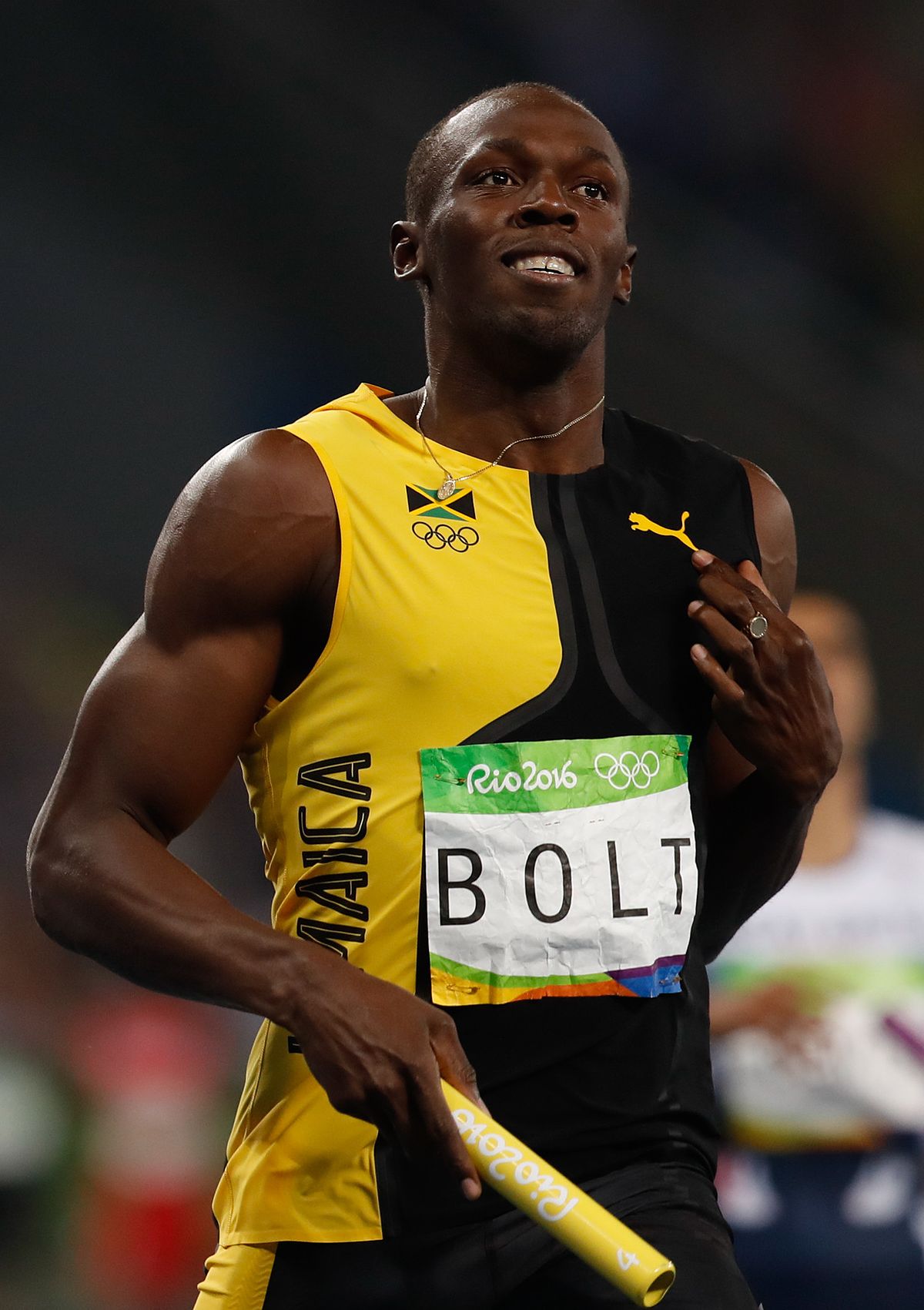
At the Rio de Janeiro Olympics, Bolt achieved an unprecedented feat by winning the 100 meters, 200 meters, and 4×100 meters relay gold medals for the third consecutive time. This accomplishment solidified his place as the greatest sprinter in history.
The Final Lap: Last World Championships and Retirement
London 2017
Bolt’s final appearance at the World Championships came in London in 2017. He finished third in the 100 meters, behind Justin Gatlin and Christian Coleman. In his last race, the 4×100 meters relay, Bolt pulled up injured, marking a bittersweet end to his competitive career.
Legacy and Impact
Usain Bolt’s impact on track and field is unparalleled. His charismatic personality, combined with his incredible speed, made him a global icon. Bolt’s records in the 100 meters and 200 meters remain unbroken, and his achievements have inspired countless athletes around the world.
Off the Track
Bolt’s influence extends beyond athletics. He has ventured into various business endeavors, including a signature clothing line and restaurant. Bolt has also shown interest in professional soccer, briefly training with clubs like Borussia Dortmund and signing with Central Coast Mariners in Australia’s A-League.
Humanitarian Efforts
Bolt is known for his philanthropic work, particularly through the Usain Bolt Foundation, which aims to benefit children and young people in Jamaica through educational and cultural opportunities.
Conclusion
Usain Bolt’s journey from a young boy in Trelawny to the fastest man in the world is a testament to his extraordinary talent, hard work, and determination. His achievements on the track have redefined the sport of sprinting, while his personality and charisma have made him a beloved figure worldwide. Bolt’s legacy will continue to inspire future generations of athletes and fans alike.


