
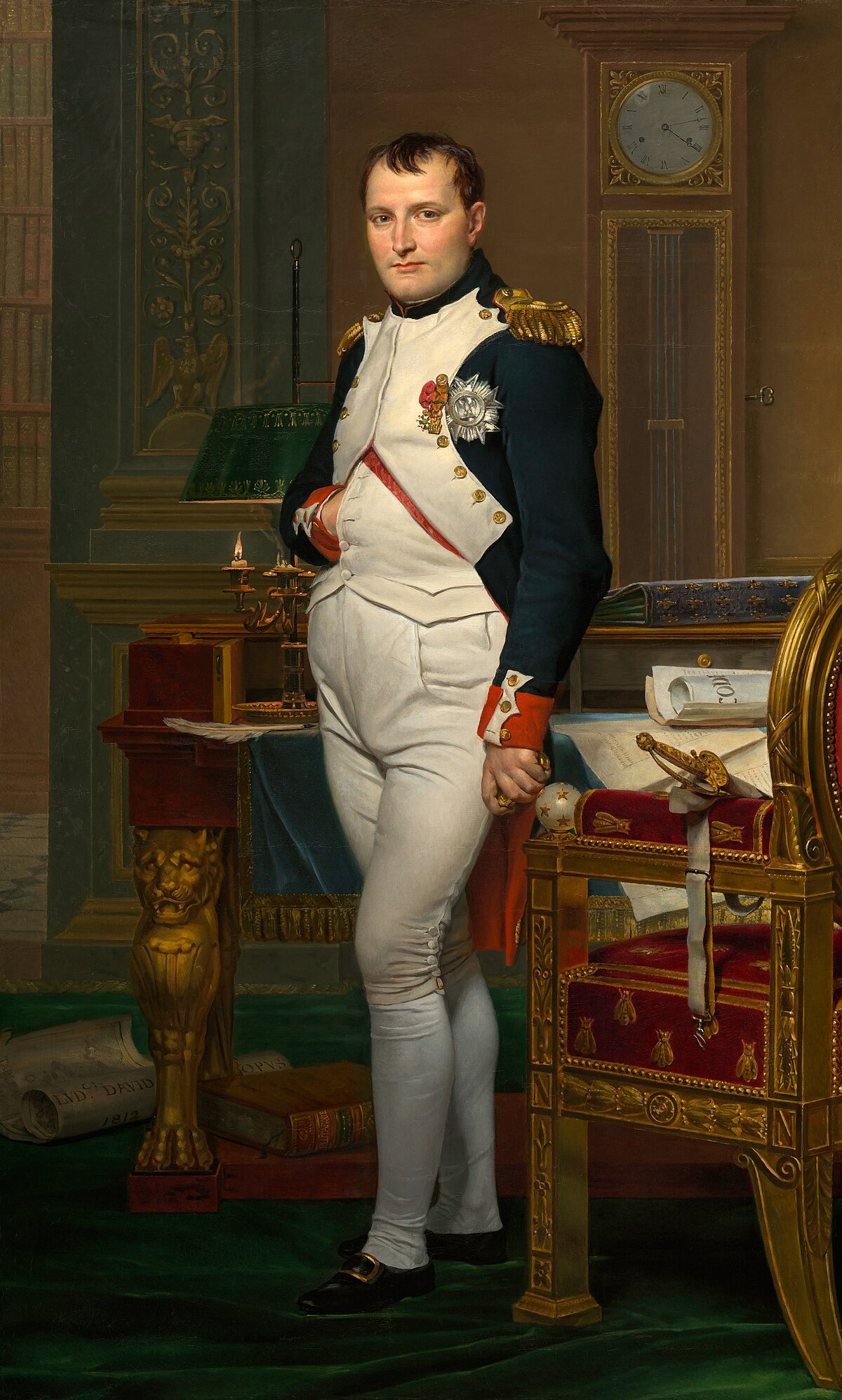
Napoleone Buonaparte, later known as Napoleon Bonaparte, is one of history’s most renowned figures. Born on August 15, 1769, in Ajaccio, Corsica, his life was marked by military conquests, political upheavals, and a lasting impact on Europe and the world. This article explores his age, rise to fame, and significant life highlights, providing detailed insights into his historical context and legacy.
Early Life and Education
Napoleon was the second son of Carlo Buonaparte, a lawyer of Tuscan origin, and Letizia Ramolino, a young and beautiful woman who bore thirteen children. Contrary to his father’s initial wishes for him to pursue a legal career, Napoleon was pushed towards a military path. On May 15, 1779, he moved to the military college of Brienne, where the sons of noble families were trained at the king’s expense. Thanks to the recommendations of Count de Marbeuf, he was accepted and remained there for five years. In September 1784, at the age of fifteen, he was admitted to the military school in Paris, and within a year, he achieved the rank of second lieutenant in the artillery.
The French Revolution and Early Military Career
The French Revolution, a period of immense political and social upheaval in France, was a turning point for Napoleon. As the revolution erupted, Napoleon eagerly embraced its ideals and became involved in the revolutionary activities on his native island of Corsica. He joined the forces of Pascal Paoli, a key figure in Corsican nationalism, and by 1791, he was appointed commander of a battalion in the National Guard of Ajaccio.
The national assembly declared Corsica an integral part of France on November 30, 1789, ending the military occupation that had begun in 1769. Meanwhile, France plunged deeper into political chaos. Following the fall of Robespierre in 1794, Napoleon was entrusted with commanding the French troops in Italy, shortly before his marriage to Joséphine de Beauharnais.
Rise to Power
Napoleon’s rise to power began with his successful Italian campaign in 1796. As commander of the French army in Italy, he displayed extraordinary military genius, defeating the Austrians and Piedmontese and securing the Treaty of Campo Formio in 1797. This victory laid the groundwork for what would later become the Kingdom of Italy.
Following his success in Italy, Napoleon embarked on the Egyptian campaign in 1798. Although intended to disrupt British trade routes, the campaign was also a strategic move by the French Directory to keep Napoleon away from France, where he was becoming increasingly influential. In Egypt, Napoleon’s forces achieved significant victories, including the defeat of the Mamluks at the Battle of the Pyramids and the British fleet at the Battle of Aboukir Bay. However, the situation in France deteriorated, prompting Napoleon to return in 1799, leaving his army under General Kléber’s command.
Coup of 18 Brumaire
Upon his return to France, Napoleon executed a coup d’état on November 9-10, 1799 (18 Brumaire according to the revolutionary calendar), overthrowing the Directory and establishing the Consulate. He appointed himself as First Consul, effectively becoming the ruler of France. His ability to consolidate power quickly demonstrated his strategic brilliance and political acumen.
As First Consul, Napoleon implemented numerous reforms that transformed French society. He restructured the administration and justice system, established the Bank of France, and signed the Concordat of 1801 with Pope Pius VII, which reconciled the Catholic Church with the French state. His most enduring legacy, the Napoleonic Code, was a comprehensive set of civil laws that influenced legal systems worldwide.
The Coronation and Empire
In 1804, Napoleon crowned himself Emperor of the French, signaling a new era in French and European history. His coronation was a grand affair, solidifying his authority and ambition. The following year, he also became King of Italy, further expanding his influence.
Under Napoleon’s rule, France experienced significant modernization and reforms in education, urban planning, economy, and the arts. The establishment of the Napoleonic Code provided a legal framework that outlived his reign and remains a cornerstone of modern legal systems.
Military Campaigns and Expansion
Napoleon’s ambition extended beyond France’s borders. He embarked on a series of military campaigns that reshaped Europe. Despite a failed attempt to invade England, he secured notable victories against Austria and Russia at the Battle of Austerlitz in 1805 and Prussia at the Battle of Jena in 1806. The Treaty of Tilsit in 1807 with Russia marked the height of his power, establishing a European empire under his control.
Napoleon’s rivalry with Britain remained a persistent challenge. In response to the British maritime blockade, he implemented the Continental System between 1806 and 1808, aiming to isolate Britain economically. While this policy boosted French industry, it strained the economies of European countries and necessitated further territorial expansion.
The Downfall
Napoleon’s downfall began with his ill-fated invasion of Russia in 1812. Misjudging the Russian winter and supply lines, his Grand Army suffered devastating losses, with only a fraction of his troops returning. This disaster emboldened his enemies, leading to the Sixth Coalition’s resurgence. By 1814, allied forces invaded France, capturing Paris in March. Napoleon was forced to abdicate in favor of his son and was exiled to the island of Elba.
However, his exile was short-lived. In March 1815, Napoleon escaped from Elba, returning to France for a brief period known as the Hundred Days. Rallying support from liberals and former soldiers, he regained control of France. His return culminated in the Battle of Waterloo on June 18, 1815, where he was decisively defeated by the British and Prussian forces. This defeat led to his final abdication and subsequent exile to the remote island of Saint Helena.
Exile and Death
On Saint Helena, Napoleon lived under British supervision, isolated and reflecting on his life and legacy. He spent his final years dictating his memoirs, defending his actions, and reminiscing about his past glories. He died on May 5, 1821, likely from stomach cancer, although some theories suggest he was poisoned.
Napoleon’s death marked the end of an era, but his influence endured. His military tactics, administrative reforms, and legal contributions left an indelible mark on history. The Napoleonic Code, in particular, remains a foundation for civil law systems around the world.
Legacy
Napoleon Bonaparte’s legacy is a complex tapestry of military genius, political ambition, and profound impact on European and global history. His ability to rise from relative obscurity to become Emperor of the French and ruler of a vast European empire is a testament to his extraordinary skills and determination.
Despite his controversial actions and the immense human cost of his wars, Napoleon’s reforms brought about significant changes in governance, law, and society. His efforts to modernize and centralize the French state laid the groundwork for future developments in France and influenced other nations.
Napoleon’s life and career continue to be the subject of extensive study and debate. His military strategies are analyzed in military academies, his administrative reforms are examined by scholars, and his legacy is commemorated in monuments and museums. The duality of his character, both as a visionary leader and a ruthless conqueror, ensures that he remains one of history’s most fascinating and enigmatic figures.
Conclusion
Napoleon Bonaparte’s journey from a young Corsican to Emperor of the French is a story of ambition, brilliance, and relentless pursuit of power. His age, fame, and life highlights reflect a man who reshaped the course of history through his military conquests and profound reforms.
As we continue to explore and understand his life, Napoleon’s legacy serves as a reminder of the complexities of leadership and the enduring impact one individual can have on the world. His story is not just a historical account but a lesson in the possibilities and perils of ambition, making Napoleon Bonaparte a figure whose influence transcends time.


