
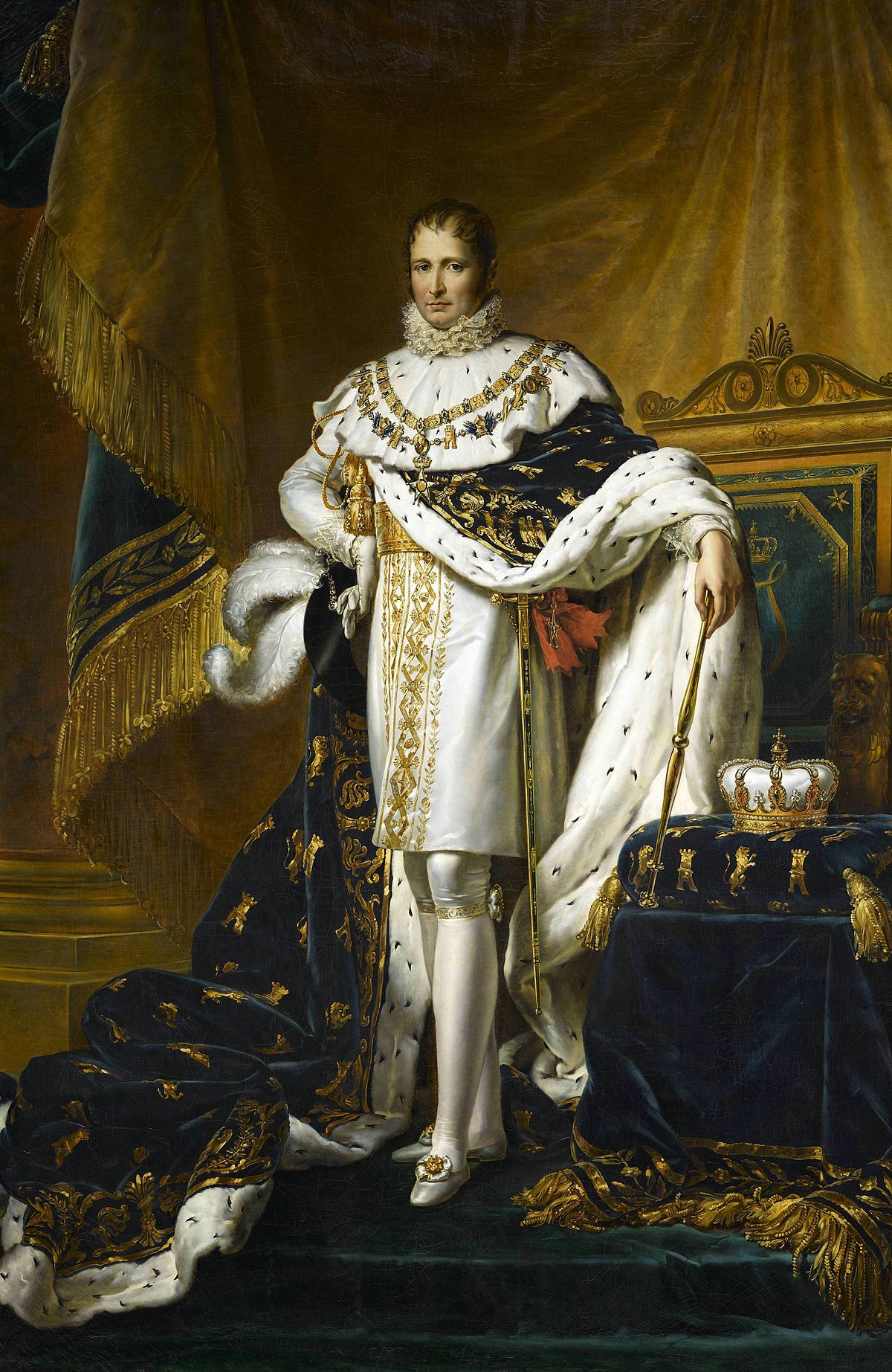
Giuseppe Bonaparte, born on January 7, 1768, in Corte, Corsica, was a significant yet often overshadowed figure in the Bonaparte family. The elder brother of Napoleon Bonaparte, Giuseppe’s life was marked by his close association with his more famous sibling, his own attempts at governance, and his ultimate legacy as a ruler of two ephemeral kingdoms. This article explores his age, rise to fame, and notable life highlights, offering detailed insights and historical context.
Early Life and Family Background
Giuseppe Bonaparte was born to Carlo Maria Buonaparte, a general and supporter of Corsican patriot Pasquale Paoli, and Maria Letizia Ramolino. His birth came seventeen months before that of his more famous brother, Napoleon, who would significantly influence Giuseppe’s destiny. The Bonaparte family was entrenched in the political struggles of Corsica, an island caught between its quest for independence and French control.
Giuseppe married Julie Clary of Marseille in 1794, further entrenching himself within influential circles. This union was significant, as Julie’s sister, Désirée Clary, was once engaged to Napoleon, intertwining the families even further.
Diplomatic and Early Political Career
In 1796, Giuseppe was appointed as the French ambassador to Rome. His tenure was marked by a tragic event on December 28, 1797, when a peaceful demonstration near the French embassy turned violent. Papal soldiers opened fire, killing several people, including General Duphot, the fiancé of Julie’s sister Désirée. This incident, coupled with the earlier killing of diplomat Hugo de Basseville in 1793, intensified tensions between France and the Papal States.
The French Directory, led by the fiercely anti-Catholic Louis Marie de La Revellière-Lépeaux, decided to invade the Papal States, establishing the Roman Republic on February 15, 1798, and forcing Pope Pius VI to flee to Tuscany.
King of Naples and Sicily
Giuseppe’s rise to power was deeply intertwined with Napoleon’s military and political maneuvers. The Kingdom of Naples, under King Ferdinand IV, repeatedly broke agreements with France, largely influenced by British pressure. In response, Napoleon dispatched an army of 50,000 troops under Marshal Massena in February 1806. Ferdinand fled to Palermo, and Giuseppe was installed as the Lieutenant of the Emperor in Naples on February 14, 1806.
Giuseppe’s first proclamation as ruler, issued the next day, underscored Napoleon’s frustration with Ferdinand: “Soldiers! In ten years, I have done everything to save the King of Naples; he has done everything to lose himself.” On March 30, 1806, Napoleon officially appointed Giuseppe as King of the Two Sicilies, maintaining his right of succession to the French throne and declaring the new kingdom autonomous from France.
As king, Giuseppe sought to reassure his new subjects by forming a government of six ministers, including four Neapolitan monarchists. However, his rule was immediately challenged by Bourbon loyalists, particularly in Calabria, where insurgent forces created significant difficulties for the French troops.
Reforms and Challenges
Giuseppe initiated several reforms during his reign. The most significant was the abolition of feudalism through the law of August 2, 1806, which eradicated numerous feudal privileges. Although innovative, this reform primarily benefited the emerging agrarian bourgeoisie, leaving many peasants’ expectations unfulfilled.
The birth of the Carbonari, a secret society opposed to French rule and aspiring for national unification, further complicated Giuseppe’s reign. This movement began in the south but quickly spread throughout Italy, adding to the resistance against French dominance.
King of Spain
The internal crisis in Spain led to the deposition of King Charles IV by his son Ferdinand VII. Seeking Napoleon’s intervention, Charles inadvertently facilitated the French occupation of Spain. Napoleon restored Charles to the throne, only to force him to cede the crown, subsequently assigning it to Giuseppe in 1808. Napoleon appointed Joachim Murat, another brother-in-law, as the new ruler of Naples.
Giuseppe’s tenure in Spain was fraught with challenges. The Spanish populace, supported by the British Duke of Wellington, rose in rebellion, initiating the Peninsular War (1808-1814). This conflict inflicted severe losses on French forces, with over 400,000 casualties.
Attempts at Reform in Spain
Despite the turmoil, Giuseppe attempted to stabilize Spain by granting a constitution and implementing various reforms. However, his efforts were largely in vain. The French defeat at the Battle of Bailén on July 23, 1808, weakened his position, although Napoleon’s intervention temporarily preserved his throne. Ultimately, the French loss at the Battle of Salamanca (1812) forced Giuseppe to flee to France in 1813.
Exile and Later Life
Following the collapse of the Napoleonic Empire, Giuseppe fled to the United States, where he purchased a prestigious estate in New Jersey. During his American exile, he engaged in relationships with local nobility, while Julie, remaining in Europe with their daughters, rekindled a past romance with François André Anthoine. The couple reunited only in 1840 in Florence.
Giuseppe Bonaparte died on July 28, 1844, in Florence, at the age of seventy-six. His legacy as the ruler of two ephemeral kingdoms is often overshadowed by Napoleon’s grandeur, yet his attempts at governance and reform reflect his dedication and resilience.
Historical Context and Legacy
Giuseppe Bonaparte’s life and career were deeply intertwined with the tumultuous political landscape of late 18th and early 19th century Europe. His roles as King of Naples and King of Spain highlight the complexities and challenges of ruling during an era marked by revolutionary fervor, wars, and the reconfiguration of European powers.
As King of Naples, Giuseppe’s efforts to modernize and reform the kingdom were significant, although they were met with resistance and challenges. The abolition of feudal privileges marked a crucial step towards modern governance, despite its limited success in addressing the needs of the peasantry.
In Spain, Giuseppe’s attempts at constitutional reform and modernization were overshadowed by the Peninsular War, which proved to be a protracted and bloody conflict. His reign in Spain is often viewed through the lens of this war, highlighting the difficulties of imposing French rule over a resistant populace.
Influence and Contributions
Despite the brevity of his reigns, Giuseppe Bonaparte’s influence extended beyond his immediate political roles. His governance style and reform efforts reflected the broader Napoleonic ambition to modernize and centralize authority, laying foundations that would influence future governance models.
His interactions with secret societies like the Carbonari underscore the era’s revolutionary undercurrents, which sought national unification and resistance against foreign domination. These movements would later play a crucial role in the unification of Italy.
Family Dynamics and Personal Relationships
Giuseppe’s life also reflects the intricate dynamics within the Bonaparte family. His close relationship with Napoleon, marked by both cooperation and dependency, shaped his political trajectory. His marriage to Julie Clary and the subsequent personal challenges, including his American exile, highlight the personal sacrifices and complexities faced by members of the Bonaparte family.
Conclusion
Giuseppe Bonaparte’s life was a testament to the turbulent and transformative period in which he lived. As a king of two short-lived kingdoms, his efforts at reform and governance, though often overshadowed by his brother Napoleon, reflect a dedication to the principles of modernization and centralized authority.
His legacy, intertwined with the broader historical forces of the Napoleonic era, provides valuable insights into the challenges and aspirations of a period marked by revolution, war, and the reconfiguration of European power structures. Giuseppe Bonaparte remains a figure of historical significance, whose life and actions continue to inform our understanding of this pivotal epoch in European history.


