
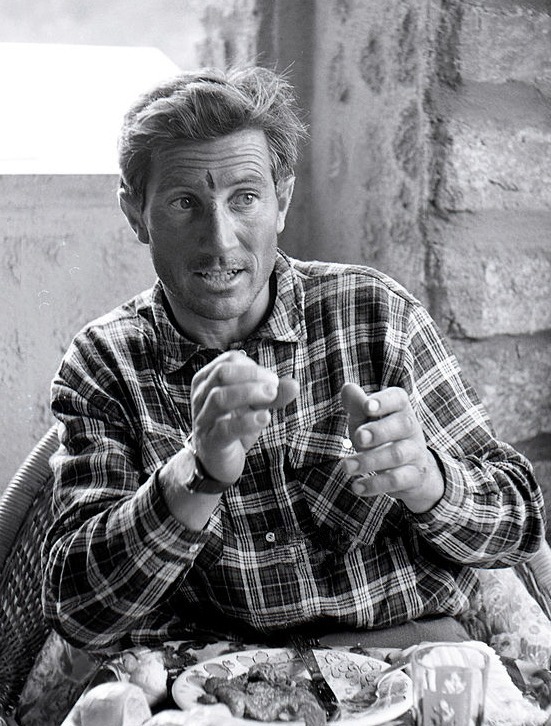
Walter Bonatti, born on June 22, 1930, in Bergamo, Italy, was a legendary mountaineer, explorer, and journalist. Known for his remarkable achievements in the world of alpinism, Bonatti’s life was marked by extraordinary ascents, incredible adventures, and a relentless pursuit of truth. This article explores his age, rise to fame, and notable life highlights, providing detailed insights and historical context to his remarkable journey.
Early Life and Beginnings in Mountaineering
Walter Bonatti’s introduction to the world of sports began with gymnastics, which he practiced with the Forti e Liberi club in Monza. At the age of eighteen, he started his climbing career on the Prealps in Lombardy. During these early years, Bonatti worked as a steelworker at Falck in Sesto San Giovanni, dedicating his weekends to mountaineering after completing his night shifts.
In 1949, he scaled the Cassin Route on the north face of the Grandes Jorasses and the Vitale Bramani and Ettore Castiglioni route on the Pizzo Badile. The following year, Bonatti attempted to conquer the east face of the Grand Capucin in the Mont Blanc massif but was thwarted twice by poor weather conditions. Undeterred, he returned in 1951 and successfully opened a new route on the red granite wall, marking his first significant achievement in alpinism.
The Tragic News and Military Service
Just after his triumph on the Grand Capucin, Bonatti was met with the tragic news of his mother’s death, an event that deeply affected him. He continued his climbing endeavors, scaling the Aiguille Noire de Peuterey with Roberto Bignami. Shortly after, he was called to military service, where he was initially placed in the School of Motorization at Cecchignola but later reassigned to the 6th Alpine Regiment due to his complaints.
During his military service, Bonatti achieved several notable climbs, including the first winter ascent of the north face of Cima Ovest di Lavaredo with Carlo Mauri and the ascent of the Matterhorn. His achievements during this period highlighted his exceptional climbing skills and tenacity.
The Controversial K2 Expedition
In 1954, Bonatti participated in the Italian expedition to K2, led by Ardito Desio, along with Lino Lacedelli and Achille Compagnoni. This expedition would become a pivotal and controversial chapter in Bonatti’s life. During the final push to the summit, Bonatti and the Hunza porter Amir Mahdi were forced to spend a night in the open at high altitude without proper shelter, enduring temperatures as low as minus fifty degrees Celsius. This incident occurred because Compagnoni and Lacedelli had moved the camp without informing Bonatti, allegedly to prevent him from joining the summit push and sharing the glory.
Bonatti’s version of events, initially suppressed due to a pre-expedition agreement, surfaced in the early 1960s, leading to a long-standing dispute about the events on K2. His account was finally vindicated in 2008 when an official report recognized his crucial role in the expedition and the truth of his claims, acknowledging that Lacedelli and Compagnoni had indeed used the oxygen Bonatti had carried to reach the summit.
Solo Ascents and Major Achievements
In 1955, Bonatti achieved one of the most remarkable feats in mountaineering history by solo climbing the southwest pillar of the Petit Dru in the Mont Blanc massif. The six-day ascent on one of the most challenging granite faces in the world, using only natural rock fissures, solidified his reputation as one of the greatest climbers of his time.
The following year, Bonatti attempted the winter ascent of the Via della Poire with his friend Silvano Gheser. Caught in a severe storm, the pair were rescued by alpine guides Sergio Viotto, Gigi Panei, Albino Pennard, and Cesare Gex at the Rifugio Gonella. After recovering in Courmayeur, Bonatti successfully climbed the north face of the Grand Pilier d’Angle, one of Mont Blanc’s last untouched routes, multiple times over the following years.
In 1958, he participated in an expedition to Patagonia led by Folco Doro Altan, aiming to summit the unclimbed Cerro Torre. Although this attempt was unsuccessful, Bonatti later joined Riccardo Cassin’s expedition to the Karakoram, where he reached the summit of Gasherbrum IV (just under 8,000 meters) without supplemental oxygen on August 6, 1958, alongside Carlo Mauri.
Later Climbing Career and Transition to Exploration
Bonatti’s relationship with the Italian Alpine Club (CAI) deteriorated over the years due to his perception of the organization as overly bureaucratic. Despite this, he continued to achieve significant climbs in Italy, France, and Peru. In 1961, he narrowly escaped death during an attempt to summit the Freney Pillar, when a storm trapped his team near the summit, resulting in the loss of four climbers.
In August 1964, Bonatti made the first ascent of the north face of Punta Whymper on the Grandes Jorasses and completed his alpine climbing career with a remarkable solo winter ascent of the north face of the Matterhorn in five days. This climb marked the first solo ascent, a new route, and the first winter ascent of the face, earning him the Gold Medal from the Presidency of the Italian Republic.
Exploration and Journalism
After retiring from extreme alpinism, Bonatti turned his focus to exploration and journalism. He traveled extensively, climbing Mount Kilimanjaro in Tanzania and exploring the Alto Orinoco in Venezuela, where he interacted with the Waikas Yanoami indigenous people. In the late 1960s, he ventured to Sumatra to study local tigers and confirmed the accuracy of Herman Melville’s accounts in the Marquesas Islands.
Throughout the 1970s, Bonatti continued his explorations, traveling to Cape Horn, Australia, Africa (between Zaire and Congo), and New Guinea. He even reached Antarctica, exploring the Dry Valleys, and traced the sources of the Amazon River.
Personal Life and Legacy
Walter Bonatti’s personal life saw a significant turn when he met actress Rossana Podestà in Rome. The couple exchanged letters for a long period before falling in love and moving in together in Dubino, Valtellina. Bonatti’s life was filled with incredible adventures, both in climbing and exploration, showcasing his insatiable curiosity and resilience.
In 2011, Bonatti was diagnosed with pancreatic cancer, a diagnosis kept secret by his partner to prevent him from considering suicide. Walter Bonatti passed away on September 13, 2011, at the age of 81 in Rome. His funeral was held on September 18 in Villa Gomes, Lecco, and his ashes were interred in the cemetery of Porto Venere.
Before his death, in 2008, Bonatti’s account of the K2 expedition was officially validated, bringing closure to a lifelong struggle for recognition and truth. This acknowledgment cemented his legacy not only as a pioneering alpinist but also as a relentless seeker of justice.
Historical Context and Impact
Walter Bonatti’s life and career unfolded during a transformative period in the history of alpinism and exploration. His achievements in climbing, particularly his solo ascents and winter expeditions, pushed the boundaries of what was considered possible, inspiring future generations of climbers. His unwavering pursuit of truth regarding the K2 expedition highlighted the ethical and moral dimensions of mountaineering, emphasizing the importance of integrity and honesty in the sport.
Bonatti’s transition from climbing to exploration and journalism reflected his broader curiosity and desire to understand the world. His travels and writings provided valuable insights into remote cultures and natural environments, contributing to the fields of anthropology and environmental science.
Influence and Contributions
Bonatti’s influence extended beyond the realm of mountaineering. His solo climbs, particularly on the Petit Dru and the Matterhorn, remain benchmarks of skill and determination in the climbing community. His expeditions to uncharted territories and his interactions with indigenous peoples added a rich dimension to his legacy, showcasing his versatility and depth as an explorer.
His writings and photographs documented his journeys, offering a window into the challenges and wonders of remote landscapes. These contributions enriched the public’s understanding of exploration and the natural world, inspiring a sense of adventure and curiosity.
Conclusion
Walter Bonatti’s life was a testament to human endurance, curiosity, and the relentless pursuit of excellence. From his early days as a steelworker climbing the Prealps to his groundbreaking solo ascents and his explorations across the globe, Bonatti exemplified the spirit of adventure and resilience.
His legacy, marked by his incredible achievements in alpinism, his dedication to truth, and his contributions to exploration and journalism, continues to inspire and influence adventurers and scholars alike. Walter Bonatti remains a towering figure in the history of mountaineering, a true king of the Alps, whose life story is a beacon of courage, integrity, and passion.


