
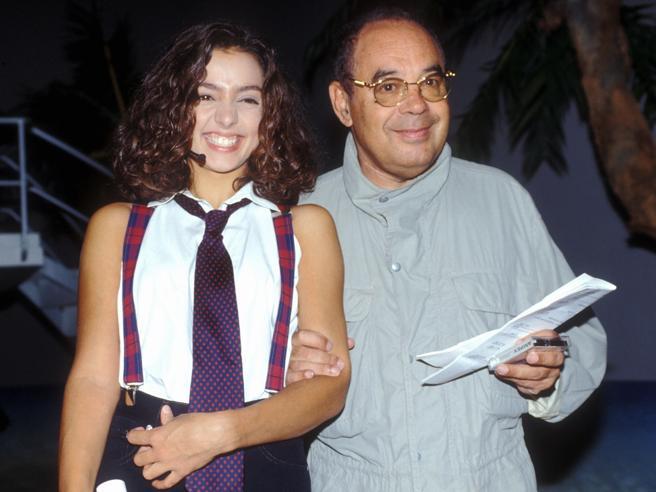
Gianni Boncompagni, born Giandomenico Boncompagni on May 13, 1932, in Arezzo, Italy, was a prominent figure in Italian entertainment. Known for his innovative work in radio and television, Boncompagni’s career spanned decades and left a lasting impact on Italian media. This article delves into his age, rise to fame, and notable life highlights, providing detailed insights and historical context.
Early Life and Career Beginnings
Gianni Boncompagni was born into a modest family; his mother was a homemaker, and his father was a military officer. At the age of eighteen, he moved to Sweden, where he spent a decade working various jobs before finding his niche in broadcasting. During his time in Scandinavia, Boncompagni attended the Academy of Photography and Graphics and began his career as a radio host. One of his memorable early interviews was with sociologist Danilo Dolci.
Boncompagni married an aristocratic Swedish woman, with whom he had three daughters, including Barbara, who would later become a television writer. The marriage eventually ended in separation, but Boncompagni retained custody of his daughters. In 1964, he returned to Italy and won a contest to become a light music programmer for RAI, the Italian public broadcasting company.
Rise to Fame in Radio
Upon joining RAI, Boncompagni met Renzo Arbore, with whom he would create some of Italy’s most iconic radio programs. Together, they revolutionized Italian radio with shows like “Bandiera Gialla” and “Alto Gradimento.” These programs were groundbreaking for their use of improvisation, nonsense humor, and catchy jingles, contributing significantly to the spread of beat music in Italy.
In addition to his radio success, Boncompagni ventured into singing under the stage name Paolo Paolo and recorded for RCA Italiana. One of his notable works was the hit song “Il mondo,” performed by Jimmy Fontana, which became an international success and secured Boncompagni substantial royalties.
Transition to Television
Boncompagni’s television career began in earnest in 1977 when he hosted “Discoring,” a music show aimed at young audiences. His innovative approach and unique style quickly made him a household name. Collaborating with Giancarlo Magalli, Boncompagni created several successful programs, including “Che patatrac,” “Sotto le stelle,” and “Galassia 2.”
In the mid-1980s, Boncompagni achieved significant success with “Pronto, Raffaella?” a show that catapulted Raffaella Carrà to stardom. He also wrote several songs for Carrà, further cementing his influence in the entertainment industry. The spin-off show, “Pronto, chi gioca?” hosted by Enrica Bonaccorti, also enjoyed widespread popularity.
Iconic Shows and Controversies
In 1987, Boncompagni joined “Domenica In,” where he worked until 1990. During this time, he helped transform the show, introducing new segments and personalities such as Edwige Fenech and Marisa Laurito. His innovative ideas, including using young girls as on-screen participants and the famous “cruciverbone” crossword segment, laid the foundation for his next major project, “Non è la Rai.”
Launched in 1991 on Fininvest (now Mediaset), “Non è la Rai” became a cult hit and ran until 1995. The show featured young female performers and launched the careers of many, including Ambra Angiolini, Antonella Elia, and Claudia Gerini. However, it was also mired in controversies, including the use of underage girls, a scandal involving a rigged crossword puzzle, and political endorsements by Angiolini during the 1994 elections.
Later Career and Legacy
In the mid-1990s, Boncompagni continued to innovate with shows like “Macao,” initially hosted by Alba Parietti and later by a digital character named Pi. The show, which launched the careers of Enrico Brignano and Paola Cortellesi, continued Boncompagni’s tradition of blending humor, music, and unpredictable elements.
In 1998, Boncompagni faced challenges with “Crociera,” a prime-time show hosted by Nancy Brilli. The program was canceled after just one episode due to low ratings and high production costs, leading to public disputes with RAI executives and calls for financial investigations.
Despite this setback, Boncompagni found success again with “Chiambretti c’è,” a show he created with Piero Chiambretti and Alfonso Signorini. In the 2000s, he continued to influence Italian television, directing the “Omaggio a Gianni Versace” concert featuring Elton John and contributing to “Domenica In” and other programs.
Personal Life and Death
Gianni Boncompagni’s personal life was as dynamic as his career. His relationships with high-profile women, including a long-term partnership with Raffaella Carrà, were often in the public eye. In later years, he maintained a more private life, focusing on his family and personal interests.
Boncompagni passed away in Rome on April 16, 2017, just weeks before his 85th birthday. His death marked the end of an era in Italian entertainment, but his legacy lives on through the countless programs and talents he nurtured throughout his career.
Historical Context and Impact
Gianni Boncompagni’s career spanned a period of significant change in Italian media and society. His innovative approach to radio and television mirrored the broader cultural shifts of the 1960s and 1970s, as Italy embraced new forms of entertainment and communication.
Boncompagni’s work reflected and influenced these changes, from the beat music craze to the rise of television as a dominant cultural force. His ability to tap into the zeitgeist and create content that resonated with audiences made him a pivotal figure in Italian pop culture.
Influence and Contributions
Boncompagni’s contributions to Italian entertainment were multifaceted. As a radio pioneer, he helped shape the medium into a platform for innovation and creativity. His television work broke new ground in terms of format, style, and content, blending humor, music, and audience interaction in ways that were both entertaining and thought-provoking.
His legacy also includes the many careers he helped launch. Figures like Renzo Arbore, Raffaella Carrà, Ambra Angiolini, and numerous others owe a part of their success to Boncompagni’s vision and support. His programs often served as incubators for new talent, providing a platform for young performers to showcase their skills and gain public recognition.
Conclusion
Gianni Boncompagni’s life and career were characterized by creativity, innovation, and a keen sense of what resonated with audiences. From his early days in radio to his groundbreaking work in television, Boncompagni consistently pushed the boundaries of what was possible in entertainment.
His influence extended beyond the programs he created, shaping the careers of many and leaving an indelible mark on Italian media. As we look back on his achievements, it is clear that Boncompagni was not just a producer and director, but a cultural icon whose impact will be felt for generations to come.


