
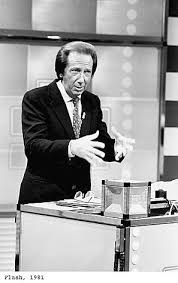
Mike Bongiorno, born Michael Nicholas Salvatore Bongiorno on May 26, 1924, in New York City, is widely regarded as the father of Italian television. With a career that spanned over six decades, Bongiorno became a household name in Italy, pioneering the quiz show format and establishing himself as a beloved television presenter. His impact on Italian popular culture is profound, earning him the title of “King of Quiz Shows” and making him an enduring symbol of Italian entertainment.
Early Life and World War II Experience
Born to an Italian-American father and a mother from Turin, Italy, Mike Bongiorno moved to Italy at a young age. He attended secondary school in Turin, where he developed an early interest in communication and media. However, his studies were interrupted by the outbreak of World War II, during which he joined the Italian Resistance.
Bongiorno’s involvement in the Resistance led to his arrest by the Nazis. He spent seven months imprisoned in Milan’s San Vittore prison before being transferred to a German concentration camp. His life was spared due to a prisoner exchange between the United States and Germany, a harrowing experience that shaped his worldview and instilled in him a deep appreciation for freedom and democracy.
The Beginnings of a Media Career
After the war, Bongiorno returned to the United States, where he began his media career. In 1946, he hosted a radio program called “Voci e volti dall’Italia” (“Voices and Faces from Italy”) for the radio station of the Italian-American newspaper “Il Progresso Italo-Americano.” This experience gave him valuable insights into broadcasting and paved the way for his future endeavors in television.
In 1953, Bongiorno returned to Italy at the invitation of RAI, Italy’s public broadcasting company, to help launch the country’s first television broadcasts. His first program, “Arrivi e partenze” (“Arrivals and Departures”), aired on January 3, 1954, marking the beginning of Italian television. Bongiorno’s approachable style and American accent immediately resonated with viewers, establishing him as a familiar face in Italian households.
The Birth of Italian Quiz Shows: “Lascia o Raddoppia?”
Mike Bongiorno’s true breakthrough came in 1955 with the launch of “Lascia o Raddoppia?” (“Double or Nothing?”), Italy’s first major quiz show. The show, inspired by the American program “The $64,000 Question,” quickly became a cultural phenomenon. It was so popular that cinemas across Italy would close on Thursday nights to avoid competing with the show’s airtime.
“Lascia o Raddoppia?” ran until 1959 and solidified Bongiorno’s status as a television icon. The show’s success was due in large part to Bongiorno’s ability to engage with contestants and viewers alike, making quiz shows a staple of Italian television. His catchphrase “Allegria!” (“Cheerfulness!”) became synonymous with the upbeat, optimistic tone of his programs.
Throughout the 1960s and 1970s, Bongiorno continued to host a string of successful shows, including “Campanile Sera” (1960), “Caccia al numero” (1962), “La fiera dei sogni” (1963-1965), and “Giochi in famiglia” (1966-1967). Each of these programs contributed to the growth of television as a central medium in Italian culture.
“Rischiatutto” and the Golden Era of Television
In 1970, Mike Bongiorno launched another groundbreaking show, “Rischiatutto” (“Risk Everything”), which took the quiz show format to new heights. “Rischiatutto” was notable for its use of electronic scoring and special effects, innovations that were ahead of their time in Italian television. The show introduced the first “talking” female assistant on Italian TV, Sabina Ciuffini, who became a popular figure in her own right.
“Rischiatutto” ran until 1974 and is remembered as one of the most influential programs in Italian television history. The show’s success further cemented Bongiorno’s reputation as the king of Italian quiz shows, and his influence on the medium was recognized by cultural critics, including the renowned Umberto Eco, who wrote an essay titled “Fenomenologia di Mike Bongiorno” (“Phenomenology of Mike Bongiorno”), analyzing his impact on Italian television and society.
Collaboration with Silvio Berlusconi and the Rise of Private Television
In 1977, Mike Bongiorno met Silvio Berlusconi, a rising media entrepreneur who would later become one of Italy’s most powerful political figures. Berlusconi was in the process of creating Italy’s first private television network, and he recognized that Bongiorno’s star power could help legitimize and popularize this new venture.
Bongiorno joined Berlusconi’s TeleMilano, which would later evolve into Canale 5, the flagship channel of Mediaset, Berlusconi’s media empire. Bongiorno’s presence on the network was instrumental in its early success. He hosted several hit shows, including “I sogni nel cassetto” (1980), “Bis” (1981), “Superflash” (1982-1985), “Pentatlon” (1985-1986), and “TeleMike” (1987-1992).
One of Bongiorno’s most enduring successes during this period was “La ruota della fortuna” (“The Wheel of Fortune”), the Italian version of the American game show. Bongiorno hosted the show for an astonishing 3,200 episodes, setting records and reinforcing his status as a beloved television personality.
Sanremo and Beyond: A National Icon
Mike Bongiorno’s association with the Sanremo Music Festival, Italy’s most prestigious music event, further elevated his profile. He hosted the festival 11 times between 1963 and 1997, making him one of the most recognizable faces in Italian entertainment. His ability to connect with both audiences and performers made him a natural choice for such a high-profile event.
In addition to his work on television, Bongiorno made cameo appearances in several Italian films, often playing himself. His roles in movies like “Totò lascia o raddoppia?” (1956), “Il giudizio universale” (1961), and “C’eravamo tanto amati” (1974) showcased his versatility and underscored his popularity across different media.
Bongiorno’s influence extended beyond entertainment; he was a cultural touchstone for generations of Italians. His signature style, characterized by his amiable personality and occasional gaffes, endeared him to viewers of all ages. His catchphrase “Allegria!” became emblematic of his positive, upbeat approach to life and television.
Later Years and Legacy
As the 21st century dawned, Mike Bongiorno continued to adapt to the changing media landscape. In 2001, he embarked on an ambitious expedition to the North Pole, highlighting his enduring sense of adventure and curiosity. The trip, which involved scientific research on the effects of pollution in the polar regions, was a testament to his willingness to engage with new challenges even in his later years.
Bongiorno’s contributions to Italian television were officially recognized in 2004 when he was awarded the title of “Grande Ufficiale dell’Ordine al merito della Repubblica” by President Carlo Azeglio Ciampi. This honor underscored Bongiorno’s status as not only a television icon but also a national treasure.
In 2009, after his contract with Mediaset ended, Bongiorno signed with Sky Italia, marking a new chapter in his career. However, this phase was cut short by his untimely death on September 8, 2009, in Monte Carlo, where he suffered a fatal heart attack.
The Aftermath: A Controversial Legacy
Mike Bongiorno’s death was met with widespread mourning across Italy, reflecting his profound impact on the nation’s cultural landscape. However, his legacy took a dark turn in 2011 when his body was stolen from its resting place in Dagnente, near Arona. The theft shocked the nation and led to a lengthy investigation. The coffin was eventually recovered later that year in Vittuone, near Milan, but the motives behind the theft remain unclear. To prevent further incidents, Bongiorno’s remains were cremated, and his ashes were scattered in the mountains of Cervino, in Valle d’Aosta, fulfilling his family’s wishes.
In 2015, the city of Milan honored Bongiorno’s legacy by naming a street after him, “Via Mike Bongiorno,” located in the modern Porta Nuova district. This tribute serves as a reminder of his lasting influence on Italian television and culture.
Conclusion: The Enduring Legacy of Mike Bongiorno
Mike Bongiorno’s career is a remarkable story of innovation, resilience, and connection with the Italian public. He was more than just a television presenter; he was a symbol of post-war Italy’s optimism and a pioneer who helped shape the nation’s media landscape. His work introduced Italians to the quiz show format, brought families together around their television sets, and created a sense of shared cultural experience that defined a generation.
Bongiorno’s legacy lives on in the countless television presenters who followed in his footsteps, inspired by his unique blend of professionalism and warmth. His catchphrase “Allegria!” continues to evoke memories of a time when television was a new and exciting medium, and his influence on Italian popular culture is undeniable.
For over six decades, Mike Bongiorno entertained, informed, and inspired millions of viewers. His contribution to the world of television is unmatched, and his place in the history of Italian media is secure. As a trailblazer in the world of television, Bongiorno’s life and career remain a testament to the power of communication and the enduring appeal of a warm, genuine connection with an audience.


