
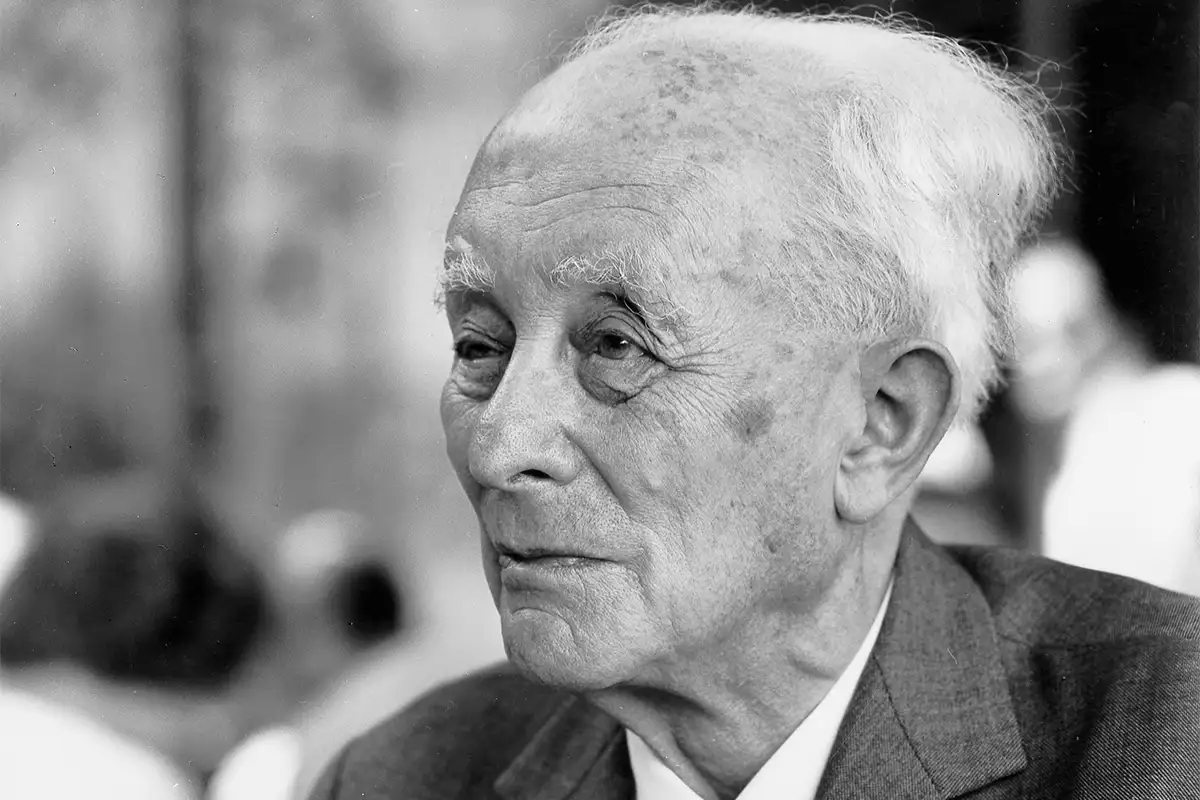
Max Born, born on December 11, 1882, in Breslau (now Wrocław, Poland), was a renowned physicist whose work laid the foundation for quantum mechanics and earned him the Nobel Prize in Physics in 1954. His contributions to the field of theoretical physics, particularly in the area of quantum mechanics, have left an indelible mark on the scientific community. This article explores the life, career, and significant achievements of Max Born, providing detailed insights and historical context to understand his legacy.
Early Life and Education
Birth and Family Background
Max Born was born into a well-educated family. His father, Gustav Born, was a professor of anatomy and embryology, while his mother, Margarete Kauffmann, came from a prominent Silesian industrial family. This intellectual and culturally rich environment significantly influenced Born’s early development and academic pursuits.
Education
Born attended the König Wilhelm’s Gymnasium in Breslau, where he displayed an early aptitude for mathematics and science. He continued his studies at the universities of Breslau, Heidelberg, Zurich, and Göttingen. At Göttingen, he was particularly influenced by prominent mathematicians and physicists such as David Hilbert, Hermann Minkowski, and Carl Runge. His academic journey was marked by a blend of mathematics and physics, setting the stage for his future contributions to theoretical physics.
Early Career and Academic Achievements
Doctoral Work
In 1906, at the age of 24, Max Born received his doctorate from the University of Göttingen. His thesis, which focused on the stability of elastic wires and tapes, won him the university’s Philosophy Faculty Prize. This early work demonstrated his ability to tackle complex problems in theoretical physics, a skill that would define his career.
Postdoctoral Research
Following his doctoral studies, Born spent a brief period at Cambridge University under the mentorship of J.J. Thomson, a leading figure in the study of atomic structure. He then returned to Breslau, where he worked with physicists Otto Lummer and Ernst Pringsheim on problems related to relativity theory. This period of intense research and collaboration helped Born solidify his expertise in both mathematics and physics.
Collaboration with Minkowski
One of Born’s significant early collaborations was with Hermann Minkowski, who invited him to Göttingen to assist with his work on the theory of relativity. After Minkowski’s untimely death in 1909, Born took on the responsibility of completing and managing his mentor’s scientific papers. This experience deepened Born’s understanding of the theoretical underpinnings of modern physics and prepared him for his future groundbreaking work.
Contributions to Quantum Mechanics
Professorship at Göttingen
In 1921, Max Born was appointed to a full professorship at the University of Göttingen, a position he held for over a decade. During this period, Göttingen became a leading center for theoretical physics, attracting some of the brightest minds in the field. Born’s work during this time was pivotal in the development of quantum mechanics.
Development of Quantum Mechanics
Between 1925 and 1926, Born, along with his colleagues Werner Heisenberg and Pascual Jordan, published a series of papers that laid the foundations for matrix mechanics, one of the earliest formulations of quantum mechanics. Born’s interpretation of the wave function in terms of probabilities and his statistical interpretation of quantum mechanics were revolutionary. These contributions helped resolve many of the paradoxes and inconsistencies of classical mechanics when applied to atomic and subatomic systems.
Influential Students and Collaborators
Born’s tenure at Göttingen saw collaborations with several future luminaries of physics, including Enrico Fermi, Robert Oppenheimer, Wolfgang Pauli, and Paul Dirac. His ability to mentor and inspire these young scientists contributed significantly to the advancement of theoretical physics during the early 20th century.
Impact of World War II and Emigration
Political Climate and Emigration
The rise of the Nazi regime in Germany in 1933 forced Max Born, like many other Jewish scientists, to emigrate. He accepted an invitation from Cambridge University, where he continued his research in theoretical physics. The political climate in Germany during this period led to a significant brain drain, with many prominent scientists seeking refuge in other countries.
Research in Electrodynamics
During his time in Cambridge, Born focused on nonlinear electrodynamics, collaborating with Leopold Infeld. This research extended the classical theories of electromagnetism and provided new insights into the behavior of electromagnetic fields.
Academic Positions Abroad
In 1935, Born spent six months at the Indian Institute of Science in Bangalore, collaborating with Sir C.V. Raman and his students. This period of international collaboration enriched Born’s scientific perspectives and expanded his influence in the global scientific community.
Later Career and Nobel Prize
Professorship at Edinburgh
In 1936, Max Born was appointed as the Tait Professor of Natural Philosophy at the University of Edinburgh, a position he held until his retirement in 1953. His time at Edinburgh was marked by continued research and teaching, further establishing his legacy as a leading theoretical physicist.
Nobel Prize in Physics
In 1954, Max Born was awarded the Nobel Prize in Physics for his fundamental research in quantum mechanics, particularly for his statistical interpretation of the wave function. This recognition affirmed the profound impact of his work on the understanding of atomic and subatomic processes.
Honors and Recognition
Beyond the Nobel Prize, Born received numerous honors throughout his career. In 1959, he was awarded the Grand Cross of Merit with Star by the President of the Federal Republic of Germany. He was also made an honorary citizen of Göttingen, reflecting the lasting significance of his contributions to the city’s scientific community.
Legacy and Influence
Scientific Contributions
Max Born’s contributions to theoretical physics, particularly his work on quantum mechanics and the statistical interpretation of the wave function, have had a lasting impact on the field. His research provided the framework for understanding the probabilistic nature of quantum systems, a cornerstone of modern physics.
Mentorship and Collaboration
Born’s ability to mentor and collaborate with other leading scientists of his time helped advance the collective understanding of physics. His influence extended beyond his own research, shaping the careers and work of many prominent physicists.
Personal Life and Retirement
Max Born spent his retirement years in Bad Pyrmont, a small spa town, and later in Göttingen, where he passed away on January 5, 1970. His personal life was marked by a deep commitment to both his family and his scientific pursuits. He married Hedwig Ehrenberg in 1913, and together they had three children.
Conclusion
Max Born’s life and career are a testament to the power of intellectual curiosity, collaboration, and resilience. From his early education in Breslau to his groundbreaking work in quantum mechanics, Born’s contributions have left an indelible mark on the field of theoretical physics. His legacy continues to inspire and inform contemporary scientific research, underscoring the enduring relevance of his work.
As we reflect on the life of Max Born, we celebrate a scientist whose dedication to understanding the fundamental principles of the universe has enriched our knowledge and paved the way for future discoveries. His story is a reminder of the profound impact that one individual’s passion and perseverance can have on the world.


