
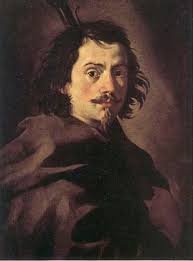
Francesco Borromini, born Francesco Castelli on September 25, 1599, in Bissone, near Lake Lugano, is recognized as one of the most innovative and influential architects of the Baroque era. Known for his distinctive architectural style characterized by dynamic structures and intricate designs, Borromini’s work has left an indelible mark on the landscape of Rome. This article delves into the life, career, and significant achievements of Francesco Borromini, providing detailed insights and historical context to understand his enduring legacy.
Early Life and Education
Birth and Family Background
Francesco Borromini was born into a family with a strong stonemasonry tradition. His father, Giovanni Domenico Castelli, was a stone mason, and young Francesco was introduced to the craft from an early age. This early exposure to stonemasonry laid the foundation for his future career in architecture.
Education and Early Training
Borromini’s formal education in architecture began in Milan, where he worked as an apprentice stonemason on the construction of the Milan Cathedral (Duomo di Milano). His talent and dedication soon became apparent, and he moved to Rome in 1619 to further his career. In Rome, he joined the workforce of the renowned architect Carlo Maderno, his distant relative, who was then the chief architect of St. Peter’s Basilica.
Career Beginnings
Collaboration with Carlo Maderno
Under Maderno’s mentorship, Borromini honed his skills in architecture and design. He worked on several significant projects, including the façade of St. Peter’s Basilica and the Palazzo Barberini. Maderno’s influence is evident in Borromini’s early work, which combined classical architectural principles with innovative designs.
Partnership with Gian Lorenzo Bernini
After Maderno’s death in 1629, Borromini collaborated with Gian Lorenzo Bernini, one of the most prominent architects and sculptors of the Baroque period. Together, they worked on the Baldacchino at St. Peter’s Basilica, an elaborate bronze canopy over the main altar. Despite their successful collaboration, Borromini and Bernini developed a professional rivalry, as their contrasting personalities and approaches to architecture often clashed.
Independent Architectural Works
San Carlo alle Quattro Fontane
Borromini’s first independent commission was the Church of San Carlo alle Quattro Fontane (commonly known as San Carlino), a masterpiece of Baroque architecture. The church, constructed between 1638 and 1641, is noted for its complex geometric design, featuring undulating walls and an intricate interplay of concave and convex forms. The innovative use of space and light in San Carlino set a new standard for Baroque architecture and established Borromini as a leading architect of his time.
Oratory of the Filippini
From 1637 to 1649, Borromini worked on the Oratory and Convent of the Filippini, another significant project that showcased his architectural genius. The Oratory’s façade and interior reflect Borromini’s distinctive style, characterized by fluid lines and dynamic spatial arrangements. His use of alternating concave and convex surfaces created a sense of movement and vitality, distinguishing his work from that of his contemporaries.
Sant’Ivo alla Sapienza
One of Borromini’s most celebrated works is the Church of Sant’Ivo alla Sapienza, constructed between 1642 and 1660. The church’s unique plan, based on two intersecting equilateral triangles, and its remarkable dome and lantern, exemplify Borromini’s innovative approach to architecture. The interior’s intricate geometrical design and harmonious proportions demonstrate his mastery of spatial composition and his ability to create visually stunning and structurally sound buildings.
Later Career and Challenges
San Giovanni in Laterano
In 1646, Borromini was commissioned by Pope Innocent X to renovate the Basilica of San Giovanni in Laterano. His task was to preserve the ancient basilica while addressing structural issues. Borromini ingeniously incorporated pairs of ancient columns into new, large pilasters to reinforce the building. Despite his successful completion of the project, Borromini’s relationship with the papal administration grew strained, particularly regarding his work on the Church of Sant’Agnese in Piazza Navona.
Rivalry with Gian Lorenzo Bernini
Borromini’s rivalry with Bernini intensified over the years, contributing to his professional challenges and personal struggles. While Bernini was celebrated for his grandiose and theatrical style, Borromini’s work was often more subdued and intellectually rigorous. This rivalry affected Borromini’s career, as Bernini’s influence often overshadowed his own achievements.
Collegio di Propaganda Fide
One of Borromini’s last major projects was the renovation of the Collegio di Propaganda Fide, commissioned in 1646. The college’s façade and chapel, completed between 1653 and 1667, are notable for their bold use of curved forms and intricate detailing. Despite his declining health and increasing personal difficulties, Borromini continued to push the boundaries of architectural design.
Personal Life and Character
Personality and Traits
Borromini is often described as a solitary, impulsive, and melancholic individual. His intense dedication to his work and his exacting standards sometimes led to conflicts with clients and collaborators. Unlike Bernini, who was known for his social charm and political acumen, Borromini was more introspective and focused on his artistic vision.
Struggles and Mental Health
Borromini’s professional rivalries and personal frustrations took a toll on his mental health. His depressive tendencies and feelings of inadequacy were exacerbated by the successes of his rival, Bernini. The stress of his work and the challenges he faced contributed to a growing sense of isolation and despair.
Tragic End
On August 3, 1667, Borromini tragically ended his own life by throwing himself onto a sword. His death marked the end of a tumultuous but highly productive career. Despite his struggles, Borromini’s contributions to architecture remain profound and enduring.
Legacy and Influence
Architectural Innovations
Francesco Borromini’s architectural innovations have had a lasting impact on the field of architecture. His use of complex geometries, dynamic forms, and innovative spatial arrangements set new standards for Baroque architecture and influenced subsequent generations of architects. Borromini’s work is celebrated for its intellectual rigor and artistic originality.
Recognition and Honors
While Borromini’s work was often overshadowed by Bernini during his lifetime, his contributions to architecture have been increasingly recognized and appreciated in the centuries since his death. His buildings, particularly San Carlo alle Quattro Fontane and Sant’Ivo alla Sapienza, are regarded as masterpieces of Baroque architecture and continue to inspire architects and scholars.
Influence on Modern Architecture
Borromini’s influence extends beyond the Baroque period, impacting modern architectural movements. His emphasis on dynamic forms and innovative use of space can be seen in the works of modern architects such as Frank Lloyd Wright and the deconstructivist movement. Borromini’s legacy is a testament to the enduring power of architectural innovation and creativity.
Conclusion
Francesco Borromini’s life and career are a testament to his extraordinary talent and dedication to the art of architecture. From his early training in Milan to his groundbreaking works in Rome, Borromini consistently pushed the boundaries of architectural design. His rivalry with Bernini, personal struggles, and untimely death add a poignant dimension to his story, underscoring the challenges faced by artists and innovators.
Borromini’s legacy endures in the stunning buildings he left behind and the lasting influence of his architectural vision. His work continues to inspire and captivate, reflecting the timeless appeal of creativity and innovation. As we reflect on the life and achievements of Francesco Borromini, we celebrate a genius whose contributions have left an indelible mark on the history of architecture.


