
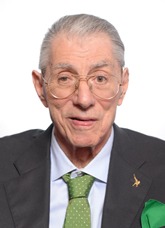
Umberto Bossi, born on September 19, 1941, in Cassano Magnago, Italy, is a prominent figure in Italian politics, known for his pivotal role in the autonomist movement in Northern Italy. Bossi’s political journey, marked by his advocacy for regional autonomy and federalism, has significantly influenced the political landscape of Italy.
Early Life and Education
Umberto Bossi was born in the small town of Cassano Magnago in the Lombardy region of Italy. His early education saw him attend a scientific high school, and he later pursued studies in medicine. However, Bossi did not complete his medical degree. Instead, he specialized in applied electronics in medicine, a field that hinted at his diverse interests and capabilities.
Political Beginnings
Bossi’s foray into politics began in the late 1970s. His encounter with Bruno Salvadori, a prominent figure in the Union Valdotaine, during his time at the University of Pavia, steered him towards the autonomist cause. Salvadori’s influence was instrumental in Bossi’s development of his political ideology centered around regional autonomy.
Formation of Lega Lombarda
In the early 1980s, together with Giuseppe Leoni and Roberto Maroni, Bossi founded the Lega Lombarda. Bossi was appointed the Secretary of the newly formed party, which marked the beginning of his long and active political career. The party’s primary objective was to advocate for the interests and autonomy of the Lombardy region and Northern Italy.
Rise to Prominence
The 1987 elections were a turning point for Bossi and his party. The Lega Lombarda managed to garner significant support, primarily from the northern regions of Italy. This electoral success enabled Bossi to enter the Italian Parliament. His unique title of “Senatur,” a nod to his position as a Senator, became synonymous with his political identity.
Formation of Lega Nord
In 1989, Bossi spearheaded the transformation of Lega Lombarda into Lega Nord. This new formation was a union of various regional leagues from Northern Italy. Despite initial resistance from within the party, Bossi’s vision and efforts led to the successful expansion and consolidation of the party. He was appointed the Federal Secretary of Lega Nord, a position he held for many years.
Political Ideology and Achievements
A cornerstone of Bossi’s political agenda has been “devolution,” the decentralization of legislative powers from the central government to the regions. This policy aimed to grant regions greater control over critical areas such as health, education, and security. Bossi’s commitment to reducing bureaucratic inefficiencies and countering centralism resonated with many in Northern Italy.
The Pontida Manifestation
In 1990, Bossi initiated the Pontida Manifestation, an annual event that became a hallmark of Lega Nord’s activities. This event, held in the town of Pontida, served as a rallying point for the party’s supporters and a platform for promoting their political agenda.
Tangentopoli and Its Aftermath
The early 1990s were tumultuous for Italian politics, marked by the Tangentopoli scandal, which exposed widespread corruption. Initially, Bossi supported the judicial investigations. However, the Lega Nord was not entirely unscathed, as it faced allegations of receiving illicit funding. Despite these challenges, Bossi and his party emerged stronger, with the 1992 elections marking a significant victory, bringing 80 parliamentarians to Rome.
Alliance with Silvio Berlusconi
The mid-1990s saw Bossi and Lega Nord form an alliance with Silvio Berlusconi’s Forza Italia. This collaboration yielded substantial political gains, including Bossi’s appointment as Minister for Institutional Reforms in the Berlusconi government. This period underscored Bossi’s strategic acumen in navigating the complexities of Italian politics.
Health Challenges and Political Resilience
In 2004, Bossi suffered a severe health setback due to a cerebral stroke, which necessitated a long rehabilitation period. Despite this, he made a remarkable recovery and returned to political life. His resilience was evident as he continued to participate actively in political campaigns and public events.
Later Years and Legacy
In 2012, amidst a scandal involving the party’s treasurer, Bossi resigned as the Secretary of Lega Nord. Despite stepping down from this leadership role, he remained a significant figure within the party. He continued to be active in politics, being elected to the Senate in 2018.
Influence on Italian Politics
Umberto Bossi’s legacy in Italian politics is profound. His advocacy for regional autonomy and federalism has left an indelible mark. The annual Pontida rally and the symbolic “Rite of the Po” reflect his efforts to cultivate a distinct regional identity for Northern Italy.
Conclusion
Umberto Bossi’s life and career are a testament to his enduring commitment to regional autonomy and political reform. From his early days influenced by Bruno Salvadori to his leadership in Lega Nord, Bossi has been a pivotal figure in shaping the discourse around regionalism in Italy. His journey, marked by significant achievements and challenges, underscores his role as a key player in the Italian political arena.


