
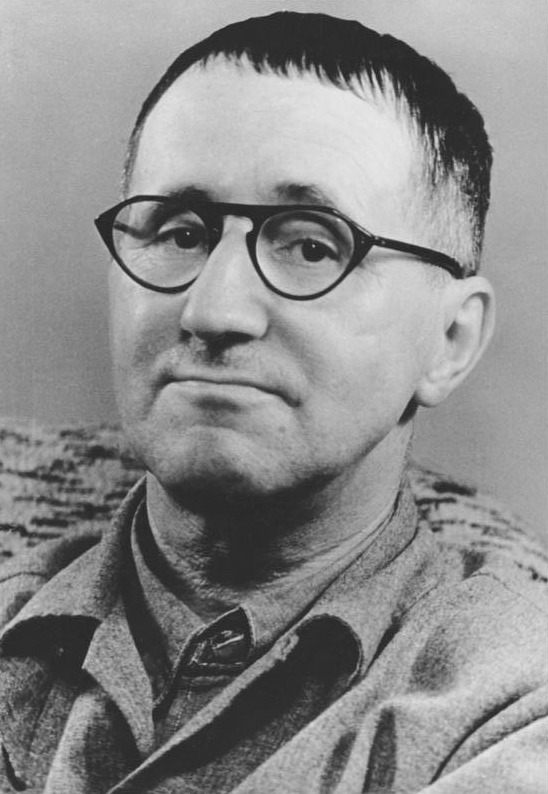
Bertolt Brecht, born Eugen Berthold Friedrich Brecht on February 10, 1898, in Augsburg, Germany, is one of the most influential playwrights and poets of the 20th century. Known for his development of the epic theater, Brecht’s contributions to literature and theater have left an indelible mark on modern drama. This article delves into the life, fame, and significant highlights of Bertolt Brecht’s illustrious career, providing detailed insights and historical context.
Early Life and Education
Bertolt Brecht was born to a middle-class family in Augsburg, Bavaria. His father, Berthold Friedrich Brecht, worked in a paper mill, and his mother, Sophie Brecht, was a devout Protestant. Brecht’s early education at the Royal Bavarian Realgymnasium provided him with a strong foundation in the classics, which later influenced his writing style.
During his youth, Brecht showed a keen interest in literature and theater. He wrote his first play, “The Bible,” at the age of sixteen. Brecht’s early exposure to the works of Goethe and Schiller, as well as his involvement in the local theater scene, set the stage for his future endeavors in drama and poetry.
The Impact of World War I
The outbreak of World War I in 1914 had a profound impact on Brecht’s life and career. Although he initially supported the war, his views changed dramatically after serving as a medical orderly in a military hospital. The horrors and futility of war deeply affected Brecht, leading him to adopt a more critical and pacifist stance in his later works.
Brecht’s experiences during the war inspired some of his earliest plays, including “Baal” (1918) and “Drums in the Night” (1922). These works, characterized by their anti-war themes and existential questions, marked the beginning of Brecht’s career as a playwright.
Development of Epic Theater
One of Brecht’s most significant contributions to the world of theater is the development of the epic theater. Unlike traditional dramatic theater, which aims to create a sense of realism and emotional involvement, epic theater seeks to provoke critical thinking and self-reflection in the audience. Brecht achieved this through various techniques, such as the use of narration, direct address, and minimalistic staging.
The concept of the “Verfremdungseffekt” or “alienation effect” is central to Brecht’s epic theater. This technique involves distancing the audience from the characters and events on stage, encouraging them to view the performance with a critical and analytical mindset. Brecht’s goal was to transform theater into a platform for social and political change.
Notable Works and Achievements
Bertolt Brecht’s body of work is vast and varied, encompassing plays, poems, and essays. Some of his most notable plays include:
“The Threepenny Opera” (1928)
Co-written with composer Kurt Weill, “The Threepenny Opera” is one of Brecht’s most famous works. The play is a critique of capitalist society and explores themes of corruption, greed, and social injustice. Its most famous song, “Mack the Knife,” has become a classic in its own right.
“Mother Courage and Her Children” (1939)
Set during the Thirty Years’ War, “Mother Courage and Her Children” is a powerful anti-war play that follows the story of a canteen woman who tries to profit from the war but ultimately loses her children. The play is considered one of Brecht’s masterpieces and a poignant commentary on the brutality and futility of war.
“Life of Galileo” (1938-1939)
“Life of Galileo” explores the conflict between science and religion through the life of the renowned astronomer Galileo Galilei. The play delves into themes of truth, authority, and intellectual freedom, reflecting Brecht’s own struggles with censorship and political oppression.
“The Caucasian Chalk Circle” (1944)
Inspired by an ancient Chinese play, “The Caucasian Chalk Circle” is a story of justice and morality set against the backdrop of a civil war. The play’s innovative use of storytelling and its exploration of ethical dilemmas have made it a classic of modern theater.
Political Exile and Later Years
Bertolt Brecht’s political views and activities often put him at odds with the authorities. As a committed Marxist, he was highly critical of fascism and capitalism, which led to conflicts with the Nazi regime in Germany. In 1933, following the rise of Adolf Hitler, Brecht fled Germany and spent the next fifteen years in exile, living in various countries including Denmark, Sweden, and the United States.
During his time in exile, Brecht continued to write and produce plays, collaborating with other exiled artists and intellectuals. However, his stay in the United States was marked by increasing scrutiny and suspicion due to his communist beliefs. In 1947, Brecht was called to testify before the House Un-American Activities Committee (HUAC) during the height of the Red Scare. Shortly after his testimony, he left the United States and settled in East Berlin.
Return to Germany and Legacy
In East Berlin, Brecht founded the Berliner Ensemble, a theater company dedicated to producing his works and promoting the principles of epic theater. The Berliner Ensemble quickly gained international acclaim, becoming a hub for innovative and socially engaged theater.
Brecht’s influence on theater and literature extends far beyond his lifetime. His theories and techniques have been adopted and adapted by countless playwrights, directors, and performers around the world. Brecht’s commitment to using theater as a tool for social change and his innovative approaches to storytelling continue to inspire new generations of artists.
Personal Life and Relationships
Bertolt Brecht’s personal life was as complex and multifaceted as his work. He was married twice, first to Marianne Zoff, an opera singer, and later to Helene Weigel, an actress who played a crucial role in the success of the Berliner Ensemble. Brecht had several long-term relationships with other women, including Elisabeth Hauptmann and Ruth Berlau, who were also his collaborators.
Brecht’s relationships with his collaborators were often intense and creatively productive. His partnerships with women like Hauptmann and Berlau were instrumental in the development of many of his works. Despite the controversies and complexities of his personal life, these relationships were essential to Brecht’s creative process and his achievements in theater and literature.
Poetry and Essays
In addition to his plays, Bertolt Brecht was a prolific poet and essayist. His poetry reflects his political beliefs, personal experiences, and philosophical musings. Brecht’s poems often employ simple language and stark imagery to convey profound and sometimes provocative messages.
Brecht’s essays and theoretical writings on theater, collected in works such as “Brecht on Theatre” and “The Messingkauf Dialogues,” provide valuable insights into his artistic vision and methodologies. These writings continue to be studied and referenced by scholars, students, and practitioners of theater.
Conclusion
Bertolt Brecht’s legacy as a playwright, poet, and theorist is unparalleled. His innovative approach to theater, characterized by the development of epic theater and the use of the alienation effect, revolutionized modern drama. Brecht’s works continue to be performed and studied around the world, reflecting the enduring relevance of his ideas and artistic vision.
From his early days in Augsburg to his exile and eventual return to East Berlin, Brecht’s life was marked by political upheaval, personal challenges, and creative triumphs. His commitment to social justice, intellectual freedom, and artistic innovation has left an indelible mark on the cultural landscape of the 20th century and beyond.
Bertolt Brecht’s contributions to theater and literature are a testament to the power of art as a force for change. His works challenge audiences to think critically, question authority, and engage with the world in new and meaningful ways. As we continue to grapple with the social and political issues of our time, Brecht’s legacy remains a beacon of inspiration and a call to action.


