
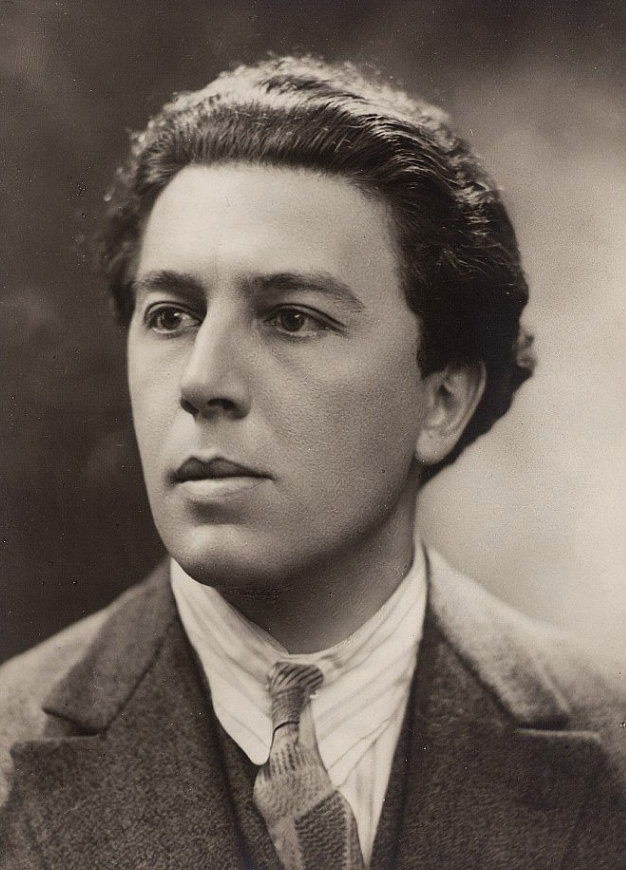
André Breton, born on February 18, 1896, in Tinchebray, France, was a seminal French writer, poet, and one of the founding figures of the Surrealist movement. Known for his profound influence on 20th-century art and literature, Breton’s work in surrealism revolutionized how people perceive reality and the unconscious mind. This article delves into Breton’s life, his rise to fame, and the significant highlights of his career, providing detailed insights and historical context.
Early Life and Education
André Robert Breton was born into a modest family in Tinchebray, Normandy. His father, Louis-Justin Breton, was a policeman, and his mother, Marguerite-Marie-Eugénie Le Gougué, was a former seamstress. The family moved to Paris when Breton was four years old, and he spent much of his childhood in the bustling city, which significantly influenced his later works.
Breton showed an early interest in literature and the arts, but he initially pursued studies in medicine and psychiatry. He attended the University of Paris, where he studied under prominent figures like Jean-Martin Charcot and Sigmund Freud. His medical background, particularly in psychiatry, profoundly impacted his understanding of the human mind and would later inform his surrealist theories.
Entry into the Literary and Art World
Breton’s literary career began during World War I, where he served in a neurological hospital. His interactions with shell-shocked soldiers and exposure to the fragility of the human mind deepened his interest in the unconscious. During this period, he also met fellow writers Guillaume Apollinaire and Jacques Vaché, who introduced him to avant-garde ideas and Dadaism.
Dada Movement
Breton became an active member of the Dada movement, a radical and anti-establishment artistic movement that emerged during World War I. Dadaism’s rejection of conventional aesthetics and embrace of chaos resonated with Breton’s growing disillusionment with traditional forms of art and literature. He collaborated with notable figures like Tristan Tzara and Louis Aragon, contributing to Dada publications and participating in their provocative events.
Founding of Surrealism
The transition from Dada to Surrealism marked a significant turning point in Breton’s career. Disenchanted with Dada’s nihilism, he sought a more constructive approach to artistic and intellectual exploration. In 1924, Breton published the “Surrealist Manifesto,” which officially launched the Surrealist movement. In the manifesto, he defined surrealism as “pure psychic automatism,” emphasizing the importance of the unconscious mind in creating art.
Key Works and Theories
Breton’s writings laid the foundation for Surrealism. His seminal works include “Nadja” (1928), a novel that blends autobiography, narrative, and surrealist philosophy, and “Les Champs Magnétiques” (The Magnetic Fields, 1920), co-written with Philippe Soupault, which is considered one of the first examples of automatic writing.
Breton’s concept of “automatism” involved creating art without conscious thought, allowing the unconscious mind to express itself freely. This technique aimed to bypass rational control and tap into deeper, often repressed, layers of the psyche. Breton believed that this approach could reveal profound truths about human experience and challenge the limitations of conventional art and literature.
Surrealism’s Influence and Expansion
Under Breton’s leadership, Surrealism grew into an international movement that encompassed various forms of artistic expression, including literature, visual arts, cinema, and theater. Breton’s charisma and intellectual rigor attracted a diverse group of artists and writers, including Salvador Dalí, René Magritte, Max Ernst, and Man Ray.
Surrealism in Visual Arts
Surrealism’s impact on visual arts was profound. Breton’s advocacy for the movement helped bring attention to surrealist painters and photographers, whose works explored dreamlike imagery, irrational juxtapositions, and symbolic content. Artists like Dalí and Magritte became iconic figures, their works embodying the surrealist ethos of uncovering hidden realities.
Political Engagement
Breton was also politically active, and his involvement in leftist politics influenced his artistic philosophy. He joined the French Communist Party in 1927, believing that Surrealism and communism shared a common goal of liberating human potential. However, his relationship with the party was tumultuous, and he eventually distanced himself from its rigid doctrines.
Personal Life and Later Years
André Breton’s personal life was as complex and multifaceted as his professional endeavors. He was married three times, and his relationships significantly influenced his work. His first marriage to Simone Kahn ended in divorce, after which he married Jacqueline Lamba, a surrealist painter. His third wife was Elisa Bindhoff, whom he met in the United States during World War II.
Exile During World War II
During the Nazi occupation of France, Breton fled to the United States, where he continued to promote surrealism. His exile years were productive; he wrote several important works, including “Arcane 17” (1944), a poetic meditation on war, love, and rebirth inspired by his relationship with Elisa. Breton returned to France after the war, resuming his role as the leader of the Surrealist movement.
Legacy and Death
André Breton passed away on September 28, 1966, in Paris. His death marked the end of an era, but his legacy lives on through his extensive body of work and the lasting impact of Surrealism. Breton’s contributions to art and literature continue to be celebrated, and his ideas remain influential in contemporary artistic and intellectual circles.
Lasting Impact and Recognition
Breton’s influence on modern art and literature is immeasurable. Surrealism’s emphasis on the unconscious mind and exploration of dreamlike states has permeated various cultural domains, from visual arts and literature to film and psychology.
Influence on Contemporary Art and Literature
Contemporary artists and writers continue to draw inspiration from Breton’s theories and techniques. The surrealist focus on inner reality and the breaking down of logical constraints has paved the way for numerous experimental and avant-garde movements. Breton’s ideas about automatism and the liberation of the unconscious mind remain relevant, influencing not only artists but also thinkers in psychology and philosophy.
Awards and Honors
Breton’s contributions to culture and the arts have been recognized through various awards and honors. Posthumously, he has been celebrated in numerous retrospectives, exhibitions, and academic studies that highlight his pivotal role in shaping 20th-century art and literature.
Surrealism in Popular Culture
Surrealism, as pioneered by Breton, has found its way into popular culture, influencing everything from advertising and fashion to music videos and films. The movement’s visual style and thematic concerns have become part of the broader cultural lexicon, demonstrating the enduring power of Breton’s vision.
Conclusion
André Breton’s life and work are a testament to the transformative power of art and the enduring quest to understand the human psyche. From his early involvement in the Dada movement to his leadership in founding and shaping Surrealism, Breton’s contributions have left an indelible mark on the cultural landscape. His writings, theories, and unwavering commitment to exploring the depths of the unconscious mind continue to inspire and challenge artists, writers, and thinkers worldwide.
Breton’s legacy is one of innovation, courage, and intellectual rigor. As we continue to explore and celebrate his work, André Breton remains a towering figure in the history of art and literature, whose ideas continue to resonate and influence new generations of creators.


