
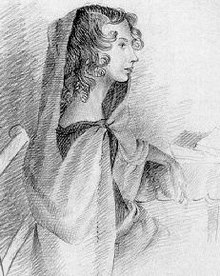
Anne Brontë, born on January 17, 1820, in Thornton, Yorkshire, England, was the youngest of the famous Brontë sisters. Alongside her sisters Charlotte and Emily, Anne Brontë is remembered as one of the most significant literary figures of the Victorian era. Although her works are often overshadowed by those of her sisters, Anne’s novels Agnes Grey and The Tenant of Wildfell Hall are celebrated for their realism, social criticism, and exploration of the struggles faced by women in the 19th century. This article explores the life, career, and enduring legacy of Anne Brontë, shedding light on her contributions to English literature and her role in the Brontë literary legacy.
Early Life and Family Background
Anne Brontë was born into a family that valued education and intellectual pursuits. She was the youngest of six children born to Reverend Patrick Brontë, an Anglican clergyman of Irish descent, and Maria Branwell Brontë. The family moved to Haworth, a small village on the edge of the Yorkshire moors, when Anne was still an infant. This remote and rugged landscape would later provide the backdrop for much of the Brontë sisters’ literary work.
Tragedy struck the Brontë family early on. In 1821, when Anne was just one year old, her mother died of cancer. This loss deeply affected the Brontë children, and their father, Patrick, struggled to raise them alone. To help care for the children, Patrick’s sister-in-law, Elizabeth Branwell, moved to Haworth and became a surrogate mother to the Brontë siblings.
Anne’s early education was overseen by her father and Aunt Elizabeth, and she was exposed to a wide range of literature from a young age. The Brontë children—Charlotte, Emily, Branwell, and Anne—spent much of their time creating intricate imaginary worlds and writing stories and poems. These early creative endeavors laid the foundation for their later literary achievements.
Education and Early Influences
In 1824, Anne’s older sisters, Maria and Elizabeth, were sent to the Clergy Daughters’ School at Cowan Bridge, a boarding school for the daughters of clergymen. The harsh conditions at the school, which included poor nutrition and strict discipline, led to the deaths of both Maria and Elizabeth, who died of tuberculosis shortly after returning home. This tragedy left a profound impact on the surviving Brontë children, and the experience of Cowan Bridge would later serve as inspiration for Charlotte’s depiction of Lowood School in Jane Eyre.
Anne, being the youngest, was educated at home under the guidance of her father and Aunt Elizabeth. She received instruction in subjects such as music, drawing, and literature, and she developed a deep love for reading and writing. In 1835, at the age of 15, Anne was sent to Roe Head School, where her sister Charlotte was a teacher. Anne’s time at Roe Head was challenging, as she struggled with homesickness and the rigors of school life. However, she persevered and completed her education, which prepared her for a career as a governess.
The Governess Years: Agnes Grey
Like many women of her social class, Anne Brontë faced limited career options. The most respectable occupation available to her was that of a governess, a role she reluctantly took on to support herself and her family. Anne’s experiences as a governess provided the material for her first novel, Agnes Grey, published in 1847.
Agnes Grey is a semi-autobiographical novel that tells the story of a young woman who becomes a governess to support her family. Through the character of Agnes, Anne Brontë explores the difficulties and indignities faced by governesses, who were often treated poorly by their employers and had little authority or respect in the households they served. The novel also critiques the social structures that placed women in such vulnerable positions and highlights the emotional and psychological toll of such work.
Unlike the romanticized depictions of governesses in other literature of the time, Anne Brontë’s portrayal is starkly realistic. Agnes Grey provides a detailed and unflinching look at the challenges faced by women in the Victorian era, particularly those who sought to earn a living while maintaining their dignity and integrity. Although Agnes Grey was overshadowed by the simultaneous publication of Emily Brontë’s Wuthering Heights, it has since been recognized as an important work in the canon of Victorian literature.
The Tenant of Wildfell Hall: A Groundbreaking Novel
Anne Brontë’s second novel, The Tenant of Wildfell Hall, published in 1848, is widely regarded as her most significant work. The novel tells the story of Helen Graham, a woman who leaves her abusive, alcoholic husband and seeks refuge at Wildfell Hall under an assumed name. The narrative unfolds through a series of letters and diary entries, revealing Helen’s struggles to protect her young son from his father’s influence and her determination to live independently.
The Tenant of Wildfell Hall was groundbreaking for its portrayal of a woman’s right to leave an abusive marriage, a subject that was highly controversial in Victorian society. The novel’s depiction of marital abuse, alcoholism, and the consequences of moral corruption was both daring and ahead of its time. Anne Brontë’s unflinching examination of these issues challenged the prevailing social norms and sparked debate among readers and critics.
The novel was met with mixed reviews upon its publication. While some praised its boldness and realism, others criticized its unflattering portrayal of men and its perceived immorality. Even Charlotte Brontë, Anne’s sister and literary executor, had reservations about the novel’s content. After Anne’s death, Charlotte prevented the re-publication of The Tenant of Wildfell Hall, which contributed to its relative obscurity for many years.
Despite the initial controversy, The Tenant of Wildfell Hall has since been recognized as one of the first feminist novels in English literature. It remains a powerful exploration of the challenges faced by women in a patriarchal society and a testament to Anne Brontë’s courage as a writer.
Family Tragedy and Final Years
The Brontë family was marked by a series of tragic losses that deeply affected Anne and her surviving siblings. In 1848, Anne’s brother Branwell Brontë died after a prolonged struggle with alcoholism and drug addiction. His death was followed by the deaths of Emily Brontë in December 1848 and Anne herself in May 1849.
Anne Brontë had been suffering from tuberculosis, the same illness that had claimed the lives of her sisters and brother. Despite her declining health, she remained determined and sought to recover by moving to the coastal town of Scarborough, hoping the sea air would improve her condition. However, her health continued to deteriorate, and she died on May 28, 1849, at the age of 29. Anne Brontë was buried in Scarborough, making her the only Brontë sibling not interred at the family home in Haworth.
Legacy and Posthumous Recognition
Anne Brontë’s contributions to English literature have often been overshadowed by those of her more famous sisters, Charlotte and Emily. However, in recent years, there has been a renewed interest in her work, particularly The Tenant of Wildfell Hall, which is now recognized as a pioneering work of feminist literature.
Anne Brontë’s novels are notable for their realism, moral seriousness, and social critique. Unlike the more romanticized works of her sisters, Anne’s writing is grounded in the realities of everyday life and explores the complexities of human relationships, social class, and the position of women in society. Her portrayal of strong, independent female characters who resist societal expectations and assert their autonomy has resonated with modern readers and scholars alike.
In addition to her novels, Anne Brontë was also a talented poet. Her poetry, much like her prose, reflects her deep religious faith, her love of nature, and her contemplative nature. Although her poetic output was modest compared to that of her sisters, it nonetheless reveals her sensitivity and introspection.
Today, Anne Brontë is recognized as an important literary figure in her own right. Her works are studied and appreciated for their literary merit and their contribution to the broader Brontë legacy. Anne’s writing continues to inspire and challenge readers, offering a unique perspective on the struggles and aspirations of women in the 19th century.
Conclusion
Anne Brontë’s life was tragically short, but her literary achievements have left a lasting impact on English literature. As the youngest of the Brontë sisters, she carved out a distinct voice that was both bold and compassionate. Her novels, Agnes Grey and The Tenant of Wildfell Hall, remain powerful explorations of the social issues of her time, particularly the challenges faced by women in a rigidly patriarchal society.
Anne Brontë’s work has gained renewed recognition in recent years, with The Tenant of Wildfell Hall being hailed as one of the earliest feminist novels. Her writing continues to be celebrated for its realism, moral depth, and commitment to social justice. Through her work, Anne Brontë has secured her place in the literary canon, and her legacy continues to influence and inspire readers around the world.


