
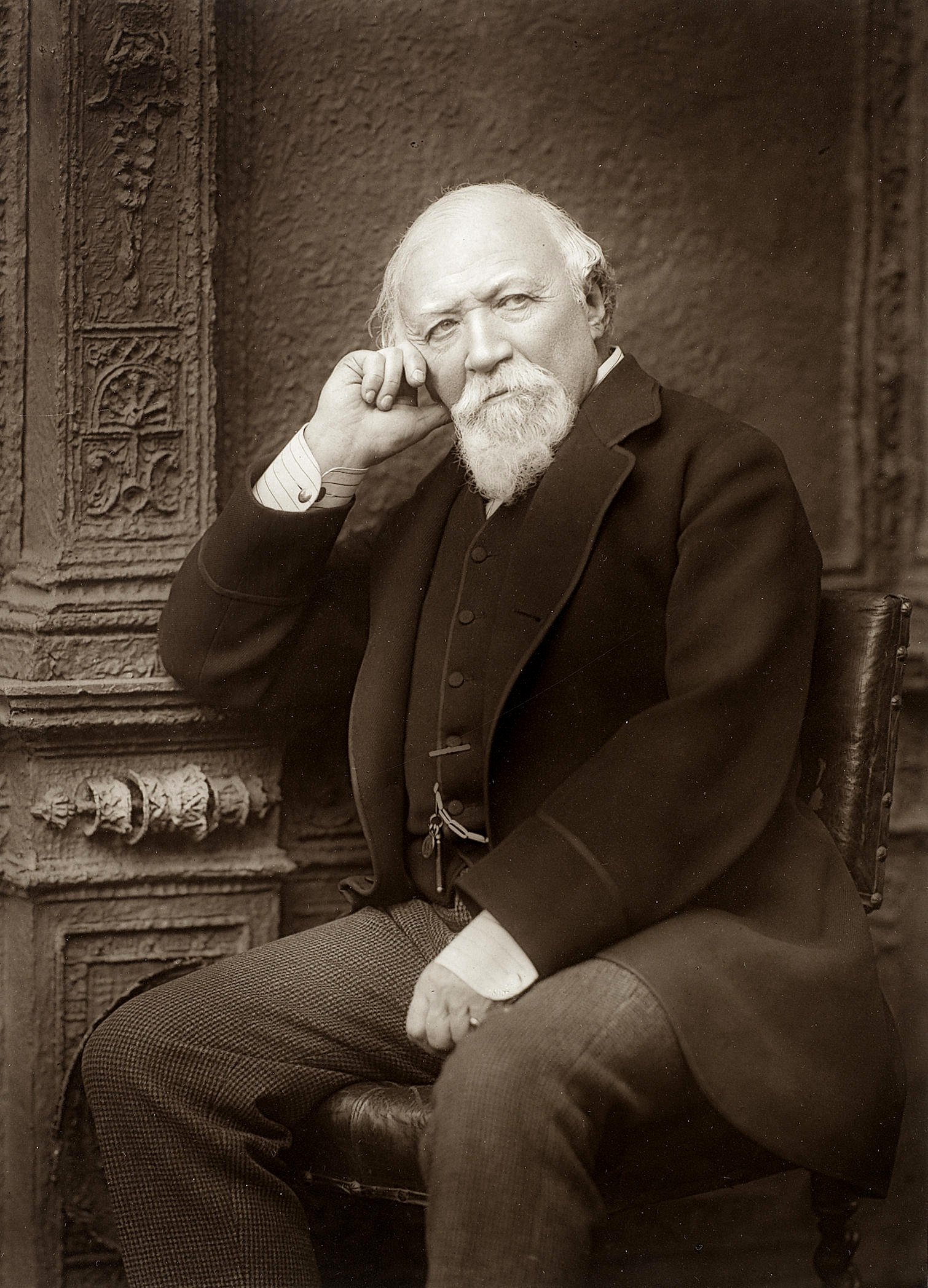
Robert Browning, born on May 7, 1812, in Camberwell, England, is one of the most celebrated poets of the Victorian era. Known for his mastery of dramatic monologues and his profound psychological insight, Browning’s work has left an indelible mark on English literature. His journey from a precocious child with a voracious appetite for reading to one of the great literary figures of the 19th century is a story of intellectual rigor, emotional depth, and artistic evolution.
Early Life and Education
Robert Browning was born into a well-to-do family that nurtured his early interests in literature, music, and the arts. His father, Robert Browning Sr., was a clerk at the Bank of England but had a passion for books, amassing a personal library of over 6,000 volumes. This collection, rich in classical literature, history, and philosophy, provided the young Browning with an extensive literary education at home. His mother, Sarah Wiedemann Browning, was of German and Scottish descent and was deeply religious. Her love for music and her devout nature had a lasting influence on Browning’s early development.
As a child, Browning was something of a prodigy. He was reading at a young age and demonstrated a remarkable ability to absorb and retain information. By the time he was fourteen, Browning had already written poetry and was fluent in several languages, including French, Greek, Italian, and Latin. His early exposure to the works of the Romantic poets, particularly Percy Bysshe Shelley, whom he idolized, shaped his early writing and philosophical outlook.
The Young Poet: Early Works and Struggles
At sixteen, Browning enrolled at the University College London, but he left after just a year, preferring to continue his education independently. His first major work, Pauline: A Fragment of a Confession (1833), was published anonymously at his family’s expense. The poem, a confessional piece heavily influenced by Shelley, did not attract much attention and was later dismissed by Browning himself as immature and flawed.
Undeterred, Browning continued to write, and in 1835 he published Paracelsus, a dramatic poem that explored the life of the Swiss physician and alchemist Paracelsus. Unlike his first effort, Paracelsus garnered some critical attention and brought Browning into contact with prominent literary figures of the time, including Thomas Carlyle and William Wordsworth. These connections helped Browning gain a foothold in the literary circles of London, though widespread recognition still eluded him.
In 1837, Browning attempted to transition to playwriting with his historical tragedy Strafford, which was staged in London. However, the play was not well received, and its failure marked a turning point in Browning’s career. Realizing that his talents were better suited to poetry, Browning turned away from the theater and focused on refining his poetic voice.
The Development of the Dramatic Monologue
The early 1840s were a period of significant development for Browning as he began to experiment with the form that would become his signature: the dramatic monologue. This literary device allowed Browning to delve deeply into the minds of his characters, presenting their thoughts and emotions in a way that was both intimate and revealing.
One of his earliest successful uses of the dramatic monologue was in Pippa Passes (1841), a poem that tells the story of a young girl whose innocent songs influence the lives of the people she encounters. The poem was well-received and helped to establish Browning’s reputation as a poet with a unique and powerful voice.
Over the next decade, Browning continued to refine the dramatic monologue, producing some of his most famous works, including My Last Duchess and The Bishop Orders His Tomb at Saint Praxed’s Church. These poems, with their complex characters and psychological depth, showcased Browning’s ability to explore the darker aspects of human nature.
Love and Partnership: Elizabeth Barrett Browning
In 1845, Browning’s life took a dramatic turn when he began corresponding with Elizabeth Barrett, a well-known poet who was six years his senior. Elizabeth was living in relative seclusion due to ill health, but Browning was deeply moved by her poetry and felt a strong connection with her. Their letters quickly turned into a passionate love affair, and in 1846, despite the objections of Elizabeth’s tyrannical father, the couple eloped to Italy.
Their marriage was a deeply fulfilling partnership, both personally and creatively. The Brownings settled in Florence, where they lived for the next fifteen years, a period that was among the happiest and most productive of their lives. Elizabeth’s health improved in the warm Italian climate, and the couple had one child, a son named Robert Wiedemann Barrett Browning, known as “Pen.”
During this time, Browning continued to write, although much of his work was overshadowed by the popularity of his wife’s poetry. One of his notable works from this period is Men and Women (1855), a collection of fifty-one poems that includes some of his finest dramatic monologues. The collection did not sell well at the time, but it has since been recognized as one of Browning’s masterpieces.
The Return to England and Late Success
The death of Elizabeth Barrett Browning in 1861 was a devastating blow to Browning. Deeply grieving, he returned to England with his son and spent the next few years in relative obscurity. During this period, Browning published Dramatis Personae (1864), a collection of poems that received critical acclaim and marked the beginning of his late-life recognition.
However, it was the publication of The Ring and the Book (1868-69) that truly cemented Browning’s reputation as one of the great poets of the Victorian era. This long narrative poem, based on a real-life 17th-century Italian murder case, is a complex exploration of truth, justice, and the human condition. The poem’s twelve books, each presenting a different perspective on the events, showcase Browning’s skill in creating distinct and psychologically rich characters. The Ring and the Book was a critical and commercial success, and it secured Browning’s place among the literary giants of his time.
Influence and Legacy
Robert Browning’s influence on English literature is profound. His innovative use of the dramatic monologue opened new possibilities for exploring character and consciousness in poetry. Browning’s ability to capture the complexities of human thought and emotion has inspired countless poets and writers, from his contemporaries to modern-day authors.
Browning’s work is also notable for its intellectual rigor. His poetry often engages with philosophical, religious, and ethical questions, reflecting his deep engagement with the issues of his time. While some of his poems can be challenging due to their dense language and intricate structure, they reward careful reading with their depth of insight and emotional power.
Browning’s legacy is also closely tied to his marriage with Elizabeth Barrett Browning. Together, they represent one of the most famous literary couples in history, and their love story continues to capture the imagination of readers and scholars alike. The Brownings’ correspondence, much of which has been preserved, offers a fascinating glimpse into their creative processes and the deep bond they shared.
Final Years and Death
In his later years, Browning continued to write and publish, though his output slowed. He remained active in literary circles and enjoyed the recognition that had eluded him earlier in his career. Browning was also honored with several awards, including honorary degrees from Oxford and Edinburgh Universities.
Browning spent his final years traveling between England and Italy, often staying with his son, Pen, in Venice. It was in Venice, on December 12, 1889, that Browning passed away from complications related to bronchitis. His death occurred on the same day that his final book, Asolando, was published.
Robert Browning was buried in Westminster Abbey’s Poets’ Corner, alongside other greats of English literature. His legacy, both as a master of the dramatic monologue and as a poet who delved deeply into the human psyche, remains secure.
Conclusion
Robert Browning’s life and work stand as a testament to the power of poetry to explore the depths of human experience. From his early struggles to his late-life success, Browning’s career is marked by a relentless pursuit of artistic excellence and a profound engagement with the world around him. His innovative use of the dramatic monologue and his ability to capture the complexities of the human soul have earned him a place among the greatest poets in the English language. Today, more than a century after his death, Browning’s work continues to be studied, admired, and enjoyed by readers around the world.


